By Vince Carter
There's a word going around the NBA right now, and it isn't a very fun one once you translate it. Boston called it optionality this week. Say it enough times and it starts to sound like strategy. Strip away the press conference polish and it just means one thing: we can't afford both of you anymore.
That's the frame for everything that happened around the league this week, and it's why this episode needed a companion piece instead of just a recap. Grab your coffee, keep the pod running in the other tab, and let's get into what actually happened versus what the podiums want you to believe.
Boston's Cap Math Wore a Suit and Called Itself a Basketball Decision
Start with the headline. Boston sent Jaylen Brown to Philadelphia for Paul George and four draft picks. Brad Stevens stood at a podium and said the trade cost him sleep, and for once that wasn't just a talking point. Ten years, six trips to the conference finals, two Finals appearances, a championship, a Finals MVP trophy, and a Celtics team that never missed the playoffs with him on the roster. That's what left town.
Stevens leaned on "optionality" so hard in that press conference that it basically became a second job title. But peel the buzzword off and what's underneath is the second apron functioning like a hard cap that Boston's ownership group, led by Bill Chisholm and backed by Sixth Street, is not interested in testing. Brown and Jayson Tatum combined for 47 percent of the cap during the 2024 title run. Stevens said that number was trending toward 70 percent of the payroll tied up in two players. That's not a basketball problem. That's a spreadsheet problem wearing a jersey.
Here's what gets lost in the spin: Brown just had the best individual season of his career. 28.7 points, 6.9 rebounds, 5.1 assists, sixth in MVP voting, second team All-NBA, 56 wins for the team. They traded him the year after his peak, not because he declined, but because he got expensive at exactly the moment he got great. You cannot call that making the team better. Nobody in that Boston press room, not the beat writers who cover this team every day, got a real answer to how this roster improves right now. Every response looped back to optionality, which is a word for later, not a word for this season.
Now, the analytics side isn't nothing. Brown's pick and roll ball handling sat in the 68th to 83rd percentile from 2019 to 2021, genuinely elite table setting. That number slid to the 38th to 57th percentile from 2022 onward. His efficiency held steady in the low to mid 50s the whole time, so this isn't a guy who fell off a cliff. It's a guy who Boston used differently as the years went on, and whose foul weather skill set (creating shots off the bounce, absorbing tough minutes, playing angry when a series gets physical) doesn't show up cleanly in a spreadsheet.
Philadelphia gets a real problem to manage in a good way. Brown slots in next to Tyrese Maxey as a second side initiator, and he was shooting closer to the rim and more efficiently than the year before. Add him to Maxey, Joel Embiid, and a maturing VJ Edgecombe, and you've got four mouths that all need touches. Nick Nurse is going to have to be a genuine tactician there or this turns into a shot distribution mess by Thanksgiving.
And Brown didn't take this quietly. He said the relationship with the organization went sideways the moment his name entered trade conversations, and that he felt disrespected by how it played out. Stevens called him a force in that same press conference, which is exactly the problem with projecting Paul George into his old seat. Force is not a low usage, complementary description. That's the real swap being sold here as like for like, and it isn't. Boston didn't lose Jaylen Brown because he stopped being great. They lost him because great got too expensive to stack twice. Build a fully operational contender and don't act shocked when the budget office eventually knocks.
Donovan Mitchell Bet on Cleveland Before Cleveland Had to Prove Anything
Flip to Cleveland, where I need to own something on record. I had Donovan Mitchell walking out of that city after back to back disappointing playoff exits. Instead, he left real money on the table and signed a four year, $273 million extension that doesn't even kick in until the 2027-28 season, including a $75 million player option once he turns 34. He could have waited a single year and signed for $353 million instead. He chose stability over the bigger number.
That's the opposite of where I thought this was heading, and it raises a real question worth sitting with: does Mitchell know something the rest of us don't about LeBron's free agency, or is this just genuine faith in Koby Altman and Kenny Atkinson to keep building around him?
The numbers back up why Cleveland wanted this done. Since the trade, Mitchell is averaging close to 27 points, five assists, four and a half rebounds, and a steal and a half a night on roughly 47 percent shooting across 264 games, with a playoff appearance every single season. His Cleveland playoff averages (27.3 points, 52.1 effective field goal percentage, 2.6 turnovers) actually top his Utah playoff numbers in efficiency, even though he scored a bit more per game out west. Translation: he's grown as a decision maker and he trusts the roster around him more than he used to.
Where I stay cautious is Evan Mobley. I expected him to be assertive in a Chris Bosh kind of way by now, someone who takes over stretches on his own terms, and I'm not convinced he ever gets there. If Cleveland's ceiling depends on Mobley becoming a guy who demands the ball, that's still an open question, extension or not. If LeBron actually lands in Cleveland and accepts a smaller, complementary role, he's an upgrade over what they had at that spot last year. But betting on that is still betting on a hypothetical. Mitchell is getting paid like a champion already lives in that building. Whether the roster catches up to that belief is the entire season.
Brunson Won It All With a Broken Hand and Didn't Tell Anyone
New York's story somehow tops both of those, and it didn't come out until after the parade. Jalen Brunson won Finals MVP while playing through a torn ligament in his left wrist, on his shooting hand, the whole postseason. Nobody knew until the surgery got confirmed.
The box score tells the story if you know where to look. In April, his effective field goal percentage sat at 52.4 with a true shooting mark of 56.9. In May it climbed to 54 and 60.8, with the team a plus 17.8 whenever he was on the floor. Then June arrived, Finals month, and his efficiency cratered: 47.4 effective field goal percentage, 53.6 true shooting, plus minus collapsing to barely positive. Here's the part that gives it away. His scoring average actually rose to a series high 32.6 points in June. He scored more and got less efficient at the same time, which is exactly what you'd expect from a guy whose contested looks at the rim were getting harder to finish while everything else around him tightened up. That's not a slump. That's a hand.
His three point stroke barely moved all postseason, staying around 36 percent, right in his career range. It was specifically the pressured, contested looks near the basket that suffered, which lines up perfectly with a wrist injury and nothing else. Over four years, he's averaging 26.3 points and 6.8 assists with back to back trips to the Eastern Conference finals and now a title. This isn't a hot stretch. It's a sustained climb to franchise cornerstone status, and he did the hardest part of it compromised. The word out is he resumes basketball activities late in the summer and shouldn't miss camp. If that holds, a healthy Brunson next spring is a genuinely frightening proposition for the rest of the East, especially with OG Anunoby's defense continuing to grow into a real weapon on both ends.
Indiana Is Quietly Building Something Nobody's Talking About
While everyone stares at LeBron's timeline, Indiana went out and signed Kelly Oubre Jr. for two years and 16.5 million guaranteed, solving a size on the wing problem the front office had been naming out loud for weeks. Oubre is 6-foot-8, a bruising cutter and slasher, which matters enormously next to a healthy Tyrese Haliburton, who's finally back after losing all of last year to a torn Achilles (and, for good measure, a bout of shingles).
Oubre started 41 of 50 games last year in Philadelphia, playing over 31 minutes a night on a career-high 36 percent from three. That's a near full-time role shrinking into a lower-minutes bench role in Indiana, but paired with Ivica Zubac's physical presence in the paint (acquired at the deadline), Rick Carlisle now has multiple bodies who fit the constant-cutting, pace-first system Haliburton thrives in. The move pushes Indiana about 6.5 million over the luxury tax and a million below the first apron. Doesn't matter. This is a team built to go all the way or bust, and it quietly has the pieces to make real noise in the East while everyone else waits on a 41-year-old to make a decision.
The Clippers Are Recasting the Lead Role
Kawhi Leonard is back in Toronto, and the Clippers are left figuring out life without the best two-way player they've ever employed. Over the last seven seasons, the Clippers won at a 65.6 percent clip with Leonard in the lineup and 48.4 percent without him. Brandon Ingram arrives as the offensive replacement, and he can genuinely match a lot of what Leonard provided as a scorer (47.1 percent from mid-range, 52.2 percent on corner threes). What he can't replace is the defense. Ingram has posted a negative defensive box plus minus in every season of his career, with a steal rate well below the norm for a wing his size. That's not a one-year blip. Leonard, by contrast, posted a positive defensive mark every season, averaging plus 1.8 for his career. With Darius Garland's smaller frame also on this roster and likely to get hunted in pick and roll coverage, the defensive math here is a real concern heading into the season, no matter how much offensive juice Ingram provides.
LeBron Has the Entire League Standing Still
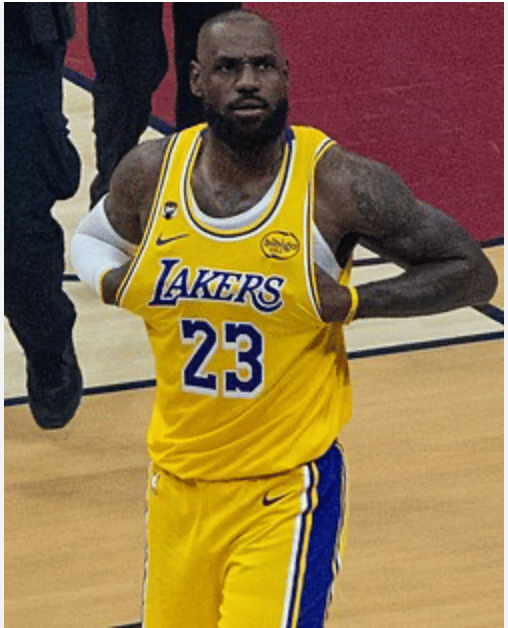
And then there's the freeze. LeBron James, 41 years old and entering year 24, has half the league's transactions on hold while he decides where he wants to finish his career. Denver can only offer the veteran minimum. Same with Miami and Philadelphia. Golden State and Cleveland look like the two real contenders for his services, mostly because both offer him a genuine shot at meaningful, on-ball impact rather than pure decoration. Whichever way he goes, Jokic already said he's not waiting around and plans to re-sign in Denver long term regardless. Everyone else in the league is stuck checking their phones.
That's the state of the NBA in one very expensive, very tense week. Boston chose a budget over a proven winner. Cleveland chose loyalty over leverage. New York found out its franchise player was carrying a broken hand the whole time. Indiana built quietly while nobody watched. The Clippers are recasting their whole identity. And LeBron is out here playing golf while the league holds its breath.
Full breakdown, full receipts, and a lot more argument in this week's episode. Listen wherever you get your podcasts, and catch the video version, clips, and this week's poll on YouTube. Subscribe so you don't miss the next one, because this offseason isn't slowing down anytime soon.
Catch up with us everywhere. On X, that's @frontrunnerpc and @Socially_FRPC. On Instagram, find us at @frontrunnerpc. And on YouTube, just search FRPCVince, or type Front Runner Podcast Collective into the search bar and we'll pop right up.