By Vince Carter and Special Contributor Soraya G.
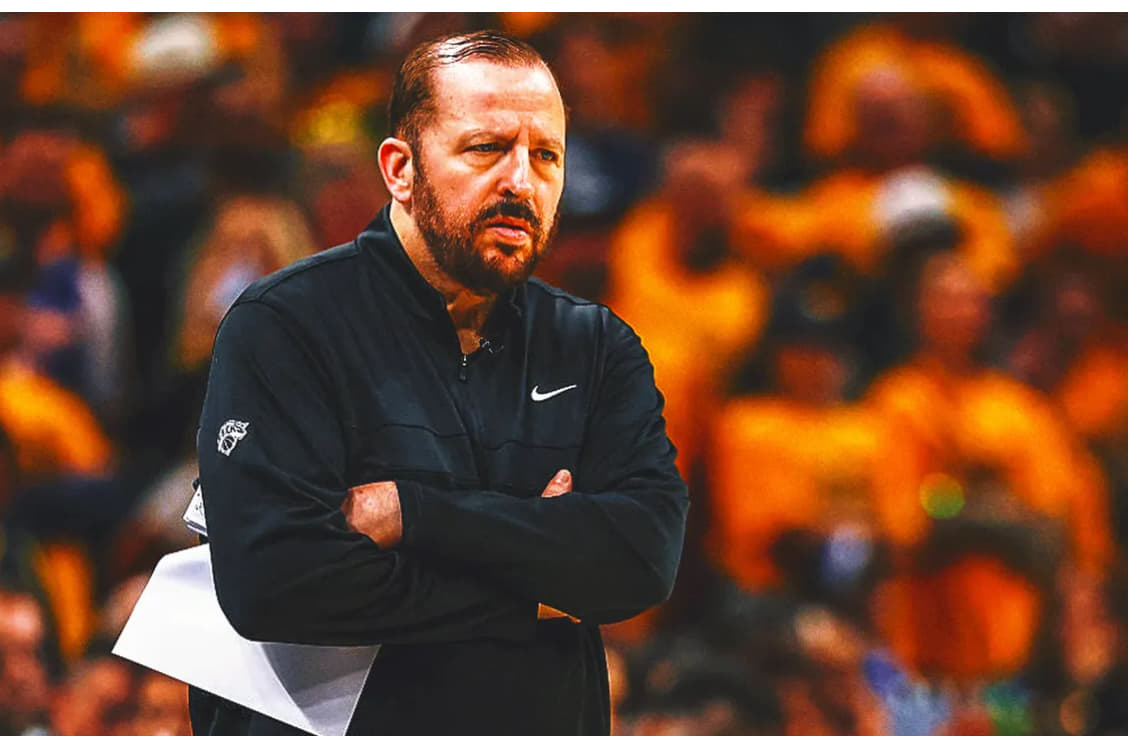
For the first time in a long time, the Knicks had structure. They had identity. They had Thibs. And then? They fired him.
In the first part of this no-holds-barred breakdown, Front Runner Podcast Collective dives into the shockwave that hit MSG when Tom Thibodeau was dismissed after one of the Knicks’ most successful seasons in decades. 50 wins. Eastern Conference Finals. Buy-in from the star. And yet, Thibs is out not for failing, but for failing to be enough.
Vince and Soraya don’t waste time. They frame the firing as more than a tactical adjustment it’s a cultural fracture. “You’re not firing a coach,” Vince says early on. “You’re firing a feeling.” And that feeling? Impatience.
Thibodeau’s track record speaks volumes: a .550 win percentage, second only to Van Gundy in team history. He brought grit back to the Garden, raising the floor with no-nonsense rotations and defensive focus. Yet, his greatest flaw became his downfall he maxed out what he had. And the Knicks front office? They wanted more.
Cue the split-screen metaphor: on one side, Thibs builds something from scratch. On the other? The $300 million roster, the prized pieces Brunson, Towns, OG still struggling to get over the hump. The question this podcast poses is direct and damning: “Was this a coaching failure, or was Thibs the scapegoat for flawed roster construction?”
There’s no evasion here. The conversation hits all the key marks: the loyalty Brunson showed in taking less money, the optics of throwing out a culture-builder right when the team started mattering again, and the pressure that now transfers squarely onto Leon Rose and the front office. Because once you fire the coach, the clock isn’t just ticking on the locker room it’s ticking on you.
The pod doesn’t canonize Thibs either. They critique his stubbornness, his minute distribution, his resistance to bench depth. But they challenge the idea that now was the time to make a move and they question whether any coach could survive a cycle where progress isn’t enough unless it’s perfect.
Part 1 isn’t about nostalgia. It’s about accountability. And what makes it powerful is the nuance: Thibs wasn’t perfect. But in a league built on illusion and impatience, he gave the Knicks something real. And now, that’s gone.
What replaces it? Unclear.
But whoever walks through that door next will inherit not just a team but a fuse already lit.
The Bench That Never Was: How Thibs and the Front Office Finally Collided!
If the first section gave us the why of Thibodeau’s firing, the second submission delivers the how it fractured. And make no mistake: it’s not about a blowout loss or a locker room revolt it’s about a creeping disconnect between the sideline and the boardroom.
This episode of Front Runner Podcast Collective rips into the tension that had been bubbling under MSG’s polish: the player development standoff. Soraya and Vince dissect how Thibs, known for squeezing every drop out of a starting five, repeatedly resisted the tools the front office was handing him. Most notably? The bench.
Deuce McBride barely saw the floor. Precious Achiuwa played a limited role. Even young assets like Tyler Kolek and Pacome Dadiet were ghosted when fans were screaming for experimentation, especially as injuries piled up. “You wanted Thibs to develop with the urgency of winning now,” Soraya notes sharply, “but that’s not how he’s built. He’s a wartime coach, not a sandbox coach.”
The pod drops receipts. Knicks' depth evaporated in the postseason, and while Brunson went nuclear, the offense became a static, over-reliant grind. And this wasn’t unforeseen. Synergy data, lineup analytics, the eye test they all pointed to the same issue: Thibs didn’t trust his bench. And the front office noticed.
This wasn’t just about wins. It was about control. The vibe? The Knicks front office expected Thibs to follow a “developmental directive.” Instead, he treated the rotation like a locked vault. And that, in the end, wasn’t sustainable not for a team with multiple draft picks, young talent, and expectations.
What makes this episode click is its balanced take: Thibs’ rigidity wasn’t malicious. It was his identity. He trusted grinders, not projects. But in a league where versatility, development, and depth are king, that mindset eventually clashes with any front office trying to future-proof a contender.
“You can’t ask a chef to use ingredients he doesn’t believe in,” Vince says. “But then don’t be surprised if the front office walks in and changes the whole menu.”
And here's the kicker: the fans saw it. The rotation gaps weren’t a nerd stat complaint they were obvious to anyone watching. So when Thibs got canned, it felt less like a betrayal and more like the final, inevitable break in a mismatched marriage.
So Thibs is out but the system tension he embodied? That’s still very much in play. Whoever comes next will need to be both teacher and tactician, because in New York, the court isn't just a battleground — it's a boardroom.
And right now, the boardroom’s on the clock.
The Fuse Is Lit: After Firing Thibs, the Knicks Are Out of Excuses!
The Knicks didn’t just fire a coach. They triggered a countdown.
In our last installment of Front Runner Podcast Collective’s deep-dive, the conversation shifts from what happened to what’s next. And it becomes clear fast: New York’s front office just stepped out of the shadows and directly into the spotlight.
Vince and Soraya pull no punches. This isn’t about a simple coaching change. This is about organizational DNA. Thibodeau’s firing created a power vacuum, and the real question becomes: Who gets to fill it? Is this now Brunson’s team? Will Leon Rose finally face public scrutiny? Or will the Knicks just paper over their internal fractures with a shiny new hire?
The discussion starts with tone: after the firing, there’s no clarity, just more questions. “The Knicks needed to explain the ‘why’ in a way fans could digest,” Soraya notes. “Instead, they left a void.” A void quickly filled with speculation, chaos, and pressure.
Then comes the pivot: if Thibs was the system, who’s going to define the next one? Because system hires matter. Vince tosses out potential names some player-friendly, others tacticians — but the takeaway is clear: you can’t just plug in a new face and expect the culture to stick.
Especially not with Brunson watching. Because now, everything hinges on his buy-in.
The pod emphasizes just how much weight Brunson carries. This isn’t just your best player this is your culture carrier. He took less money, showed up every night, and never threw anyone under the bus. So when he made that public comment backing Thibs? It wasn’t emotional. It was calculated. It was leadership.
And now? The front office has to prove it’s worthy of that trust.
The hosts explore a key tension that cuts through the episode: identity vs flexibility. Do the Knicks double down on structure and discipline? Or chase the ever-slippery “player-first” vibe that’s trendy but volatile? It’s not just a coaching question it’s a brand decision. A philosophical stance. One that fans will feel, even if they don’t articulate it.
“This isn’t a rebuild,” Vince says. “It’s a redefinition. And redefinitions come with risks.”
The pod closes with a shot of truth: firing Thibs wasn’t the mistake. Thinking that move alone fixes everything? That would be.
Now it’s the front office on the hot seat. The next 12 months will define the next five years. And the fuse they lit when they let go of Thibodeau? It’s burning fast. There is a Part 2 of the podcast and a blog for a Second Screen experience upcoming as well. Look Sharp! It will be coming in HOT!!!