By Vince Carter and Soraya G.
Spurs’ Backcourt Bottleneck: Fox, Harper, Castle and the High-Stakes San Antonio Experiment
De’Aaron Fox: The Veteran Engine (or the Odd Man Out?)
San Antonio didn’t just pay De’Aaron Fox. They anointed him. Four years, $229 million, the keys to the offense, and a neon sign above the locker room: this is your point guard. The question: does Fox still fit as the franchise driver, or is he about to get parked in the carpool lane by younger, hungrier talent?
Here’s the reality. Fox is in his prime, a lefty blur who turned Sacramento into “Light the Beam” playoff contenders after 16 years of darkness. His last three seasons? 23.5 points, 6.3 assists, 4.8 boards. Not empty stats, but proof of a player who can carry a team until the math changed. The Spurs bought Fox for the same reason everyone used to buy sports cars: acceleration, reliability, that rush of something proven.
But the NBA’s landscape isn’t built for comfort. The new San Antonio isn’t about loyalty; it’s about maximizing Victor Wembanyama’s window. Fox offers instant synergy: elite rim pressure, pick-and-roll dynamism, a defense ratcheted up by the presence of Wemby behind him. Even as his shooting fell off a cliff post-trade (a ghastly 27% from deep in San Antonio), he’s the guy who can close games, win late, and set a tone.
Yet, his biggest value the ability to dominate the ball may soon become the biggest bottleneck. With Dylan Harper and Stephon Castle demanding real minutes, Fox’s 34–38-minute diet is suddenly a crowded dinner table. There’s only so much oxygen for on-ball creators, and history says these experiments end with hard choices and hurt feelings.
If Fox embraces an off-ball evolution think Derek White with a jet pack he survives. If not? Even $229 million doesn’t guarantee you a seat at the next playoff table. In San Antonio, the only thing more valuable than experience is adaptability. And the clock is already ticking.
Sounds troubling that we are already willing to augment an All - Star’s position and role on the team, if Fox had a reputation as a more reliable shooter, I would not give this any consideration.
Dylan Harper: Rookie with the Blueprint (or a Gamble with the Ball?)
Every rebuild needs a jolt of new blood. For the Spurs, grabbing the number two overall pick and selecting Dylan Harper a prospect with NBA genetics, a pick-and-roll brain, and the audacity to believe he can run the show now, not later. The talent was too enticing to pass on even if created the glut of on ball facilitators for the Spurs to decide, which one will handle the rock mostly! The franchise took him second overall for a reason. That reason is that Harper is NICE!!! But here’s the rub: in a guard room full of ball-dominant talent, is Harper the key that unlocks the offense, or just another log in the jam?
Harper is special. Forget the college struggles he was asked to do everything at Rutgers, and still managed to show flashes of SGA-like tempo control, paint touch artistry, and advanced passing. His “bag” is deep: live-dribble reads, skip passes, crafty floaters, the pull-up from 15. The NBA game should, eventually, slow down for him. The catch? He’ll need to hit enough threes to keep defenses honest (and keep Fox/Castle from cramping the floor.
The stakes are simple but ruthless. For Harper to seize the controls, he must do more than dribble the air out of the ball he has to bend NBA defenses, orchestrate late-game possessions, and prove, by midseason, that he can command respect from a room full of grown men. That’s more than raw talent; it’s about confidence, poise, and a ruthless refusal to defer. Not to mention in a caldron of the most competitive conference and the Spurs eyeing a playoff spot. Wembanyama’s leap destroys patience and pushes down on the accelerator towards competing as of now!
If Harper pulls this off, Fox shifts to a slashing two, Castle becomes a defensive wing, and the Spurs get a three-headed monster that actually fits. But if Harper struggles or if the veterans freeze him out—San Antonio risks another “too many cooks” crisis, with precious developmental reps lost and another year of Wemby’s timeline burned.
This isn’t about making everyone happy. It’s about identifying the alpha, fast. Harper’s upside is real, but in the NBA, upside is a currency that loses value by the game. The Spurs can’t afford hesitation. Neither can Dylan.
Stephon Castle: From On-Ball Hope to Wing Glue (or Next in Line for a Trade?)
For months, Stephon Castle’s mantra was “I’m a point guard.” The Spurs drafted him, empowered him, and he delivered: Rookie of the Year, flashes of primary creation, defensive menace. But when the Fox-Harper axis landed in San Antonio, the story changed. Now, Castle’s future depends on whether he can pivot both literally and figuratively! It is all well and good to voice that you are a point guard but when two other on ball guards show up on your doorstep with better resumes as on ball guards, you must adapt to the new normal. All of these maneuvers are for what is best and what is right to surround Victor Wembanyama, that is a fact that cannot be overnighted!
Castle is that rare guard who eats up tough defensive assignments and lives for the dirty work, think OG Anunoby-lite with a little more on-ball juice. But with Fox entrenched and Harper hungry, Castle faces a choice: become the defensive connector on the wing, or risk getting squeezed out of the closing lineup entirely. The irony? His NBA survival depends on embracing a narrower, less glamorous role. A role he may well be best suited for.
Here’s the roadmap. If Castle can hit open threes (35%+ on real volume), chase wings, and become a chaos agent on defense, he’s the perfect modern 2.5. He’s got the size (6’6”+), the length, and enough athletic pop to check threes and some small fours. The archetype: a bigger Bruce Brown, with flashes of Josh Hart and the Spurs’ own Manu Ginóbili off the bench.
But ego is the real opponent here. If Castle bristles at moving off the ball, or stalls on the jumper, the logjam becomes untenable. The NBA graveyard is full of talented combo guards who wouldn’t sacrifice. Yet, if he adapts—embracing spot-ups, cutting, and slashing against tilted defenses he could become San Antonio’s x-factor, the guy who makes the Fox-Harper experiment more than just a fantasy.
In the end, the only thing harder than making it in the NBA is accepting a role that isn’t your dream. For Castle, the window to pivot is open but it won’t be for long.
Golden State’s Kuminga Conundrum: Trade Chips, Talent, and the Cost of Staying Relevant
The Warriors’ Reality Check – Nostalgia vs. Necessity
Golden State’s not just chasing wins they’re fighting time, payroll, and a very public identity crisis. Steph Curry’s still got the keys, but the dynasty windshield is getting foggy. As those championship banners age and the payroll swells, every personnel move matters more. Now, with the rhetoric of “Two Timelines”, that sounds just as awful as being "Light years ahead”, the Warriors face a stark reality with already bungling the Wiseman pick and having to punt on him, now Kuminga has been a revolutionary from the jump.
Here’s the deal: The Warriors are at a fork in the road that every aging contender dreads. You can see it in the front office’s frantic cost-cutting and the fanbase’s existential dread every time a legacy piece is rumored to be on the block. Steve Kerr’s system is built on trust, defense, and selflessness. But reality bites this roster is getting thin, expensive, and desperate for young legs that actually contribute to winning basketball. Kuminga, has never had a role that he has been satisfied with and Kerr has not seen enough defensive grit and rebounding to allow the mistakes that come along with a young player like Kuminga!
Kuminga, the former lottery pick, is caught between eras: the fast, loose, improvisational style that made the Warriors great, and the cold reality of today’s NBA economics. Golden State’s front office wants cap flexibility and asset value; Steve Kerr wants trustworthy defenders and off-ball buy-in. Owner Joe Lacob? He wants to have his cake, eat it, and order dessert for the whole table. It’s a collision course where sentimentality is the enemy and “potential” is a loaded word.
So what’s left? Kuminga’s flashes of athletic brilliance rim runs, transition dunks, moments where he looks like the next big thing are too rare, his lapses too common. There’s a reason why he gets yanked after a missed rotation, and why every promising spurt is followed by three games of invisibility. The coaches’ patience is thin; the payroll’s about to detonate. And there’s no more room for “potential” when the bar is championship or bust.
Golden State can’t run it back on vibes and hope. It’s time for harsh honesty and even harsher choices. The only question: do they trade the tantalizing athlete now, pay him more than they want, or risk losing him for nothing? The dynasty’s future may come down to whether the Warriors can let go of nostalgia and make a cold, clear-eyed call. If they can’t, the future’s not just uncertain it’s already slipping away.
Jonathan Kuminga’s Value: All Tools, No Toolbox?
Jonathan Kuminga is 22 years old, 6’8” with a 7-foot wingspan, and walks onto an NBA floor looking like he was built in a lab for playoff basketball. But in Golden State, that means almost nothing if you can’t carve out a defined role and deliver consistency under pressure. That’s the root of the Warriors’ anxiety: Kuminga has shown growth as a scorer and a transition finisher, but he hasn’t convinced anyone inside or outside the building that he can anchor a defense or execute with playoff discipline.
On paper, Kuminga’s per-36 numbers pop 20.5 points, 6 boards, nearly a block and a steal per game. He’s a walking “upside” poster, the kind of physical marvel scouts and fantasy GMs dream about. But watch the tape, and the holes are obvious: his defensive IQ is lagging, rebounding effort is spotty, motor runs hot and cold. The plays that make highlight reels are sandwiched between sequences where he looks lost off-ball, or is late on a rotation that leads to an open three. He wants more touches and opportunity, but shrinks from the dirty work that makes role players rich and keeps coaches sane.
Here’s why the front office is split. The “asset crowd” argues for locking Kuminga in around $19–21 million per year enough to keep him tradable, but not enough to break the cap. Analytics folks say he’s a $17 million “upside swing,” not a $25 million building block. Every exec’s nightmare: you pay for what he might become, not what he’s ever consistently shown. Scouts still believe in the leap, but time is running out. The problem is, that with acrimony and lack of trust from the player, it is difficult to to place him. As one talent evaluator said, “ So I am taking on a guy demanding opportunities and minutes and I don’t know if he is worthy of third option on a playoff team?” We have already witnessed Kuminga going to media to plead his case, there aren’t franchises lining up to take on that and pay Kuminga!
Golden State needs a Jonathan Kuminga just not the one they get on the floor. Unless he embraces rebounding, locks in defensively, and learns to thrive without the ball, he’s just another toolsy forward who’ll bounce around the league on “prove it” deals. The NBA is full of athletes who were one adjustment away from greatness. Talent is everywhere. Trust is currency. Kuminga hasn’t earned it yet. This season may be his last, best shot to flip the script and cash in on all that promise.
The Trade Market Game Of Bluff, Leverage, and the Price of Hope
If NBA trade season is poker, then the Jonathan Kuminga standoff is an all-night hand where everyone is bluffing. The Warriors don’t want to sell low, but they can’t keep waiting for a leap that may never come. Meanwhile, every team with a pulse and a hole at the forward spot wants to know: Is Kuminga a future star, or just another cautionary tale? Right now, the offers are as underwhelming as the progress reports. Golden State needs assets back for the now and the future but why would a franchise looking to buy low on Kuminga ever accommodate with all the warts of the player and the desperation of the Warriors?
The calls have come in Malik Monk, maybe a pick, a handful of “change of scenery” types. The Kings are sniffing around, but only if the protections are light. No one’s lining up to pay big for Kuminga’s highlight reels without proof of real progress. The Warriors are playing a dangerous game: sign him for $21.75 million, stay under the second apron, and keep the flexibility alive for a bigger swing at the deadline. But that no-trade clause? It’s a landmine. Give it up, and Kuminga can walk next summer, leaving nothing but regret and cap headaches.
Golden State’s best shot may be to lock Kuminga in now, flip him by February, and pray that some team’s faith in “the leap” turns into a meaningful asset. But there’s a catch: wherever Kuminga lands, he’ll have to swallow the same medicine accept a role, buy in on defense, and prove he can be more than “potential.” Because wherever he goes, stars run the show. He’s not getting handed the keys. The Sacramento scenario is telling: Keegan Murray wants to play the three, the Kings want more athleticism, but only if Kuminga actually commits to the dirty work he’s dodged in Golden State.
This isn’t just a negotiation it’s a referendum on the value of “hope” in roster building. For the Warriors, the only bad move left is indecision. For Kuminga, this is the last call to prove he’s more than hype. In a league where patience wears thin and payrolls balloon, bluffing only gets you so far. Eventually, you have to show your hand or fold.
Detroit on Delay? Offseason Grades, Rising Wings, and the Cade Cunningham Leap
Detroit’s Offseason: Graded on the Long Game, Not the Hype
If you only check offseason grades, you might think Detroit barely passed summer school another B-minus in the endless Pistons rebuild. But look closer, and the moves reveal a franchise quietly betting on process over panic, and chemistry over clickbait. The Pistons’ front office, coming off a string of underwhelming years and “too many projects, not enough progress,” finally pivoted from chasing fixes to building real infrastructure.
Start with context: Malik Beasley’s legal drama could’ve torched their only reliable spacer and his payday that Beasley most certainly going to receive. Instead, Detroit pivoted fast landing Duncan Robinson as a veteran shooter, swapping one “movement” threat for another, but with less chaos. Caris LeVert’s arrival as a jumbo secondary playmaker not only beefs up the second unit, but brings much-needed size and versatility compared to the departed Dennis Schroder. Tobias Harris returns as “the adult in the room,” a no-flash, steady-four who brings stretch, stability, and sorely needed playoff habits.
But the real juice? Optionality. The Pistons didn’t spend wildly or cash out picks they stacked vets to keep the kids insulated, and invested in guys who don’t demand the ball. Paul Reed and Isaiah Stewart are bangers off the pine, both willing to do the dirty work while Jalen Duren possibly the league’s youngest real center continues to fill out his game. With Ron Holland and Chaz Lanier lurking as “mystery box” of young lottery drafted talent, Detroit’s bench suddenly has depth and identity.
Don’t mistake caution for cowardice. The real test this year isn’t splashy trades or big names; it’s getting real data on who can stick. By not overreacting to last year’s injury mess and letting the young core actually play, Detroit is copying the OKC and Orlando playbooks let your lottery picks sink or swim, then pounce when the right trade appears.
Takeaway: The B-minus grade? That’s for impatient fans. The Pistons finally have a plan, not just a patchwork. When you’re still unwrapping the potential of Ivey, Ausar Thompson, and Cade Cunningham, restraint is the boldest move you can make.
Young Blood Rising: Ausar Thompson and Jaden Ivey’s New Chapter
Detroit’s ceiling will rise or fall on the arc of two young wings Ausar Thompson and Jaden Ivey, both of whom survived a year that would’ve derailed most sophomore and third seasons for the hyped prospects. Don’t get it twisted: this isn’t just about raw stats or draft pedigree. It’s about resilience, and about roles that matter.
Start with Ausar. The “defensive havoc” label almost doesn’t do him justice. After a scary blood clot, he missed 18 games but came back hunting every passing lane and living above the rim. When healthy, he posted a +2.4 defensive box plus-minus in the final month and held opponents to just 42% at the rim a monster stat for any wing, let alone a second-year player. The Pistons bled points without him (3-15 in his absence), and his return turned Detroit’s defense from “punchline” to “problem.” Coaches gushed about his “disruption plays” and leadership, and his confidence didn’t waver post-injury.
Offense? Still a work-in-progress. Ausar shot 32% (A vast improvement from rookie campaign) from three and a ghastly 23% on pull-ups, but found a rhythm cutting, running in transition, and hunting high-value shots. If he even becomes a league-average shooter, his two-way ceiling explodes.
Then there’s Ivey. Before a brutal leg injury, he was Cade’s ideal running mate 8.2 drives per game, 59% finishing rate, top-tier free throw rate, and a much-improved 36% from deep. His return to form isn’t just about stats; it’s about recapturing that chaos agent energy that bends defenses and speeds up Detroit’s attack. Ivey’s challenge: tighten up pick-and-roll reads (17% turnover rate), trust his leg, and shake off any Monty Williams residue from last year’s coaching carousel. May I also remind hoop lovers that Ivey was in the Monte Williams vortex of despair, languishing on the bench for Killian Hayes???
Bottom line: If Ausar continues as a lockdown wing and Ivey regains his attack-dog burst, Detroit instantly becomes a tough out and Cade finally gets the core around him that Detroit’s rebuild has promised for years.
Cade Cunningham: Franchise or Fable? The Evidence for a Leap
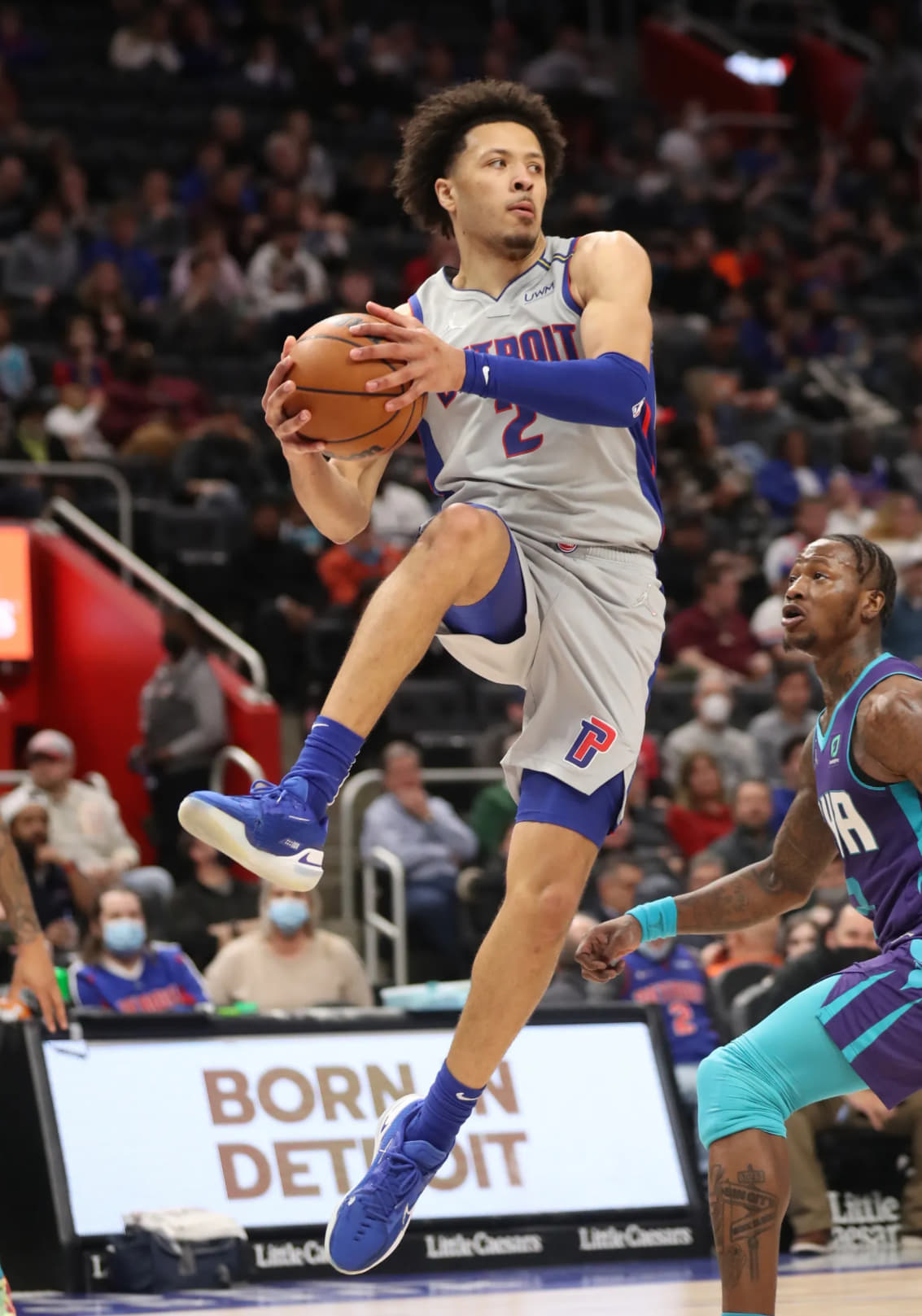
Every NBA franchise needs a face, and for Detroit, that’s Cade Cunningham a “main character” with the city’s hope riding shotgun. The question for 2025: Is Cade a true franchise elevator, or just another in the long line of “almost” stars to pass through Motown? Remember the debate between fan bases of Houston and Detroit on who got the right guy (Jalen Green or Cade Cunningham) fun times on X, I tell you!
Last season answered a lot. Cade averaged 26.1 points, 9.1 assists, 6.1 rebounds, 47% shooting, and 35.6% from three all with a ragtag lineup that rarely stayed healthy or consistent. He finished 7th in MVP voting, made All-NBA, and proved he can carry an offense even when defenders know exactly what’s coming. The real growth? Playmaking under duress. His assist rate was up, his usage near 33%, and his passing next-level for a player this young.
Sure, the turnovers spiked (4.4 per game, 16% rate off pick and roll), but context matters: Ivey and Ausar both missed big chunks, and Cade was asked to do everything, every night. Even so, Detroit’s offense and defense looked best when Cade, Ivey, and Ausar shared the court suddenly, the Pistons’ pace, spacing, and defensive pressure all ticked up. This season should be about who is Cade’s true running mate or do the Pistons need to trade for him. Cunningham is a certified franchise guy without a second or even a third masquerading as a second.
The leap from “star” to “franchise guy” is about impact. When Cade sat, Detroit fell apart. When he played, they looked like an actual NBA team. Scouts raved about his improved shooting, steady leadership, and the fact that he’s barely scratching the surface of his playmaking bag. The evidence is piling up: Cade is not just the face, but the engine and if Ivey gets healthy and Ausar keeps growing, that engine finally gets a full pit crew.
Verdict: Cade’s leap is real. Now, the Pistons just have to stay healthy, trust the young core, and resist the urge to shortcut the process. Do that, and Detroit’s “B-minus” summer might go down as the year the real turnaround quietly began.