By Vince Carter
Kawhi, Ballmer, and the $28M Paper Trail
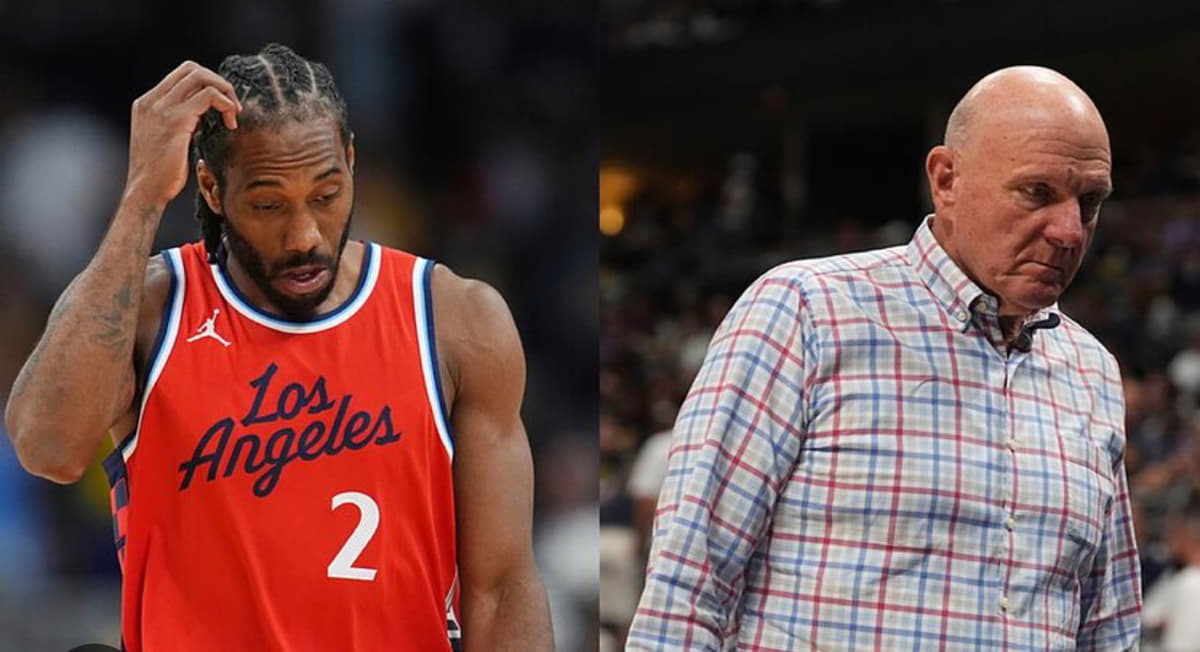
By early September, the NBA had already scheduled tip-off drama, but the biggest headline came from a courtroom, not the court. At the center: Kawhi Leonard, his uncle Dennis Robertson, and Clippers owner Steve Ballmer.
The story reads like a Scooby-Doo script. In 2021, Ballmer invested $50 million into Aspiration, a now-defunct fintech. Months later, Aspiration inked a $28 million endorsement with Leonard’s LLC, structured as quarterly payments through 2026. By 2025, Aspiration had collapsed into bankruptcy, listing the Clippers and Leonard’s company among its creditors.
The allegation: Ballmer’s ownership stake in Aspiration created a circular pipeline owner → sponsor → player—that effectively added millions to Leonard’s Clippers deal outside the salary cap. The team denies involvement, arguing stars regularly sign with arena sponsors. But the timing, overlapping contracts, and absence of public deliverables fuel suspicion.
Uncle Dennis looms again. In 2019, he reportedly sought perks from both the Lakers and Clippers before Kawhi chose L.A.’s “other” franchise. Back then, Commissioner Adam Silver found no punishable paper trail. Now, the question is whether those side asks evolved into more sophisticated compensation structures.
History offers precedent: in 2000, the Timberwolves’ Joe Smith deal cost the franchise $3.5M in fines and five first-round picks. Today’s CBA still allows fines up to $7.5M, draft forfeiture, or even contract voiding. The nuclear option stripping Leonard’s extension feels unlikely, but even losing two firsts would gut the Clippers’ carefully staged Intuit Dome era.
Why it matters: the NBA must preserve competitive balance for small markets, while Ballmer’s Clippers face the possibility of sanctions just as they try to anchor their $2B arena. It’s not only about cap math it’s about optics, trust, and whether the league believes this was naivete or intent.
Clippers in the Crosshairs
The NBA’s two loudest storylines this September couldn’t be more different—yet both hinge on how contracts intersect with power.
In Los Angeles, the Kawhi Leonard–Aspiration scandal keeps tightening. Investigators are probing whether Clippers owner Steve Ballmer’s $50M stake in the failed fintech indirectly bankrolled Kawhi’s $28M endorsement deal. The mechanics look suspicious: owner → sponsor → player, with little evidence of real deliverables. Skeptics call it a salary-cap workaround. Defenders note stars routinely sign with arena partners.
Uncle Dennis is back in the frame. From Kawhi’s Spurs exit to the Lakers–Clippers free agency tug-of-war, Dennis Robertson has always tested the edges of what perks a star can secure. If investigators tie Ballmer’s money directly to Kawhi’s contract, penalties could mirror the Timberwolves’ Joe Smith precedent forfeited picks, multimillion fines, even voiding deals.
The stakes extend beyond cap math. The Intuit Dome, Ballmer’s $2B arena and centerpiece of the franchise’s 2020s identity, hosts the 2026 All-Star Game and 2028 Olympics basketball. Sanctions now would gut roster flexibility just as the franchise showcases itself on a global stage.
Meanwhile in Brooklyn, Cam Thomas flipped restricted free agency on its head. Rather than signing a long-term extension, the 24-year-old scorer accepted the $5.99M qualifying offer, locking him into one year before unrestricted free agency in 2026. That move strips the Nets of trade leverage Thomas can veto any deal and puts every possession this season under a spotlight.
Executives are split on his value. Some see a 24 PPG rising star; others see a high-volume scorer with tunnel vision. Either way, Brooklyn faces the nightmare of losing its leading scorer for nothing. As one insider put it: “If your guy takes the qualifying offer, you failed.”
For the Clippers, the risk is existential. For the Nets, it’s managerial malpractice. Different coasts, same theme: how fragile a franchise becomes when money and talent collide off the court.
The Los Angeles Clippers’ season is under a cloud darker than any smog. At the center: Kawhi Leonard’s $28M endorsement deal with bankrupt fintech Aspiration, linked by whispers to Steve Ballmer’s $50M investment. The NBA’s investigation could trigger fines, draft-pick forfeitures, or in the nightmare scenario, voiding Kawhi’s contract.
Uncle Dennis, long cast as Kawhi’s shadow agent, lurks again. From the Spurs exit to the Lakers free agency tug-of-war, he’s been the throughline of perks, asks, and whispers. If investigators tie Ballmer’s money directly to Kawhi’s contract, history warns the hammer could fall as hard as the Joe Smith–Timberwolves scandal of 2000, which cost Minnesota five first-round picks.
Cam Thomas Flips the Script on Restricted Free Agency
The Brooklyn Nets’ summer of indecision just detonated into a nightmare headline: Cam Thomas, 24 years old and fresh off averaging 24 points per game, signed the $5.99M qualifying offer.
What does that mean? Brooklyn has him for one more year and then zero control. By accepting the QO, Thomas locked himself into a one-year deal, gained veto power over trades, and positioned himself to walk as an unrestricted free agent in 2026. Restricted free agency, designed to protect teams, has flipped into a trapdoor for the Nets.
This wasn’t a romantic “bet on yourself” move. It was a power play born of mistrust. For months, Brooklyn’s front office couldn’t land on his value some execs saw a $10M-per-year scorer, others a $30M-caliber bucket-getter. Instead of committing to even a short two-year bridge deal, the Nets froze. Thomas responded by taking the nuclear option.
Now every possession in 2025–26 doubles as an audition tape for 29 other teams. He’ll hunt shots, keep his scoring average north of 24, and remind suitors that he can create in crunch time. Meanwhile, Brooklyn plays knowing its best scorer may vanish for nothing.
The irony: after drafting five rookies built to pass, they hand the offense to two of the NBA’s greenest lights Thomas and Michael Porter Jr. That’s not development; that’s a paradox.
Front offices privately call a qualifying-offer acceptance a scarlet letter proof of failed negotiations. For the Nets, it’s asset malpractice. For Thomas, it’s leverage reclaimed.
Why the Qualifying Offer Stings
Restricted free agency (RFA) is designed to protect teams. Draft, develop, and you should have the inside track to keep your guy. Instead, Brooklyn got boxed in.
By taking the qualifying offer, Thomas locked himself into a one-year deal that:
Can’t be traded without his consent.
Expires into unrestricted free agency in July 2026.
Leaves Brooklyn with zero control or matching rights.
“If your guy takes a qualifying offer, you failed. It’s a scarlet letter for a front office.”
The Nets raised Thomas, fed him minutes, and now risk losing him for nothing just as he’s entering his prime.
The League’s Split on Cam
Around the league, execs couldn’t agree on Thomas’ value. Some said two years, $20 million total. Others saw a three-year, $90 million player. That gulf in perception scorer vs. tunnel-vision chucker paralyzed Brooklyn’s front office.
While they hesitated, Thomas unfollowed the team on Instagram. Negotiations soured. Then came September 4th, the hammer drop.
Now every bucket Cam scores in 2025–26 doubles as an audition tape for 29 other teams.
Brooklyn’s Paradox: Built to Pass, Led by Gunners
The irony? Brooklyn just drafted five rookies known for vision, passing, and ball movement. Then they turned the offense over to Cam Thomas and Michael Porter Jr. two of the league’s most notorious gunners. I cannot wait for the Porter Jr. clap for the ball!
That means Igor Denim’s playmaking, Nolan Traoré’s rhythm, Danny Wolf’s ball-handling all risk being smothered in the shadows of heat-check machines.
“Brooklyn just drafted five guys built to pass the ball, then handed the rock to two guys built to never pass it.”
It’s theater more than basketball. Get your popcorn and maybe your groans.
Cam Thomas’ quiet rebellion in Brooklyn reminds us: from individuals to institutions, everyone’s recalibrating leverage.
All-Star Reset: USA vs. World Becomes the Stage
The NBA has tried everything to juice All-Star Weekend: playground captains, Elam endings, draft gimmicks. None stuck. In 2026, the league is betting on something bigger pride. The All-Star Game will pit Team USA against Team World.
It’s not just a tweak. It’s an admission: basketball’s power map has shifted.
The World’s MVP Era
The last nine MVPs? Eight went to international players. Most recently, Shai Gilgeous-Alexander claimed the 2025 award, following a run that put Oklahoma City back in the West’s elite tier. He joins the lineage of Nikola Jokić, Giannis Antetokounmpo, Joel Embiid, a string of global superstars redefining what an NBA alpha looks like.
Add Victor Wembanyama, who publicly criticized the All-Star Game for being “a show, not competition,” and suddenly the World side isn’t just talented — it’s motivated. Wemby has been open about wanting the league’s showcase to mean something, and his presence turns that talk into action. Pair his words with Shai Gilgeous-Alexander’s MVP rise, Luka’s orchestration, Jokić’s surgical dominance, and Giannis’ relentlessness, and you have a roster that looks less like a novelty lineup and more like a championship core dropped into an exhibition setting.
These aren’t outsiders anymore; they’re shaping the modern game. The World team reflects the league’s current hierarchy — MVPs, Finals MVPs, generational rookies — all carrying the chip of proving they can not only dominate in June but also embarrass Team USA in February. For them, this isn’t an All-Star Game; it’s a referendum.
“For the World side, this isn’t about highlights it’s about respect.”
And if Wembanyama’s critique becomes the emotional trigger? Expect the World squad to treat the stage like a playoff proving ground, finally forcing Team USA to answer in kind.
“If the World side wins, it’s not an upset it’s confirmation.”
For years it has been a Monday Morning QB on how bad the All-Star Games have been, an All-Star Game could feel like real competition, not just highlight trading. Imagine Luka orchestrating crunch time, Shai slashing, Wemby patrolling the rim, and Giannis powering downhill.
The American Counterpunch
Team USA isn’t short on firepower. The likely 2026 roster features Anthony Edwards, Devin Booker, Steph Curry, Kevin Durant, LeBron James, Jalen Brunson, and Paolo Banchero.
Brunson has emerged as New York’s iron-willed closer, while Banchero adds frontcourt versatility and a bruising edge. Combined with the league’s established elite, America still boasts unmatched depth wave after wave of guards and wings who can stretch the floor or collapse a defense.
But pride cuts both ways. What if the U.S. gets smacked in its own house? What if Luka calls for a LeBron switch, or Wemby dunks through Durant? The optics go global and every Olympic cycle after carries that footage. Just think of post All-Star break locker room banter...
Scene: Lakers locker room, first day back after All-Star weekend.
LeBron (grinning but with some bite):
“Man… you really had to do me like that in front of everybody? Callin’ me out on switches like I’m just some vet hangin’ on?”
Luka (smirks, tying his shoes):
“Bron, you know me. I see a matchup, I take it. It wasn’t disrespect it was the World team proving a point.”
LeBron (raises eyebrows, half-laugh):
“Proving a point? You were pointing at me, Luka. In my city. Over and over!”
Luka (leans forward, serious now):
“Yeah, because it mattered. Everyone thinks USA owns the league. I had to show the world can win, too. That’s pride. But here? We’re family. I’d never go at you like that in purple and gold.”
LeBron (shakes his head, then chuckles):
“You know that clip’s gonna run all year. Every arena, every headline: ‘Luka cooks LeBron at All-Star.’ You better drop 30 a night for us so people remember which side you’re on.”
Luka (grinning, gives a quick nod):
“Deal. But remember, you raised me on this best players don’t hide. Even from you.”
LeBron (smiles, daps Luka up):
“Respect. Just know next practice, you’re not getting that switch. We’re running it back, 1-on-1.”
Luka (laughs):
“Careful, old man. You might regret asking for that rematch.”
Stakes Beyond Ratings
Make no mistake: NBC’s new broadcast deal shaped this. The NBA needed a February tentpole that wasn’t just dunks and defense-free quarters. “USA vs. World” sells harder than a draft, harder than nostalgia.
The risk? If players don’t care, it flops spectacularly. But if they do? It could be the closest the NBA gets to recapturing Dream Team energy.
Why Fans Should Care
If Team World dominates, it validates what MVP voting already told us: the NBA is a global league, not just an American one.
If Team USA reasserts itself, it’s a reminder of depth, history, and the country’s ability to reload.
Either way, it finally gives All-Star Sunday something it has lacked for years stakes.
“This isn’t Team LeBron vs. Team Giannis. It’s USA vs. everyone else and everyone else might be better.”
Bottom Line
The NBA is rolling dice with All-Star Weekend, and the payoff could reshape how fans experience February basketball. Whether it becomes a permanent feature or a one-off gimmick depends on one thing: do players feel the pride, or treat it like another exhibition?