By Vince Carter May 23rd, 2025
The 2025 Conference Finals are not just games. They are a reckoning.
From Oklahoma City to Indianapolis, the message is clear: the NBA's heartland is rewriting the power codes of playoff basketball. While traditional markets fade under the glare of solo brilliance, the Thunder and Pacers are showing us what happens when structure is the star.
This isn't about "upsets" anymore. It's about confirmation. What we’ve seen across these Game 2s isn't lightning in a bottle it’s blueprint basketball.
The Thunder didn’t just beat Minnesota. They installed a new standard. With only eight turnovers, OKC turned every Timberwolves misstep into a clinic on modern execution. Shai Gilgeous-Alexander, fresh off hoisting the MVP trophy, dropped 38 points with a calm that bordered on cruel. “He’s not chasing the game, he’s bending it,” Vince said on-air. That isn’t just good tape it’s gospel. SGA isn’t improvising. He’s reading from a script the rest of the league hasn’t seen yet.
But it’s not just SGA. Jalen Williams rebounded from playoff inconsistency to post a 26–10 double-double. Chet Holmgren made a three-time Defensive Player of the Year look like an optional setting. This isn’t raw talent overpowering chaos. It’s organized dominance.
Flip to the East and the story rhymes.
The Pacers went into MSG and dismantled a Knicks squad crowned in celebrity and nostalgia. Pascal Siakam put on a game-two performance reminiscent of 2019 Kawhi: 39 points, 6 rebounds, 4 assists, 4 steals—and most importantly, relentless mismatch exploitation. He didn’t just score; he tilted the court.
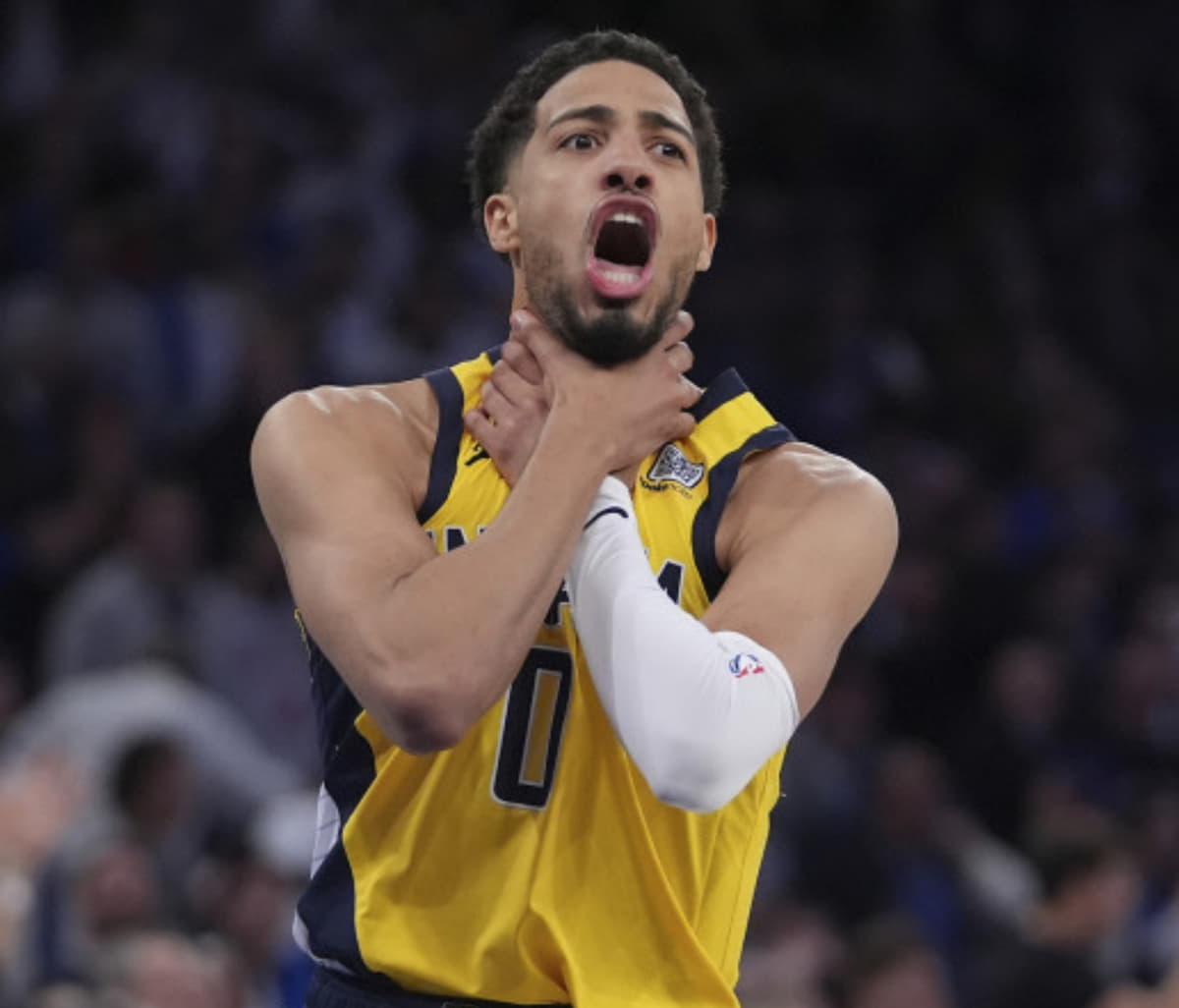
And when New York over-helped? Aaron Nesmith made them pay. Ben Sheppard stood tall. Tyrese Haliburton, even in an off-shooting night, ran the system like a maestro. Eleven assists, only two turnovers. He is the league’s emerging tempo deity.
Together, Indiana and OKC are putting a clinic on how modern basketball thrives on cohesion, versatility, and preparation. No wasted motion. No solo over-dribbling. Just teams that know who they are, what they want, and how to go get it.
This isn’t just about May basketball. It’s a warning shot for June, July, and every draft war room that follows.
🧩 Bench Minutes = Belief: Why Depth Isn’t Just a Luxury, It’s an Identity
The deeper you go into May, the shorter most teams shrink. Eight-man rotations become seven. Seven becomes six you can actually trust. Star legs get heavy. Role players freeze out. Margin evaporates. That’s what history says.
But that’s not what the Indiana Pacers and Oklahoma City Thunder are doing.
In fact, these teams are flipping the script.
While the Knicks and Wolves leaned into exhaustion treating their benches like decorations the Pacers and Thunder kept running nine-deep in conference finals games. Not garbage minutes. Not “break-in-case-of-injury” shifts. Real, rotational trust.
And that’s not just strategy. That’s culture.
Take Indiana. T.J. McConnell, Ben Sheppard, Tony Bradley none of them are names trending on hoops Twitter. But in Game 2 at MSG, they posted +5, +8, and +1 respectively. That’s not filler, that’s functional. Carlisle didn’t panic. He leaned on development. Sheppard ran his motion cuts like a third-year vet. McConnell disrupted New York’s flow in every second he played. And it worked.
Oklahoma City’s no different. When Cason Wallace hits the floor, you can feel Daignault’s confidence radiate through the screen. It’s not about stat-stuffing. It’s about energy transfer. Wallace pressures ball-handlers, cuts with intent, and gives SGA a breather without dropping the scheme. That’s rare for a rookie in the playoffs. That’s even rarer when the games are this tight.
Contrast that with the Knicks. New York only trusted eight. And even that felt generous. Miles McBride, once a rising defensive cog, looked invisible. the bench barely sniffed real action. Meanwhile, Brunson played hero ball in overtime zero assists, five straight ISOs, no counters, no trust. It wasn’t lack of effort. It was lack of oxygen.
Same in Minnesota. The Wolves’ starters looked spent chasing cutters off ball screens by the third quarter. Gobert and Conley were hunted relentlessly. No wrinkle. No recalibration. No lift off the pine.
This is what happens when your bench is only a parachute.
Oklahoma City and Indiana built theirs like jet fuel.
It’s also a reminder that playoff resilience isn’t just about stars going supernova. It’s about whether your sixth, seventh, and ninth guys believe they matter when it counts. Because if they do?
They move with purpose. They defend with legs. They make corner threes in Game 5.
And that’s how you steal games. That’s how you win series.
This isn’t depth for depth’s sake. This is belief. Embedded into the system. Reinforced by the coaching staff. Activated when it matters most.
And if the coastals don’t adjust? They’re not just going to lose this year.
They’re going to lose the next five.
🛡️ Defensive Identity = Offensive Weaponry
In the modern NBA, defense isn't just about denial it's about dictation.
The two teams up 2–0 in the Conference Finals understand this intimately. The Pacers and Thunder aren't winning because they're making stops. They're winning because their defensive DNA powers their entire ecosystem.
You saw it in Game 2. You felt it.
OKC turned Minnesota over just eight times. Not a staggering number but the timing of those turnovers? Devastating. Third quarter. When the Wolves tried to punch back, tried to lean into a run. That’s when OKC suffocated them.
They don’t just get stops. They convert them into storms.
Shai Gilgeous-Alexander (NBA's MVP) pulling Rudy Gobert out to the wing, drawing a second defender, and hitting Jalen Williams in stride for a reverse? That wasn’t improv. That was predicated on prior disruption a transition sprung by a misread, a loose handle, a bad angle.
And that’s the trick: OKC doesn’t just defend. They choreograph collapse.
Same with Indiana. Against New York, they weaponized positional discipline. No gambling. No hero rotations. Just pressure, coverage, recovery, repeat. And when the Knicks got impatient? That’s when Tyrese Halliburton started slicing up tilted defenses. Kickouts to Nesmith. Skip passes to Sheppard. Siakam feasting inside.
It’s all connected.
The defense squeezes you until you break. The offense punishes your scramble.
The Knicks and Wolves? They defend in fragments. Rim protection here. A chasedown there. But without synchronized pressure or transition synergy, it's all reactive. You’re always backpedaling. You’re never setting tempo.
Meanwhile, Indiana and OKC defend like they're on offense. Every deflection is a first pass. Every rebound is a runway.
That shift treating defense as a source of offense, not a separate phase is the subtle revolution happening before our eyes.
Let’s be honest: most of the league still defends with the mindset of survival. These two teams? They defend like it’s their preferred mode of attack.
This is why you’re seeing real-time collapses from teams with more All-Star nods and bigger payrolls.
Because defensive cohesion isn’t sexy. But it’s deadly. And in May? It travels.
OKC and Indiana aren’t just holding their lines.
They’re launching from them.
🔁 Lineup Elasticity and Matchup Mastery
The Thunder and Pacers aren’t just winning matchups they’re removing the idea of fixed matchups entirely.
That’s what lineup elasticity is. It’s not just about who you play. It’s about how many different ways your players can exist on the floor.
This postseason has become a masterclass in that principle.
Let’s start with Indiana.
Rick Carlisle has been orchestrating three-guard lineups late in games—not because he’s desperate, but because it’s strategic. Haliburton, Nembhard, and McConnell aren’t just coexisting—they’re cooperating across roles. Haliburton initiates. Nembhard scales up to wing-sized defensive assignments. McConnell pressures entry passes like it’s Game 7 every possession.
This isn’t just quirky rotation. It’s modular identity.
On one possession, Halliburton runs a ghost action to create a short-side angle. Next time down? He’s off-ball, catching a skip pass from Nembhard. The symmetry doesn’t break. The threat reshuffles.
Meanwhile, on the other side, the Knicks run ISO after ISO hero basketball in a system league. Every adjustment is reactive. Every coverage change is a compromise. Because they’re built to withstand the playoffs, not shape them.
Now cross to OKC.
Daignault’s group isn’t just young they’re malleable. You’ve got Jalen Williams, a wing who initiates like a guard and rebounds like a big. You’ve got Chet Holmgren, defending in drop one possession and switching the next. Lu Dort pinches and tags with linebacker force, then launches corner threes the next trip down.
This is what modern matchup mastery looks like:
One action triggers multiple reads.
One lineup yields four coverages.
Your fifth option might be the most dangerous man on the floor.
The Thunder ran nine cutter actions in the third quarter alone in Game 2, and scored on six of them. That’s not freelancing. That’s sequencing. That’s knowing who’s guarding who, and when to make that irrelevant.
This elasticity puts immense stress on teams with rigid cores.
Minnesota’s bigs can’t stay in space.
New York’s wings can’t create when the ball sticks.
The coastals are built for matchups. The heartland is built to move past them.
When Carlisle plays nine and trusts his bench, it’s not because he’s stubborn. It’s because he understands that adaptability is conditioning. Every man who sees the floor is not just giving rest they’re giving range. A broader set of options. A new angle of pressure.
And the teams who can't flex?
They break.
🧬 The Prototype Has Changed
You can feel it in every possession this postseason: the league isn’t just shifting it is shedding old archetypes.
We’re watching the final stages of the “heliocentric star era” quietly dissolve under the weight of coordinated systems, defensive multiplicity, and positionless orchestration. And that’s not just changing the postseason.
It’s redefining the draft board.
In the past, you'd scout the next Luka, the next Tatum, the next Harden—scorers with gravity, creators with flash. But in 2025? Front offices are hunting for something different:
Wings who move without needing volume.
Bigs who protect without anchoring.
Connectors who don’t need the ball to control the game.
In other words: players who could step onto Indiana or OKC tomorrow and make the system sharper.
That’s where Cooper Flagg enters not as a prospect, but as a signal or beacon to switchable defensive wings who can turn franchises fortunes as soon as he enters the facility!!!
The FRPC war room doesn’t just grade him as a consensus No. 1. We grade him as a culture piece. Because Flagg’s game isn’t about domination. It’s about scalability. He doesn’t need a role written for him—he writes himself into any system. Play him next to Haliburton? He cuts and rotates. Stick him behind SGA? He switches 1 through 4, blocks shots, hits the wing triple.
Think: Andrei Kirilenko with a handle. Scottie Pippen with vertical pop. Garnett’s fire with Pippen’s instincts.
His BPM at Duke: +10.6. His defensive rating: elite.
He can guard at the point of attack, then erase at the rim. He’s a forward. A hub. A ghost screen. A transition engine. A back-line editor. A possession extender.
Cooper Flagg doesn’t disrupt your system. He becomes its most intelligent version.
And that’s why, as OKC and Indiana sprint toward the Finals, scouting departments are circling the wings who scale. The question isn’t: “Can he lead a team someday?” It’s:
“Could he help a system win today?”
The old prototype is dying.
The new one isn’t louder. It’s smarter. Quieter. More surgical.
And in 2025? It wears a Duke jersey, reads coverages like a vet, and defends like he’s rewriting your clipboard.
🎓 What the Draft Can Learn From May
Every year, the NBA Draft promises upside. Star potential. "Ceilings."
But in May, all that theory hits reality.
What the 2025 Conference Finals are revealing in real time—is that the future of team-building isn’t about assembling highlight tapes. It’s about assembling cohesion. Roles. Adaptability. Two-way trust.
This month, Indiana and Oklahoma City haven’t just been dominant. They’ve been instructive. And if you’re running a front office, or trying to forecast who’ll stick, it’s impossible to ignore what they’re modeling.
These teams aren’t chasing unicorns.
They’re investing in scalable pieces with discipline and identity.
That’s why VJ Edgecombe is rising on boards. He’s not a heliocentric scorer. He’s a defensive switchblade who gives your team possession integrity.
It’s why Kon Knueppel is a front-office darling. He’s not explosive, but he cuts, he reads, he shoots 41% from deep, and he won’t kill your spacing in high-leverage minutes.
And it's why Cooper Flagg, the consensus No. 1 would be just as valuable to OKC or Indiana tomorrow as he would to a lottery rebuild.
You don’t need a player who wants to lead.
You need one who makes the system itself more lethal.
This isn’t about ignoring star talent.
It’s about redefining what that talent looks like once the ball tips in Game 6.
Because in the playoffs, shot creation without shot selection is noise.
Athleticism without assignment discipline is a trap.
Volume scoring without buy-in is expensive cardio.
The new model is clear:
Players who move off-ball with timing, not randomness.
Wings who can survive on switches and make the extra pass.
Prospects who don’t shrink in minimized usage but expand their value.
That's what the Draft can learn from May.
So when a GM walks into a war room this June talking about “fit over flash” or “floor over flair,” it won’t be cautious language.
It’ll be championship language.
Because the postseason doesn’t care how you look in workouts.
It cares who you are when rotations tighten, tempo shifts, and the whole system’s on fire.
That’s where Indiana and OKC live now.
And that’s where the future of scouting needs to start.
The next decade won’t belong to the loudest stars.
It’ll belong to the players who can amplify a winning frequency.
And if the league is listening?
The Draft will finally start echoing May.