By Vince Carter and Soraya G.
The Little Things Add Up to Wins
It wasn’t the 40-point nights that shifted these series. It was everything just beneath the surface — the plays you don’t rewind, but the ones that decide games anyway.
Josh Hart crashing backwards into the baseline to secure a rebound the Knicks had no business getting. Karl-Anthony Towns, cold through three quarters, walking to the line with Dominican Mother’s Day on his shoulders — then stepping into something only he could access. Oklahoma City chasing down their own miss, re-setting, and scoring on the third action of a busted set.
That’s what changed everything. Not highlights. Accumulations.
This week, the difference wasn’t talent. It was timing. Who knew their role. Who recognized the moment. Who could stay present when the game tilted. These weren’t blowouts. These were 48-minute balancing acts where a single decision could redirect a quarter.
As Russillo would put it, you don’t need to dominate. You just can’t flinch. And Lowe’s lens sharpens it further — what matters is what happens when the set breaks down. Who rotates. Who communicates. Who doesn’t bail out of the second effort. That’s where the gap lives now.
Hart didn’t just play well — he got trusted. Coming off the bench, he logged 34 minutes and finished the game. He rebounded in traffic, iced free throws, and gave New York continuity without Randle. Those aren’t stats you highlight in postgame, but they’re why Thibodeau never pulled him.
In OKC, it was system over splash. SGA and Jalen Williams didn’t chase matchups. They let the game move through them. The Thunder didn’t explode — they drained. The Wolves had louder moments. OKC had fewer mistakes.
Then there was Indiana. No viral highlights. No first-name-only superstars. But when they closed Game 2 with a six-pass sequence that ended in a corner three, you saw it: a team that believes in the system more than the spotlight. That possession didn’t just tie the game. It told you they’re not guessing anymore — they’re building.
That’s the connective thread. These games weren’t about dominance. They were about control — not of tempo, but of decision-making. Teams that didn’t waste possessions didn’t waste wins.
From the studio, this week didn’t feel electric. It felt intelligent. You could hear it in the live reactions — not hype, but respect. We didn’t cheer. We leaned in.
And one off-mic line that belongs in the record:
Hart rebounds like the ball owes him money.
Not a stat. A worldview.
Josh Hart and the Value of Invisible Work
If you were watching just for points, you might have missed it. But if you were watching for the rhythm of the game, you saw it plain as day.
Game 3 didn’t hinge on a superstar takeover. It turned on the shoulders of a player who gave everything without needing the spotlight. Josh Hart didn’t start, but he finished. Thirty-four minutes, ten rebounds, pressure-free free throws to close it out. What he gave the Knicks wasn’t volume it was timing.
You don’t always see this in the stat sheet. It’s the type of performance that fills in all the gaps. Hart rotated without hesitation, fought for position he had no business winning, and made sure second-chance points stayed in New York’s hands. His work wasn’t flashy. It was foundational.
And that’s what makes him essential. The kind of player who plays downhill emotionally. He’s not waiting to be called on he’s already there, fully engaged, shaping tempo by sheer insistence. When the Knicks needed identity without their All-Star forward, they got it from Hart's refusal to play any differently than he always does.
There’s something about the way he rebounds that stands out. At 6’4”, it’s not supposed to be his job. But he makes it his. You can see it in the timing, the angles, the physical commitment. He doesn’t wait for the ball to come to him. He attacks it like it’s trying to leave without permission.
This kind of effort doesn’t come with headlines. But it wins film sessions. Coaches see it. Teammates feel it. These are the players who define the temperature of a locker room the ones who don’t change based on role, minutes, or shot count. You could bench him or start him and he’d give you the same game. That’s not sacrifice. That’s DNA.
From the producer’s chair, I’ll say this: Hart was the “Baby Laker” I most wanted to keep. Not because he’s loud on the floor, but because he’s consistent. You can plug him into any system, any series, and his work translates. He doesn’t need to prove anything. He just keeps showing up.
There was a moment late in Game 3 that captured it all. Loose ball, final minute, three defenders closer to it. Hart got there first. Didn’t leap, didn’t lunge just moved with intent. Fouled, hit the free throws, closed the door. The kind of possession you feel long after the buzzer.
He didn’t take over the game. He just made it make sense.
KAT and the Emotional Pivot
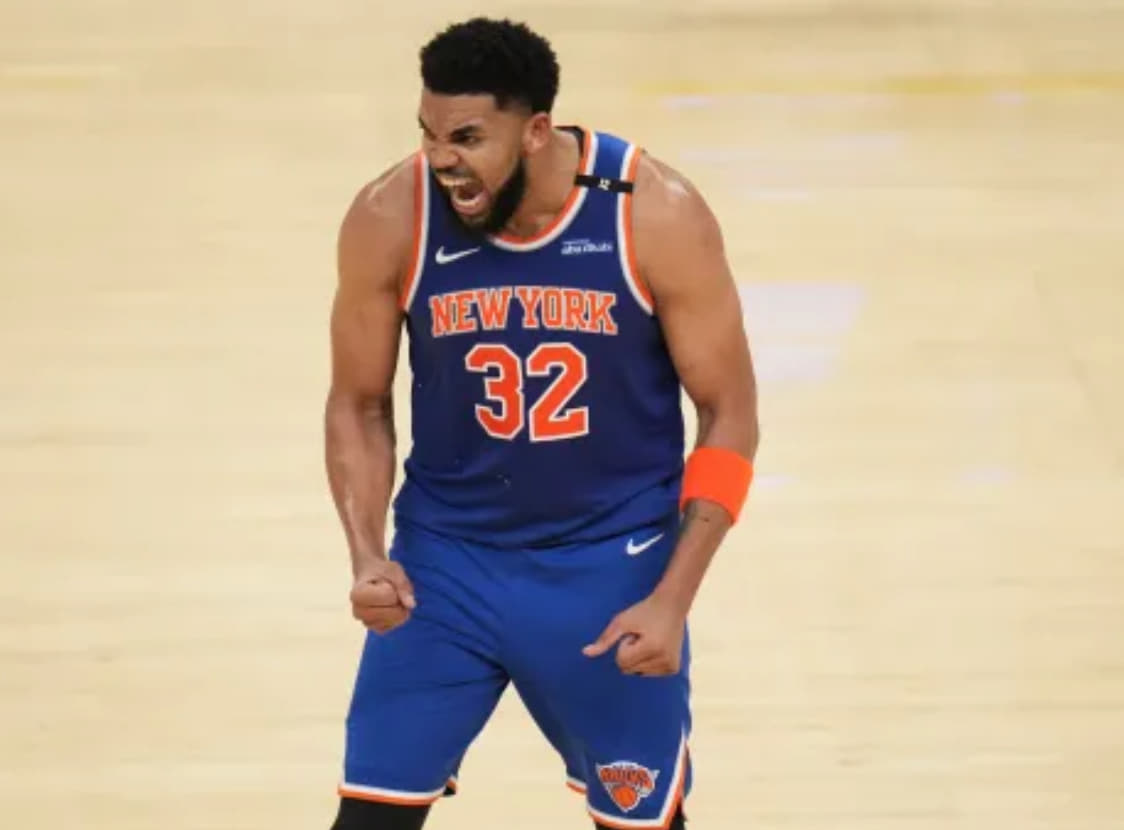
There are games, and then there are moments. What Karl-Anthony Towns gave us wasn’t about stats. It was about soul.
Through three quarters, he was pressing. The fouls piled up. The rhythm never quite found him. His footwork looked unsure, his touch was off, and the game seemed to be slipping through his hands until something changed. And if you know his story, you know exactly what it was.
It was Dominican Mother’s Day.
A moment wrapped in memory, stitched with silence. His mother used to sit just behind the bench. Even in the loudest arenas, her voice cut through. When Towns stepped on the floor for the fourth quarter, it didn’t feel like a comeback was brewing. It felt like something had been unlocked.
What followed wasn’t just a scoring run. It was a reckoning. Twenty points in a single quarter. Face-up jumpers, strong takes in the paint, a stretch where everything he touched felt inevitable. He didn’t force it. He found it. And you could feel the emotion pouring through every move not just relief, but reverence.
This is where basketball becomes something more. When a player isn’t just trying to win, but trying to connect. Trying to honor someone who made every moment possible. And when the crowd leaned in, they weren’t just reacting to the scoreboard. They were witnessing someone step into themselves not as a performer, but as a son.
You could hear it in his postgame words. The respect. The ache. The clarity. There was no scripted celebration. Just the quiet understanding that sometimes, the most important games aren’t about legacy. They’re about presence.
He didn’t say, “I did this for her.” He said, “I could hear her.”
And that’s the pivot. From pressure to purpose. From searching for rhythm to letting it arrive on its own terms. Towns didn’t just help his team. He reset his own trajectory in this series.
From the podcast chair, I’ll be honest this one stopped the room. We were halfway through pulling clips, juggling matchups, looking at defensive coverage, and when that fourth quarter rolled, we just let it play. Nobody talked. We watched it like fans, not analysts. Sometimes the moment doesn't need a voice-over. It just needs space to land.
What Towns gave us wasn’t about proving something. It was about remembering something. And when he leaned into that, when the game became a tribute instead of a test, everything opened up.
That’s the part that stayed with us after we shut off the mics. Because stats fade. But presence echoes.
OKC’s Blueprint: Cohesion Over Collapse
This wasn’t just a win. This was a vision coming into focus.
Oklahoma City didn’t just beat Minnesota they composed them out of rhythm. Every possession was a decision tree, every cut designed to open up the next domino. What OKC put on the floor in Game 3 wasn’t improvisation. It was orchestration. Built from the bottom, curated by belief.
The Thunder aren’t bigger. They aren’t older. But they’re so much more connected. You could see it in the way Shai Gilgeous-Alexander and Jalen Williams took turns probing, not forcing. SGA dropped 40 points with six assists. J-Dub added 34 and another five dimes. And the best part? Neither needed to dominate touches to get there. They moved with trust, not urgency.
It showed everywhere else, too. OKC finished with 26 assists on 39 made field goals clean, intentional basketball. They shot over 51 percent from the field and forced 23 turnovers out of a Minnesota offense that looked like it was trying to find one big answer instead of working through the little ones.
And then there was Chet.
Chet Holmgren was the hinge. Fifteen points, nine rebounds, four blocks, two assists, and a team-best +14. Nothing about his game screamed. But it didn’t need to. He doesn’t chase moments he shapes them. Altered shots, changed drives, anchored switches. And all of it in rhythm with the rest of the unit.
This is what makes the Thunder different. They don’t just react they re-space. They reboot mid-possession. When the initial set doesn’t work, they don’t panic. They pivot. Those 15 offensive rebounds weren’t just hustle. They were evidence of balance, timing, and anticipation. Floor discipline that’s been drilled in, not just drawn up.
Now look at Minnesota.
You could feel the pressure the moment things stopped flowing. Ant couldn’t find daylight. Conley turned reactive. KAT, coming off that emotional high, tried to force touches into meaning. They weren’t trusting each other they were searching for a savior. And when every trip down becomes a rescue mission, you’re done.
The Wolves looked like they were trying to win the game in one play. OKC, by contrast, made every play feel like one small win in service of a bigger identity. They didn’t hunt mismatches they created structure. They didn’t scream for calls they cut harder. They didn’t collapse when the Wolves punched they answered with poise.
This is where playoff basketball shows its depth. It’s not about going nuclear. It’s about whether your system can breathe under pressure. OKC doesn’t gasp. They glide.
From the studio, we didn’t even need to over-explain it. The tape rolled and everyone just nodded. It was one of those nights where five guys were all tuned to the same channel no lag, no drop, no ego.
They didn’t just win a game. They revealed what real teams look like when the temperature rises.
They authored a blueprint.
What These Games Teach Us About Team Identity
Here’s what we know now.
If you’re still watching these playoffs thinking it’s just about talent, you’re behind. This round didn’t showcase explosions. It revealed identities. And the teams that kept pace weren’t the ones with the most firepower. They were the ones with the most clarity.
Let’s just go through it.
New York doesn’t play fast. They play precise. And when one of their guys goes down, even a star, they don’t panic. They double down on who they are. Hart doesn’t replace Randle’s skillset, but he replaces the void. That’s what identity looks like. It’s not just a playbook. It’s a belief system.
Oklahoma City doesn’t force the game. They build it, layer by layer. This team doesn’t over-dribble. They don’t overreact. And you saw it in Game 3: the Thunder didn’t just run plays they ran principles. That’s how you get 26 assists on 39 made shots and still feel like the offense has another gear.
Minnesota? This was their stress test. And it showed. They’ve got the bodies. The talent is real. But when cohesion broke down, the cracks turned into collapses. That’s not a knock it’s a call. Because in May, it’s not enough to be built. You’ve got to be bonded.
Indiana showed flashes. They move, they share it, they compete. But they’re learning in real time that systems only work if everyone buys in under fire. The pace is beautiful when it works. But when the tempo gets punched, do you have a counter that isn’t just speed?
Here’s the bigger picture.
Identity is what survives adversity. When the game speeds up, when your second option is cold, when the lead flips and the crowd gets loud what do you fall back on? If the answer is talent, you’re in trouble. If it’s system, cohesion, and role confidence, you’ve got a shot.
From where we sit, these matchups weren’t just games. They were x-rays. They exposed what’s real and what’s performative. The teams that advanced didn’t just outscore. They outlasted. They out-trusted. That doesn’t come from coaching alone. It comes from reps, accountability, and players who know who they are when it’s tight.
And from the mic, you could feel that difference. You don’t need advanced stats when identity walks into the room. The tone changes. The pace resets. We stopped tracking individual moments and started watching for the cohesion. Every clip we pulled this week told the same story not about stars, but about systems that hold under pressure.
Because in the playoffs, every team gets hit. The ones who know themselves don’t fold. They adjust, lock in, and find answers in familiar places.
This week showed us something.
The good teams? They have stars. The best teams? They have identity.
And if you felt that while listening, we want to hear from you. Drop your favorite under-the-radar moment, your film-room favorite, or the possession that made you believe in a team’s system. Tag us at @Raya_FunchFRPC and @FrontRnnerpc on X or frpc-raya.bsky.social and frontrunnerpc.bsky.social or send us an e mail, frontrunnerpc@gmail.com Best takes get read next episode — let’s keep the conversation rolling where it matters most.
Because the best storytellers? That’s you.