By Vince Carter and FRPC Contributors
The Joy Recession: When Your Smile Becomes Your Strategy
Ja Morant & the Memphis Grizzlies | FRPC Blog Companion
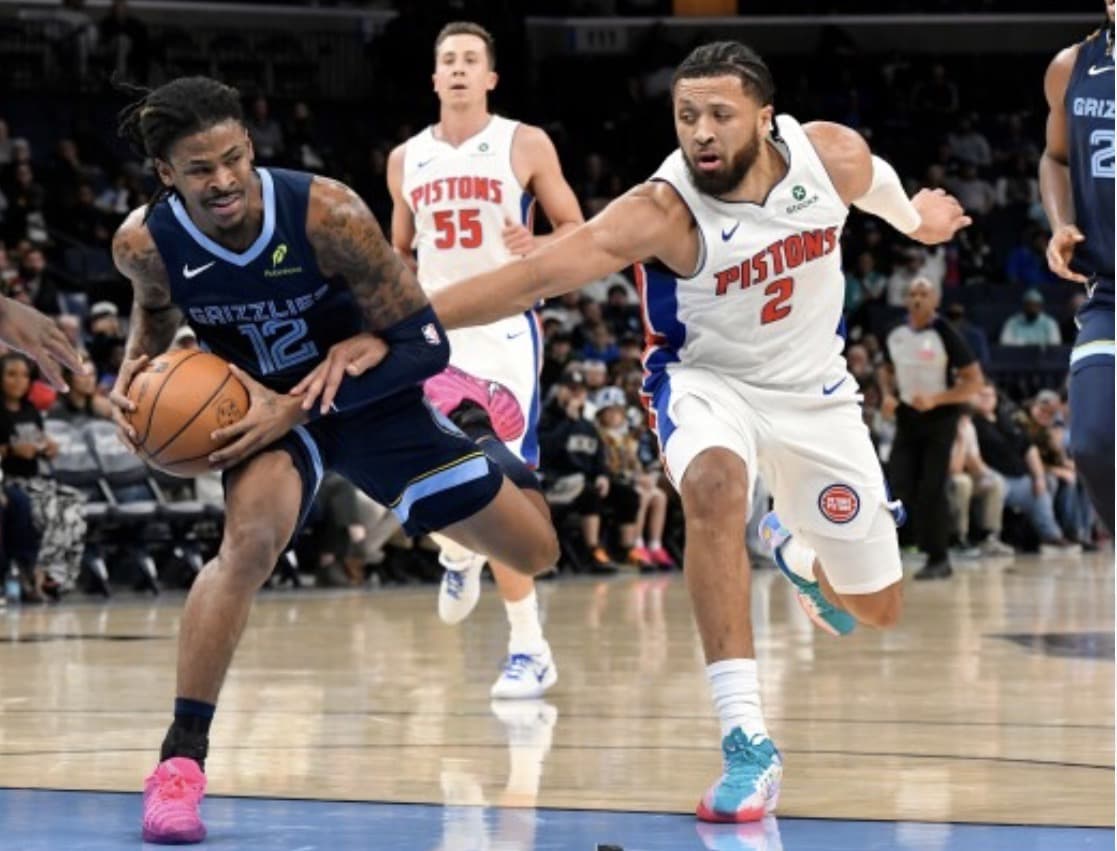
There was a time when Ja Morant made basketball feel inevitable. The grin, the bounce, the flash, they were the language of a city that had turned defiance into culture. Memphis didn’t just win; it danced while doing it. But joy can’t survive on memory, and what was once the team’s superpower now feels like an overdrafted account. The Grizzlies have entered a joy recession, one that’s as emotional as it is strategic.
The Joy Economy: When Energy Becomes Identity
Memphis built its identity on rhythm. Every fast break, every lob, every strut was part of a larger narrative: that joy could be an organizing principle. Ja Morant was the embodiment of that idea, charisma as gravity, flair as leadership. But when the foundation cracks, the system falters.
Through eight games this season, Morant’s line, 18 points, 10 assists, five rebounds, looks solid until you look closer. His field goal percentage has dropped to 39.3%, his three-point shooting sits at 13.9%, and his true shooting percentage has fallen from 56% to barely over 50%. Memphis ranks 25th in net rating and bottom-third on both sides of the ball. The numbers are symptoms of a larger truth: the energy source that powered this team has gone offline.
When joy becomes the product, the production starts to wobble. What used to be instinct now feels like effort. The dunks are there, but the grin is gone, and in Memphis, that grin was culture.
The Cost of Absence: Availability as Leadership
Ja Morant has never played more than 67 games in a season. That’s not trivia; it’s the context for everything. A team built on chemistry and shared defiance can’t withstand its emotional center being intermittently absent, whether for injury, suspension, or consequence. Every time Ja steps away, Memphis has to re-learn who it is.
Availability is leadership in disguise. Morant’s absences haven’t just disrupted rotations; they’ve rewritten expectations. Zach Klieman built this roster around Ja’s magnetism, assuming presence as a given. But consistency, not charisma, is what sustains winning. The Grizzlies have spent the past two seasons learning that leadership isn’t a mixtape. You can’t skip tracks and expect the rhythm to hold.
Each time Ja sits, the identity pauses. Each time he returns, the team scrambles to sync back up. That cycle has eroded their competitive rhythm and emotional trust. The city still loves him, but you can feel the exhale between cheers.
The Exodus: When the Support Leaves
Memphis’ identity loss isn’t just about Ja. It’s about the erosion of the ecosystem around him. Over the past year, the Grizzlies watched Desmond Bane get traded to Orlando and Dillon Brooks walk in free agency. Those two weren’t perfect, one too stoic, one too loud, but together they balanced Ja’s volatility.
Bane was the conscience, the professional voice who did the work quietly. Brooks was the chaos valve, the irritant who made the team feel unafraid. Their exits stripped Memphis of structure and swagger simultaneously. Without them, Ja’s energy, once a complement to their grit, has become the whole equation.
You can see it on the floor. The half-court offense is static. The swagger has been replaced by silence. The Grizzlies didn’t just lose players; they lost translators for Ja’s style of leadership. Memphis used to weaponize emotion; now it drowns in it.
“Bane was the conscience. Brooks was the noise. Without them, all that’s left is the echo.”
The front office’s gamble, that Ja’s growth curve would outpace his turbulence, hasn’t paid off yet. They built a system for a star still learning accountability. The result: a franchise waiting on emotional maturity like it’s a rehab timeline.
The Efficiency of Joy: When the Work Stops Smiling
Ja’s shot profile is the closest thing basketball has to a mood ring. When he’s locked in, every drive feels kinetic. When he’s distracted, you can see it in his footwork and tempo. The tape shows hesitation, pump fakes that never existed before, open looks he turns down, late passes that used to come naturally. His assist rate (40.3%) remains elite, but even his playmaking looks procedural.
Memphis’ offensive rating (113.1) and defensive rating (117.8) are telling. This isn’t just inefficiency; it’s identity confusion. The Grizzlies once lived in transition, punishing defenses that blinked. Now they play like a team staring at its reflection.
Joy, for Ja, was always more than a vibe, it was part of his mechanics. His balance, timing, and swagger were all expressions of belief. When belief erodes, efficiency follows. The game slows, shots flatten, and confidence becomes conditional.
The Identity Recession: Who Are They Without Joy?
Memphis used to be defined by grit and glide, a rare balance of toughness and flair. Ja Morant’s foray towards the rim were must see as the FedEx Faithful grew accustomed to. Now, they’re neither. Losing Ja’s spark exposed how fragile their rebrand really was. The “next generation” energy that once felt authentic now feels performative.
You can feel it in the FedEx Forum. The same crowd that used to feed off Ja’s charisma now waits for it, wondering when the joy will come back. And it’s not that fans have stopped believing, it’s that they’ve stopped recognizing the team they helped will into existence.
This is what happens when charisma becomes currency. You spend until there’s nothing left. The NBA sells joy like it’s a product, but joy requires craft to sustain. You can’t fake it on tape, and you can’t tweet it back into being.
“They traded grit for grace, and neither fits right yet.”
The Recovery Plan: Work That Smiles Back
Vince said it best on the pod: “Get your joy back through work, not words.” That’s the roadmap. Leadership isn’t an interview; it’s accumulation. For Ja, that means rediscovering belief through repetition, not reaction.
The fix isn’t viral; it’s tedious. It’s 38% from deep, not 13%. It’s 75 games, not 67. It’s showing up, even when the grin doesn’t. You want swagger and bounce... Win! Provide the leadership that ownership and front office paid for with your extension. Success solves and alleviates all sorts of ailments!
Memphis doesn’t need the old Ja. They need the adult one, the version that treats joy as discipline, not decoration. Because the joy recession won’t end with a dunk; it’ll end the day Ja realizes the work can smile back.
The Butler Blueprint: A Dangerous Parallel
If you squint, there’s a familiar playbook forming. Jimmy Butler’s exit from Miami wasn’t about a single moment; it was about tone, repetition, and leverage. Ja Morant isn’t there yet, but the pattern feels uncomfortably close: a superstar who loves his city but can’t quite fit his rhythm into the franchise’s maturity curve.
If this continues, another half-season of stagnation, another setback or PR storm, Memphis could find itself where Miami once stood: choosing between protecting the locker room or reimagining the timeline. And the market? It would salivate.
Houston has both: picks and kids. Miami has structure and heat. The Rockets can rebuild faster; the Heat can redeem faster. But the real dark horse might be a franchise like Brooklyn, young wings, flexible cap, and a desperate need for identity. The question isn’t whether Ja wants out; it’s whether Memphis can evolve fast enough that he doesn’t have to.
Fan Poll CTA:
FRPC listeners, weigh in: Would a Houston-style reset or a Miami-style redemption fit Ja’s next chapter? Hit the Community tab poll and tell us where the joy should go next.
Fan Mirror & Pull Quote
Fan Mirror:
Memphis doesn’t need another apology tour. They just need their leader to show up, healthy, grounded, and unbothered. The city has always loved imperfect stars; it just needs proof that the love goes both ways.
The Battle of the Gunners: When Brooklyn Turns Offense Into a Power Struggle
Cam Thomas, Michael Porter Jr., and the Most Entertaining Trust Issue in Basketball
Brooklyn doesn’t run an offense; it hosts a shootout. Every possession looks like an audition for the role of “lead scorer in a movie that hasn’t been greenlit yet.” Cam Thomas and Michael Porter Jr. are the co-stars nobody asked for but can’t look away from, like two microwave ovens plugged into the same outlet, both trying to cook faster than the other.
What was supposed to be a rebuilding year for the Nets has become a season-long custody battle over the ball. On paper, it’s about usage and shot diet. In reality, it’s about ego, validation, and a front office that decided to test chaos as a development tool.
The Shot Economy: Inflation, Brooklyn Style
Let’s start with the math, because numbers don’t lie, but they do smirk sometimes.
Cam Thomas is averaging 31 minutes and 17.7 shots per game, producing 24.3 points a night. Michael Porter Jr. fresh from Denver and still allergic to assists, takes 18 shots in 32 minutes, putting up 20.8 points. Combined, they account for 18% of the team’s total assists, which is to say, they pass the ball less than your Uber driver.
Their usage rates? Cam sits at 32%, MPJ at 27%, together responsible for almost 60% of the Nets’ offensive decision-making. That’s not synergy; that’s a hostile merger.
Vince nailed it on the pod: “Brooklyn runs ISO like it’s a tax deduction.” And he wasn’t exaggerating. Watch three possessions and you’ll see it, one dribble handoff into a side-eye, two jab steps, then launch. This isn’t basketball. This is dodgeball in sneakers.
The Personality Index: The Contract vs. The Podcast
If Cam Thomas and Michael Porter Jr. were a buddy cop movie, they’d both demand top billing and get the director fired by week three.
Cam Thomas’ relationship with Brooklyn’s front office could charitably be described as “strained”, like an HDMI cable in a 2007 Best Buy demo wall. Negotiations with Sean Marks this past summer dragged like an M. Night Shyamalan plot twist, ending with a one-year, $8.6 million restricted free agent deal that basically locked him in but kept him unsatisfied.
He’s playing for a future bag, and you can tell. Every jumper is a contract clause. Every heat check is a rebuttal to “team development.” You want him to feed rookies? Cam’s not feeding anybody unless it’s himself at Ruth’s Chris after a 30-point night.
Meanwhile, Michael Porter Jr., bless him, is the NBA’s most philosophical shot-taker. His podcast appearances range from “vaguely spiritual” to “did he just quote himself mid-sentence?” Vince called him “aloof,” but that’s generous. MPJ shoots like he’s trying to send the ball back to Denver just to see if it still loves him.
You put these two together, and you don’t get chemistry, you get a podcast war for the AUX cord.
The Rookie Fallout: How to Not Develop in Public
Here’s where it gets tragicomic. Brooklyn drafted five rookies this offseason — Ben Seraf, Egor Denim, Danny Wolf, Drake Powell, and Nolan Traoré. In theory, that’s a youth movement. In practice, they might as well be seat fillers at the Cam & MPJ Show. As soon as Cam Thomas signed the one year deal, that spelled the end of real development for these 5 rookies, which it was going to be difficult enough to give space for opportunity to expand any of these young assets offensive games.
Vince said it best: “It’s not a system, it’s a shootout in disguise.” These kids are supposed to learn spacing, reads, and pace. Instead, they’re learning how to duck flying Spaldings. Imagine being a rookie trying to establish your rhythm while two veterans play rock-paper-scissors over who gets to ignore your cut.
It’s not development; it’s survival.
The Nets’ front office, led by Sean Marks, insists this is all part of a plan, “let the talent express itself.” That’s a fun euphemism for “we couldn’t find a trade partner and decided to call it culture.” The stat sheet calls it something else: an 18% combined assist rate and one of the lowest team pass-to-possession ratios in the league.
Front Office Spin: Massive Shot attempts as Curriculum
Let’s be honest: Marks and the Nets aren’t trying to win 45 games. They’re trying to find something marketable. With no superstar and limited draft capital, Brooklyn’s banking on volatility as entertainment.
If it works, you call it “creative freedom.” If it doesn’t, you call it “lottery flexibility.” Either way, the blog clicks write themselves. The Nets were closed out of the high end of the lottery last draft, this season Brooklyn will do what it can to not be denied.
Cam’s motivation is simple, get buckets, get paid. MPJ’s motivation is existential, get shots, find meaning, reclaim the notion that MPJ can be Jerami Grant 2.0. And the front office? They’re just hoping one of them shoots well enough to become a trade asset by February.
What It Means: Brooklyn as Performance Art
Brooklyn doesn’t need a coach; it needs a stage manager. This isn’t a basketball team; it’s a theater troupe performing “Trust Issues: The Musical.”
Every possession is improv. Every timeout is therapy. The irony? When both Cam and MPJ get hot, it almost works. The Nets’ offensive rating jumps nearly 12 points per 100 possessions when one of them is cooking. The issue is that they never seem to cook together.
The bench looks like a support group. You can see rookies calculating when or if the ball will ever come back around. Our producer Soraya joked, “If you can dodge a pass, you can dodge accountability.” That’s dark humor, but it’s also the truth.
This is the paradox of modern Brooklyn: it’s a rebuild that refuses to admit it’s a rebuild. It’s two stars auditioning for validation in a system built on vibes, not structure.
The Recovery Plan: Controlled Chaos or Controlled Burn
If there’s a roadmap to sanity, it starts with structure. Give Cam Thomas a “microwave sixth man” role let him hunt shots guilt-free with the second unit. Start MPJ in a spread lineup where his efficiency matters more than his volume. Even I as am I writing this do not believe Cam Thomas will take demotion to the bench quietly, not with n=money on the line.
And maybe, just maybe, let the rookies touch the ball before they forget what it feels like.
If Brooklyn can turn this reality television after show into a pecking order, Thomas as scorer, MPJ as finisher, rookies as learners, there’s a version of this that actually works. Otherwise, we’re looking at a lost year of development for 5 rookies who need reps to further their offensive repertoires!
Brooklyn fans deserve a system. What they’ve got is a duel.
Fan Mirror & Pull Quote
Fan Mirror:
Brooklyn doesn’t need another star; it needs a traffic cop. The Nets have enough scorers, they just need someone to call the plays before someone calls for help.
Pull Quote:
“Cam’s playing for the bag, MPJ’s playing for enlightenment, and nobody’s passing.”
Listen for More:
Catch the full FRPC breakdown of the Nets’ identity crisis — Episode Segment: “The War Inside Brooklyn,” 27:19–44:00.
The Jordan-Esque Start: Chicago’s Fast Break into Relevance
How the Bulls Accidentally Became Fun Again
If you squint hard enough, and maybe turn the lights down just right, it almost looks like 1996 in the United Center again. No, Michael isn’t walking through that tunnel. But for the first time in a decade, the Chicago Bulls are playing basketball that feels like it means something. They’re 5–1, they’re running like they’ve got a flight to catch, and for the first time since someone named Jordan was on the payroll, there’s actual joy in the building.
This wasn’t supposed to happen. Chicago was supposed to bottom out, let the ping-pong balls do their thing, and maybe start dreaming about a future star. Instead, with one trade (Josh Giddey), one draft pick (Matas Buzelis), and one stubborn veteran (Nikola Vučević), Billy Donovan has built something resembling, dare we say it, an identity.
And somehow, it’s working.
The New Bulls Math: Grit + Glide = Proof of Life
Let’s start with the receipts. Chicago opened the season 5–0 for the first time since the Jordan era, then split in New York to land at 5–1. Their offensive rating sits at 120.0 (5th in the league), defensive rating at 114.8 (14th), and a net rating of +5.3 (7th overall). They’re running at a pace of 101.4 possessions per game, not quite Showtime, but fast enough to make you check the altitude.
And it’s not a one-man show. This isn’t DeMar and Zach dribbling the air out of the ball. It’s equal opportunity basketball, “everybody eats,” as Vince said on the pod.
Josh Giddey has been the headliner. After being swapped for Alex Caruso in a deal that puzzled half the internet, Giddey has rewarded Chicago’s faith with 22.2 points, 9.2 rebounds, and 8.7 assists per game while shooting 40.7% from three, a percentage OKC fans probably thought was theoretical.
He’s the conductor, not the soloist. He’s running Billy Donovan’s offense like a fast break seminar, hitting shooters in rhythm, and giving this team an offensive pulse that’s been missing since, well, Derrick Rose had two good knees.
The Giddey Factor: Clarity, Confidence, Control
For years, the Bulls were a team without a thesis. Every season started with a different identity: Are we rebuilding? Are we contending? Are we pretending?
Giddey solved that in a week. He’s the walking definition of “role clarity.” With the contract weight off his back, he’s free, making reads, crashing the glass, and trusting the jumper. This isn’t the hesitant OKC version; this is post-breakup glow Josh Giddey.
You can see his fingerprints everywhere. The offense flows smoother, shooters get fed, and pace actually means something now. Donovan’s system, “run and press until we vomit”, sounds insane until you realize it’s keeping Chicago’s young legs active and opponents dizzy.
The Youth Movement: Buzelis and the Bench Mob
Let’s give the 2nd year youngster his flowers. Matas Buzelis, the 6'10” Lithuanian-American wing, is putting up 15.7 points per game on 41.4% from deep. He’s a plug-and-play wing with no fear, a quick trigger, and the gall to bark at veterans after blocking their shot. The leap looks real. Buzelis has some real nasty to his game.
Vince called him “a junkyard dog with bounce” on the pod, and that might be underselling it. Buzelis is the kind of energy player Chicago has been begging for, the anti-Paxson-era draft pick.
Then there’s the bench, averaging 49 points per game, a ridiculous number that probably won’t sustain, but says everything about how engaged the roster is. Tre Jones is hitting 60% from three, Kevin Huerter has found life again (13 PPG, 65% true shooting), and even Patrick Williams is showing signs of… competence? We’ll take it.
This is how you build depth, not with lottery luck, but with defined roles and enough touches to keep everyone happy.
Vučević, the Steady Hand
For all the talk about youth and speed, this renaissance doesn’t happen without the big fella.
Nikola Vučević, once the symbol of Chicago’s treadmill purgatory, is suddenly efficient again. He’s averaging 19.3 points per game with a 70.3% true shooting mark and hitting 2.3 threes a night. The old man strength is back. He’s spacing the floor, anchoring the pick-and-pop with Giddey, and keeping the ball moving.
It’s not sexy, but it’s stabilizing. When the Bulls get frantic, Vooch slows them down. When the young guys start gassing out from Donovan’s cardio clinic, Vooch sets a screen, hits a trailer three, and resets the rhythm.
The Front Office Glow-Up
Let’s give Artūras Karnišovas his due, quietly, he’s rebuilt this thing in record time.
He made the hard calls: shipping out Zach LaVine for “almost nothing,” letting DeMar DeRozan go to Sacramento, flipping Caruso for Giddey (without receiving a first-round pick), and leaning into the youth pipeline.
At the time, Bulls fans were ready to riot. Now, they’re 5–1, playing unselfish basketball, and trending on social media for something other than nostalgia videos.
This is what happens when you stop chasing stars and start building standards. As Vince put it, “The standard is the standard.”
The Reality Check: Still Early, Still Fragile
Now, let’s not cue the parade just yet. It’s November. Shooting numbers will regress. Opponents will scout. And Chicago’s defense still ranks in the middle of the pack.
But here’s the thing: that’s fine. Because this team is finally coherent. They know who they are, a running, passing, space-sharing team that plays like it’s allergic to turnovers. decisions will have to be made when Coby White is healthy, White not known for his defense but adept at putting the ball in the hoop. Can Donovan coax a 6th man role to Coby White who found new life as a starter once LaVine was bounced from the “Windy City."
Even when the hot streak fades, the foundation is there.
The Jordan Echo: Not the Man, the Method
Let’s get this out of the way: no one is comparing Josh Giddey to Michael Jordan. (Though, if you squint during a full-court dime, it’s okay to feel a twinge of nostalgia.)
What’s “Jordan-esque” isn’t the dominance, it’s the clarity. That same sense of purpose, that understanding of roles, that culture of accountability. It’s the same principle that made Chicago great then and makes them compelling now.
When the United Center is buzzing again, not for a ring ceremony, but for a regular-season game in November and that’s something.
Fan Mirror & Pull Quote
Fan Mirror:
Bulls fans spent years begging for the team to tank. Instead, they tripped into competence and it feels better than any lottery dream.
Pull Quote:
“Billy Donovan didn’t rebuild the Bulls, he rebooted their Wi-Fi.”
Listen for More:
Catch the full FRPC breakdown of Chicago’s resurgence — Episode Segment: “The Central Division Snapshot,” 44:01–59:45.
Point Giannis 2.0: Milwaukee’s Back-to-the-Future Offense
How Doc Rivers Found Milwaukee’s Balance by Trusting the Young Guard
Sometimes the best coaching adjustment isn’t tactical, it’s emotional.
Doc Rivers didn’t reinvent the Bucks’ playbook this season. He simplified it.
He gave Giannis Antetokounmpo full creative control and surrounded him with players who actually fit his rhythm.
Through seven games, the Bucks are 5–2, averaging 122.7 points per game (5th in the NBA) with the 4th-best offensive rating (120.1). They’re fast (102.2 pace, 8th) but not frantic, efficient but not rigid. It’s the kind of basketball that looks both familiar and new, Milwaukee’s offense finally mirrors its star’s instincts.
The biggest surprise? It’s being run by Ryan Rollins, not a veteran point guard or household name.
The Giannis Operating System
Forget “Point Giannis” as a novelty. This is “Point Giannis” as infrastructure.
Giannis is averaging 34.0 points, 13.3 rebounds, and 6.8 assists while shooting 68% from the field, video-game numbers that would sound cartoonish if he didn’t make them look so routine.
Rivers has fully leaned into it. Giannis starts the offense, pushes pace, and dictates shot quality before the defense sets. He’s become the Bucks’ hub, with everyone orbiting in perfect timing.
“He’s running offense like a quarterback who knows all the audibles,” Vince said on FRPC.
The old Budenholzer version relied on spacing and scripted sets. Rivers’ version is jazz. Milwaukee is averaging 26.7 assists per game, their best since the title run, and they’re doing it without a true floor general, at least, not in the traditional sense.
Enter Ryan Rollins: The Calm in the Chaos
At 23, Ryan Rollins was supposed to be a depth piece, a two-way guard with good instincts and a nice floater. Instead, he’s become the heartbeat of Doc’s rotation.
Rollins is averaging 17.0 points, 5.7 assists, 3.9 rebounds, and shooting 41% from three across 31.4 minutes per game. He’s confident, steady, and, most importantly, not overreaching.
When Giannis initiates, Rollins becomes the rhythm guard, connecting possessions and attacking gaps when defenses collapse. When Giannis sits, Rollins controls tempo like a seasoned vet.
“He’s playing like someone who doesn’t know he’s supposed to be nervous yet.”
Milwaukee hasn’t had this kind of balance at guard since Jrue Holiday’s peak defensive year. Rollins doesn’t bring that same muscle, but his pace, shooting, and composure have stabilized the backcourt — and allowed Giannis to breathe.
The Kevin Porter Jr. Question: A Chemistry Test in Waiting
But the next chapter of this story could get complicated.
Kevin Porter Jr., out with an early-season quad strain, is expected back soon. The question floating around Milwaukee is simple: Does he get his job back?
Before the injury, Porter played one game, 10 points on 60% shooting, 2-of-3 from three. The talent is still undeniable. The fit? That’s murkier.
Porter’s reputation precedes him, volatile, brilliant, and unpredictable. For all his shot creation, he’s never been known as a connector. And that’s exactly what Rivers’ system now demands.
With Rollins running the show, the Bucks’ offense has been selfless, efficient, and connected. Porter’s natural game, high usage, isolation-driven, might short-circuit that chemistry.
Richard Jefferson raised the question on FRPC:
“Can Doc Rivers actually coach Porter into being a sixth man, or does it turn into another power struggle?”
It’s not about ability. It’s about buy-in.
If Porter accepts a bench role, microwave scorer, spark plug minutes, matchup killer — Milwaukee’s ceiling jumps. But if he chafes at losing his starting job, Doc could have another locker-room fire to manage.
Rivers has been here before. He’s managed Chris Paul’s edge, Rajon Rondo’s volatility, and Austin Rivers’… well, everything. This will test whether his veteran voice still carries weight in a modern locker room.
The Turner Effect: Structure and Safety Nets
Milwaukee’s front office didn’t panic after the Lillard era ended, they doubled down on stability. Signing Myles Turner was both a basketball and philosophical win. Turner, who were part of trade rumors for many seasons as a member of the Pacers.
Turner’s 9.7 points, 6.3 rebounds, and 2.3 blocks per game don’t scream stardom, but his impact is everywhere. His floor spacing (34% from three) and rim protection have allowed Giannis to roam freely, switching, trapping, and leading transition breaks.
Something that the Pacers miss is “defensive elasticity”, the ability to bend a scheme without breaking it. Turner’s presence gives Giannis the green light to be both playmaker and eraser.
And it’s working. Milwaukee’s Net Rating (+4.8) sits eighth in the league, despite an average defense (DefRtg 115.3, 16th). The balance is back.
The Supporting Cast: Role Players, Real Roles
For the first time in years, Milwaukee’s depth feels defined, not patched.
Gary Trent Jr. (13.6 PPG, 36.8% from three) gives them a consistent secondary shooter.
A.J. Green (12.7 PPG, 51% from three) has become the team’s best off-ball mover.
Kyle Kuzma (12.0 PPG, .540 FG) thrives as a small-ball forward, crashing boards and finding seams.
Bobby Portis (9.7 PPG, 5.3 REB) remains the team’s emotional compass.
This is Milwaukee at its most functional — less star-driven, more system-fed.
Doc Rivers’ Tightrope: Control vs. Malcontent
Rivers’ fingerprints are all over this. The pace is quicker, the offense freer, and the locker room, at least for now, calm.
But the Porter dynamic looms. Doc has always believed in giving talented players a long leash, but he’s also a coach who values predictability. If Porter returns and can’t adapt, the Bucks’ vibe could shift fast.
Russillo said it bluntly:
“They finally found harmony. The next test is whether they can keep it when talent knocks back on the door.”
The Big Picture: Milwaukee’s Quiet Rebirth
The Bucks aren’t flashy this year. They’re efficient, joyful, and balanced. Giannis runs the offense, Rollins runs the tempo, and Turner anchors the backline. It’s a team that looks like it enjoys playing basketball again.
And maybe that’s the best kind of rebuild, not the one that starts from scratch, but the one that starts from clarity.
Fan Mirror & Pull Quote
Fan Mirror:
Bucks fans, this isn’t a reboot, it’s a reset. The team finally feels like Giannis again, and that might be all it needed.
Pull Quote:
“They didn’t find their next star. They found someone who makes their star shine brighter.”
Listen for More:
Catch the full FRPC discussion on Ryan Rollins’ rise and the Kevin Porter Jr. dilemma, Episode Segment: “The Calm in the Chaos,” 1:16:33–1:34:42.
Detroit Pistons: The Waiting Game Between Patience and the Perfect Fit
When Cade Cunningham Makes Winning Look Casual, What Comes Next?
There’s a difference between potential and proof, and the Detroit Pistons just crossed that line.
When I opened the Central Division segment of The Frontrunner Podcast Collective, you could hear it, not hype, not nostalgia, but genuine respect.
“If the early wins were about potential, this is about proof. Cade didn’t just score, he controlled time,” I said.
Detroit’s 114–106 win over Memphis wasn’t just a good night. It was a declaration. Cade Cunningham didn’t flinch on Ja Morant’s return night, he closed him out. He scored 33 points, including 19 in the fourth quarter, and turned Ja’s storyline into his own headline.
“He just sat there and went like this,” Vince joked. “Hey bro, I don’t care about your return, I’m closing you out. Turn off the lights in this place.”
That’s what great guards do. They rewrite the room.
Cade the Closer: From Prospect to Problem
The Pistons are 5–2, with a top-five defense (111.4 DefRtg) and a modest but sustainable offense (114.8 OffRtg). The numbers don’t scream contender yet, but the habits do. They outscored Memphis 58–30 in the paint, played through contact, and never lost composure.
Cade’s averages, 23.6 points, 9.6 assists, 5.6 rebounds, don’t tell the full story. The stat that defines him right now? 28 assists to one turnover across his last two games. That’s 28-to-one. Vince nearly yelled it on the pod.
“I want you to hear that again, 28 to 1! He had 18 assists and one turnover versus Dallas, then 10 assists and no turnovers versus Orlando. He’s doing this all without Jaden Ivey.”
Cade isn’t just a floor general, he’s a mood stabilizer. The game slows for him, and that calm is contagious. Even with five fouls late against Memphis, he orchestrated the game like a surgeon:
2:25 left: straight-line layup.
1:06 left: 15-foot fadeaway.
0:38 left: pull-up dagger three.
That’s not youthful promise. That’s veteran pacing.
Bickerstaff’s Blueprint: Defense, Discipline, and Duran
Head coach J.B. Bickerstaff, who took over after the Monty Williams era, has the Pistons playing playoff-style basketball in November.
“Defense travels while the offense matures,” Host said. “They’re winning with smoke and mirrors right now, and I love it.”
That defense starts with Jalen Duren, who has quietly become one of the league’s most efficient young bigs:
17.3 PPG, 9.9 RPG, 60.9 TS%
86% from the free-throw line on 5.3 attempts per game
His vertical spacing has unlocked Cade’s playmaking. Duren doesn’t shoot threes, but he clears the lane and finishes everything above the rim. Vince called him “a pogo stick on legs.”
Add in Isaiah Stewart, who dropped 26 and 14 against Memphis while shooting 40% from three, and Detroit has a frontcourt with real physicality and balance. Bickerstaff’s tweak, allowing Stewart to roam as a switch defender while Duren stays near the rim, has transformed Detroit’s paint presence.
Supporting Cast: Efficiency and Grit
Duncan Robinson has found his Miami stroke again (39.1% from three), keeping weakside defenders honest.
Asar Thompson, meanwhile, continues to grow into his disruptor role, 13.3 PPG, 6.9 RPG, 1.6 steals, and a defensive motor that doesn’t stop. Vince said it best:
“Asar’s deflections are just daggers to people. He’s inflicting paper cuts on your offense every possession.”
Then there’s Ron Holland II, who put up 14 points in 20 minutes versus Memphis. His burst, alongside Asar’s precision, gives Detroit’s wings the kind of defensive length and transition juice teams like Boston and Cleveland envy.
And all of this, every win, every efficient quarter, is happening without Jaden Ivey.
The Ivey Dilemma: Patience or Pivot?
Now the question every Pistons fan is asking: Do you wait for Jaden Ivey to bloom, or do you cash in while his value’s high?
Ivey’s injury has slowed his start, but Detroit’s structure hasn’t. Cade’s chemistry with Duren, Robinson, and Thompson looks organic. The system flows. The ball moves. The spacing works.
But with Utah quietly shopping Lauri Markkanen, the temptation is real.
Markkanen would give Detroit something they’ve lacked for years, a reliable No. 2 option who doesn’t need the ball to stretch the floor. A 25-point scorer who spaces, cuts, and doesn’t break rhythm. Imagine Cade feeding Markkanen on pick-and-pop actions with Duren sealing inside. That’s balance. That’s spacing Cade deserves.
So what’s the right move?
Here’s how it breaks down, Bobby Marks-style:
The Case for Markkanen:
Legit 7-footer shooting 39% from three.
Expiring deal means flexibility if it doesn’t click.
Immediate top-four seed potential in the East.
The Case for Ivey:
Still just 23.
Athletic ceiling that’s barely been touched.
Allows organic growth with Cade, Duren, and Asar under rookie deals.
This is where Detroit’s front office earns its stripes. Do they fast-track contention or trust development?
“Ivey’s tantalizing, but Markkanen is solid. That’s the question, do you bet on upside or proof?”
Cade’s Calm and the Culture Shift
Last season’s chaos is gone. No empty stats, no false hope. The Pistons look mature.
“Detroit didn’t just steal a road win,” Host said. “They authored an identity.”
They play like they’ve already seen adversity and decided to grow from it. Cade’s voice carries. Bickerstaff’s rotations make sense. The defense has purpose. And for once, Detroit basketball isn’t nostalgic, it’s now.
The offensive rating may only rank 18th, but the defense at 4th is proof this team has a backbone. Defense travels. Leadership scales.
Whether it’s Ivey returning to complete this core or a surprise swing for Markkanen, Detroit’s base finally feels stable enough to build on.
Fan Mirror & Pull Quote
Fan Mirror:
Detroit fans, this isn’t a rebuild anymore, it’s a redefinition. Cade’s not just the franchise cornerstone; he’s the franchise compass. Whether Troy Weaver decides to double down on patience or make the Lauri leap, it finally feels like a choice made from strength, not desperation.
Pull Quote:
“Cade didn’t just score, he controlled time. Detroit didn’t match emotion, they controlled it.”
Listen for More:
Catch Vince’s full breakdown of the Pistons’ maturity jump, Bickerstaff’s defensive blueprint, and the Ivey-vs.-Markkanen debate, Episode Segment: “Detroit’s Proof of Life,” 1:48:10–2:05:33.
Cleveland Cavaliers: Learning to Win Left-Handed
Tiny-guards era, big-wing solutions, and why Darius Garland’s return changes the shot diet
The Cavs are doing that awkward November thing great teams sometimes have to do: win ugly, on purpose. As Host put it on FRPC,
“They’re not bad, they’re weird on purpose. Kenny Atkinson’s group is learning to win ugly, left-handed.”
That’s the assignment right now. No Darius Garland (until this week). Max Strus has missed time. Jarrett Allen has been in and out. Donovan Mitchell is playing through a sore hamstring. And yet, Cleveland sits 4–3, 7th in the East, with a +0.3 net rating (OffRtg 112.0, DefRtg 111.7), and a top-10 pace (102.0). It isn’t champagne basketball like last fall’s 15-0 heater; it’s forklift basketball, functional, slower, sometimes clunky, but moving weight, as Vince framed it:
“Last year Cleveland had a house party. This year the offense went from Ferrari to forklift. Functional, slower, and sometimes clunky, but moving weight.”
What’s working (and why it looks different)
Two things are keeping the floor from falling out: shooting volume and Mobley’s growth.
Three-point math: Host flagged that Cleveland is at 15.9 made threes per game on about 45.4 attempts, third in volume. That’s a huge stylistic lean and a sensible response to being guard-short. The trade-off, as he noted, is harsh: 28th in shots within five feet. When you’re light on paint touches, you live on the pull-up diet until your creation game (read: Garland) comes back online.
Evan Mobley’s expanding canvas: 19.3 PPG, 8.9 RPG, 4.4 APG. Can the Cavs allow Mobley to continue to express his offensive growing identity and assimilate Garland. I would love to see Garland or Lonzo Ball run two man game with Mobley in a variety of ways. For the health of the Cavaliers offense in the playoffs, expanding the boundaries of Mobley’s game seems to me to paramount.
“He’s doing everything.”
The passing leap is the headline; the temperament shift is the subhead. Cleveland has asked him to be an interior anchor and an offensive hub, more high-post reads, more DHO manipulation, and more decisive seals when teams switch smaller. That’s been the stabilizer while Mitchell carries usage.Donovan Mitchell, optimized: 29.5 PPG on 68.8 TS% while nursing the hammy. Vince again:
“Mitchell is doing too much, but once Garland comes back, some of that usage will be taken away.”
Translation: the diet gets healthier, fewer hero possessions, more second-side attacks, and Mitchell’s late-clock bailout work becomes a feature, not the plan.Role players actually rolling: Jalen Tyson is splashing 44% from three and auditioning as a $20M 3-and-Dconnective wing. Sam Merrill flashed 17.3 PPG in limited run, hitting 51% from deep; the gravity’s real. Those minutes matter because they let Atkinson keep the spacing scheme while the primary engines heal.
One last run with tiny guards: without playing small
Cleveland’s postseason stumbles have shared a theme: too many possessions where both guards are small, and the advantage gets bludgeoned by length. New York’s counter this year is instructive — Mikal Bridges living at a guard spot, Josh Hart behind him, and waves of size at the point of attack. The Cavs can’t conjure a Bridges out of thin air, but they can simulate the phenomenon by assembling lineups that defend like they’re big even when the nominal “point guard” is 6’1”.
This is where Lonzo Ball, Max Strus, and Jalen Tyson matter. Host on Lonzo:
“He hasn’t shot the ball very well, but the defense is the point-of-attack defense that only he can bring.”
If Lonzo is healthy enough to keep logging real POA reps, Cleveland can finally pester opposing creators at the arc without burning Mitchell or Garland. Strus brings screen navigation and help-tagging IQ; Tyson supplies length and clean feet on switches. Think about a “big perimeter” trio of Lonzo–Strus–Tyson stacked alongside Mobley and Allen: that’s a five-man group that can switch 1–4, stunt and recover, and funnel rim attempts to the trees, i.e., defend like the Knicks’ big-wing backcourts without actually having a Bridges.
Is it perfect? No. But for a team that still wants to weaponize one tiny guard (Garland) and unleash another (Mitchell), this is the path to one last honest shot with the core intact: play big on defense even when you score small on offense.
Why Garland’s return is the pressure valve
“Wednesday could mark Garland’s first game back… He’s the missing paint brush stroke: passing, pace, poise.”
Cleveland’s shot diet has been one-pass pull-ups. Garland restores two-paint-touch possessions: drag-screen tempo, middle pick-and-roll into slot skip threes, and that quick pocket pass that gets Mobley cheap dunks again. If you’re tracking one number post-return, track paint touches per half. It’ll tell you if the offense has shifted from “survive” to “stress.”
Garland’s presence also rebalances roles:
Mitchell moves back toward advantage scorer (less table-setting, more closing).
Mobley gets context on his touches, short rolls against rotation instead of stand-alone post work.
Tyson/Merrill keep their green lights without being asked to manufacture.
Lonzo (if minutes hold) can specialize: POA defense + early offense push + connective passes.
The Allen/Mobley backbone still decides May
Regular-season Cleveland can be top-10 on either end with this structure. Playoff Cleveland is about whether Jarrett Allen holds vertical ground when teams go small and pull him out. Host is blunt here:
“Until I see Jarrett Allen put somebody on their ass in the playoffs, I’m not buying it.”
Fair. The answer might be selective switch plus early scram: let Allen show higher at the level for a count, scram the mismatch on the roll, and trust Mobley’s backline IQ to erase the slip pass. That’s where having Lonzo/Strus/Tyson in the action helps, they can survive the temporary size problem while the bigs reshuffle.
What the numbers say vs. what the film promises
Volume threes (15.9 makes) + low rim attempts (28th inside 5 ft) is a Garland problem, not a philosophy problem. Expect that to normalize.
Pace 102.0 is useful if it’s purposeful, i.e., opportunities for Mobley early seals and Strus trail threes, not empty rush.
DefRtg 111.7 with starters in flux is quietly encouraging. The big-wing perimeter idea is already visible; adding lineup continuity should drop that number.
And don’t overreact to November muck. podcast framed this stretch exactly right:
“I don’t look at it as regression; I look at it as refinement.”
What success looks like by Christmas
Garland back to 28–30 minutes with paint touches up and live-dribble skips feeding the shooting diet.
Mitchell’s usage trimmed a hair, efficiency sustained, legs saved.
Mobley stays near 20 a night with assists holding north of 4 — not shrinking just because Garland’s back.
Lonzo–Strus–Tyson minutes coalesce into a real perimeter identity that bothers the better East guards.
Allen looks meaner (your word, Vince) on switches: harder hits, fewer soft retreats.
Hit those, and the Cavs stop feeling like a forklift and start looking like a well-tuned moving company.
Fan Mirror & Pull Quote
Fan Mirror:
Cavs fans, this is the last honest swing with the tiny-guards core — and that’s okay. You don’t have Mikal Bridges, but you can defend like you do with Lonzo, Strus, and Tyson around Mobley/Allen. If Garland returns the paint to the offense and Allen brings playoff muscle, the ceiling is still where you thought it was.
Pull Quote:
“They’re not bad, they’re weird on purpose… The offense went from Ferrari to forklift, functional, clunky, moving weight.”
Listen for More:
Cavs segment, on Garland’s return window, Mitchell’s usage, Tyson’s shooting, and the forklift metaphor, runs mid-show in this episode’s Central Division swing.