By Vince Carter
Atlanta Hawks: Trey’s Prove-It Year Meets the New Core
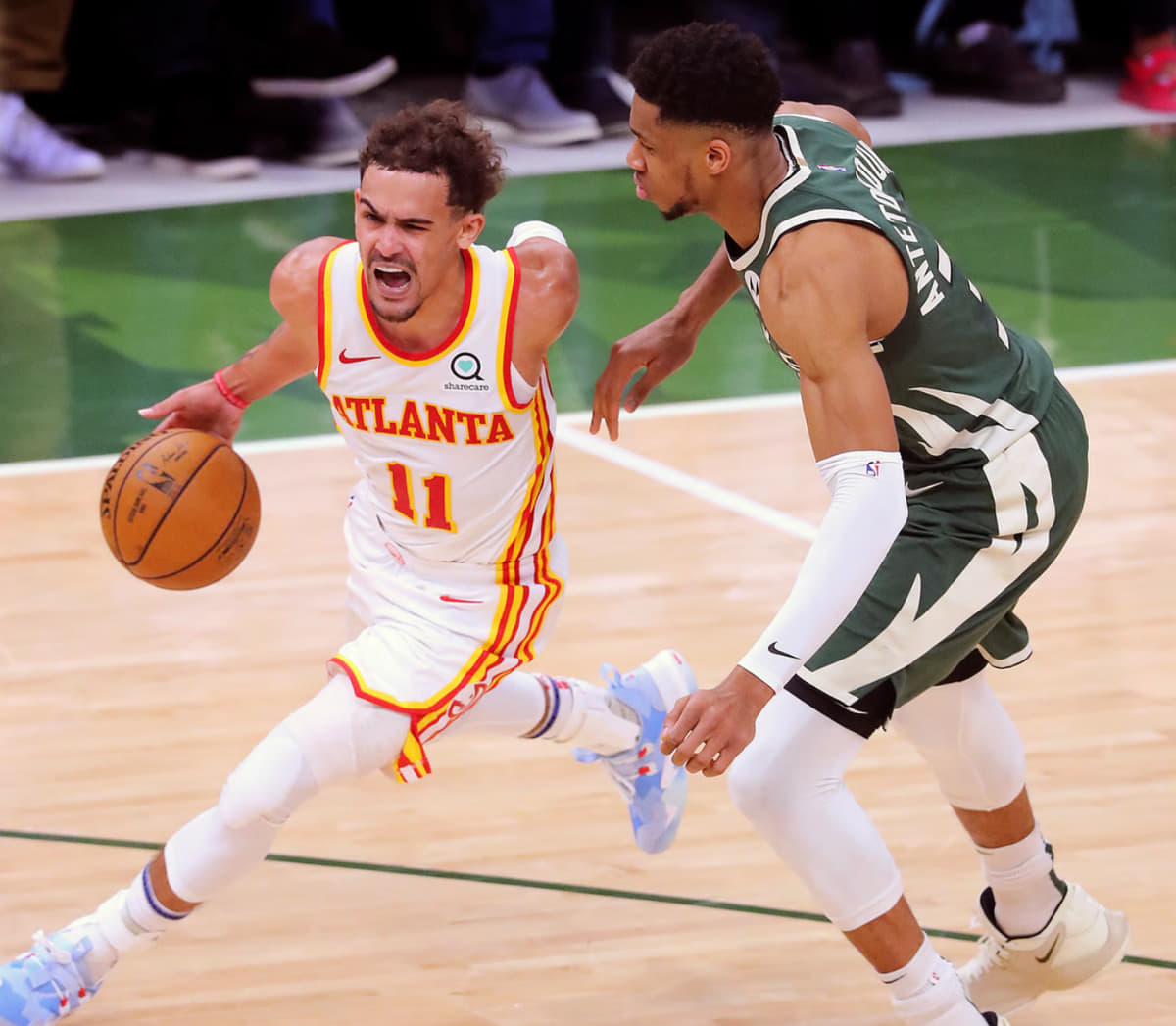
The Hawks have finally built what looks like a functional, modern roster around Trae Young and the clock on their relationship might already be ticking.
This is the NBA’s version of a tense dinner date: everyone smiles for the cameras, but you can feel the check coming. Trae, a four-time All-Star and last season’s assist leader, became extension-eligible over a month ago. No talks. No leaks. Not even a PR-friendly “we love our guy” quote. Instead, cryptic tweets, sideline body language, and a vibe that he’s in solidarity with Micah Parsons another franchise centerpiece twisting in the wind.
4 coaches and two entirely different front offices and the sentiment of Trae Young remains the same. Spectacular when it is going right and hard to play with and or watch when Trae goes rogue with logo jumpers with 17 seconds left in the shot clock. Quinn Snyder has gotten the pieces to surround Trae with the subsequent length and disruption on the defensive side of the ball to allow Young to play with the flair and freedom that he has longed for. In return, Snyder wish list from Trae is better shot selection, get off ball and relocate, and finally provide real effort on the defensive side of the ball.
The roster is, on paper, tailor-made for him. New boss Quinn Snyder has size, shooting, and defense in the mix. Dyson Daniels emerged last year as a point-of-attack defensive monster, almost snagging DPOY votes. Jalen Johnson shook off Duke-era doubts to flash star-level glue-guy skills before a shoulder injury. No. 1 pick Zachary Risacher is 6’8″ with a growing jumper, and Kristaps Porziņģis poached from Boston’s teardown finally gives Trae a legit pick-and-pop partner.
Atlanta’s problem has been stuck-in-neutral relevance: fun League Pass offense, 17th in effective FG%, four straight years in play-in purgatory. With this lineup, excuses vanish. The shot diet has to mature. Those deep-logo heat checks in the second quarter? Fine for YouTube compilations, not for contending.
And then there’s the math. De’Aaron Fox just got $229 million from San Antonio. Young will want at least that and he knows his market. Atlanta’s new front office, with zero loyalty to the GM who drafted him, seems comfortable letting the year play out. That’s a gamble. You don’t slow-play an All-NBA guard unless you’re prepared to pivot.
If the Hawks roll out a top-four East finish and Young buys into Snyder’s off-ball movement gospel, maybe this ends in champagne and a fat extension. If not? The Trae era could end not with a trade demand, but a quiet walk to the exit. And for a franchise still trying to prove its 2021 Conference Finals run wasn’t a fluke, that’s the kind of pivot you don’t survive twice.
Boston Celtics: Brad Stevens’ Fiscal Surgery and the Simons Swing
Brad Stevens is running the Celtics’ front office like a high-stakes card counter eyes on the dealer, mind five moves ahead, willing to fold a decent hand to keep the stack alive.
With Jayson Tatum shelved for the season, Boston’s not posturing for a 60-win year. They’re shedding payroll like an NFL team trimming veteran contracts before a rebuild. The George Niang dump to Utah plus two second-rounders brought back rookie R.J. Luis Jr. and, more importantly, $8 million in cap relief. That moved them $7.8M under the punitive second apron and saved roughly $34 million in luxury tax. That’s not cap wizardry; that’s rent money on the Monopoly board.
The second-apron penalties in the new CBA are the NBA’s boogeyman. Once you’re over, flexibility dies trades become math puzzles, exceptions vanish, and buyouts are for other people. Stevens is threading the needle: get younger, get cheaper, stay just competitive enough to justify keeping Jaylen Brown happy. This is the chance for Brown to have more agency as the number one without Tatum, but Brown will need to bring his hard hat to work everyday, it is a more treacherous terrain without his running mate!
Enter Anfernee Simons. On defense, he’s a turnstile. On offense? A walking heat check who’d fit perfectly in Joe Mazzulla’s 44-threes-a-night gospel. Picture Simons spotting up while Derrick White runs the show and Brown attacks closeouts that’s the kind of spacing Boston hasn’t had since prime Isaiah Thomas. It’s a calculated risk: the Celtics need scoring pop without breaking the bank or blocking the 2026 draft lane if this season slides.
The quiet beauty of Stevens’ approach is in the optionality. By moving Niang, Porziņģis, and eventually Al Horford, he’s bought the ability to drop under the first apron with one more move. That opens trade tools and exceptions most capped-out contenders dream about. In poker terms, he’s mucked a couple of decent hands to stay alive deep into the tournament.
The danger? Thin margins. One bad Brown ankle turn, one Simons shooting slump, and this group is lottery-bound. And maybe whisper it that’s fine. Get Tatum healthy, pocket a blue-chip pick, reload with room to maneuver. The Celtics aren’t tanking. They’re playing the slow game in a league obsessed with the next headline trade.
If it works, Stevens will be hailed as the GM who broke the apron without breaking the team. If it doesn’t, Boston fans might spend the spring watching Simons put up 35 in a loss and wondering how they became the NBA’s most expensive lottery team.
The High-Stakes Chessboard: Warriors, Bulls, Kuminga, and Giddey
In NBA front offices, there’s a special kind of conversation that starts with a sigh and ends with, “Alright… trade my problem for yours?” That’s exactly the vibe surrounding the Jonathan Kuminga–Josh Giddey trade framework quietly floating between the Golden State Warriors and the Chicago Bulls. 2 restricted free agents wrestling with their current franchises to be compensated and with no resolution in sight, Jake Fischer of Bleacher Report has heard whispers of let’s swap problems!!!
For Chicago, Giddey has been a curious fit a gifted connector who flashes Lonzo Ball-like quick decision-making when he’s confident, but who can get exposed if his three-point shot isn’t falling. For Golden State, Kuminga is the kind of hyper-athletic, switch-everything wing that can make their small-ball identity dangerous again… if he gets consistent touches. The problem? In Steve Kerr’s star-heavy rotation, Kuminga rarely sees the 13–15 shots a game he needs to grow.
From the Bulls’ perspective, the upside of landing Kuminga is clear: pair him with rookie Matas Buzelis, inject serious athletic juice into a team that has been stuck in NBA purgatory, and create a defensive/transition nightmare for opponents. It’s the kind of shift Chicago hasn’t seen since Jimmy Butler’s prime years. Kuminga would also arrive in a contract-year scenario, meaning he’d be playing with the urgency of someone who knows his payday depends on this stretch.
Golden State’s angle is trickier. Giddey would give Kerr’s offense a second connector alongside Draymond Green, helping unlock smoother ball movement and giving Steph Curry another high-IQ playmaker to work with. The danger? Too many cooks. Curry, Green, and (in this fantasy scenario) Jimmy Butler are already high-touch players. If Giddey’s improved three-point shooting from late last season is real, he’s an asset. If it regresses, his spacing issues could choke Golden State’s offensive rhythm.
Salary mechanics complicate the dance. Golden State is above the first tax apron, meaning they’d need to send out extra salary in any sign-and-trade for Giddey. That could mean moving Buddy Hield or Moses Moody neither of which the Warriors are eager to part with. Chicago doesn’t face those constraints, so the leverage is tilted in their direction.
In the end, this isn’t about which player is “better”, it’s about which front office can accept the risk of swapping one imperfect fit for another, betting that a change of scenery will unlock the ceiling each franchise is still waiting to see.
Life Without the Engine: Pacers, Haliburton’s Absence, and Mathurin’s Moment
When Tyrese Haliburton went down with an Achilles issue, Indiana’s offensive identity took a gut punch. Haliburton isn’t just their point guard he’s the hub, the floor-spacer, and the player who makes their dizzying pace work. Without him, the Pacers are forced to find out, in real time, what they have in Benedict Mathurin.
For two seasons, Mathurin has been a tantalizing “next up” scorer. Explosive first step, fearless attacking the rim, and flashes of a reliable perimeter shot but he’s mostly been operating as a secondary option behind Haliburton. Now? It’s put-up-or-shut-up season. The extension clock is ticking, and his 2025-26 campaign will likely determine whether Indiana sees him as a franchise cornerstone or an exciting trade chip.
The rest of the rotation is a study in retooling under pressure. Andrew Nembhard has emerged as a fearless combo guard, capable of defending at the point of attack and scoring in bunches when needed. Pascal Siakam, fresh off an Eastern Conference Finals MVP run, will be asked to channel his Toronto prime doing a little bit of everything on both ends. Aaron Nesmith’s floor-spreading and defensive versatility keep him indispensable, especially without Haliburton orchestrating every set.
Then there’s the frontcourt question mark. Losing Myles Turner leaves a rim protection and pick-and-pop vacuum. The Pacers are betting on Jay Huff a 7-footer with legit three-point touch and the twin wild cards of Isaiah Jackson and James Wiseman. Jackson has shown flashes as a switchable rim protector, but hasn’t logged enough minutes to prove he can anchor a playoff defense. Wiseman’s raw tools remain enticing, but his processing speed on the floor still lags, leading to those “two steps behind” moments that burn possessions.
Without Haliburton, spacing shrinks and the Pacers’ offense risks becoming a grind. That makes Mathurin’s shot selection, decision-making, and efficiency the season’s central storyline. If he proves he can create offense without Tyrese spoon-feeding him, Indiana’s ceiling stays in the playoff range. If not? They could tumble into the East’s soft underbelly good enough to beat bad teams, but not nearly equipped to survive the conference’s top seven.
In short, Haliburton’s absence forces Indiana to confront the questions they’ve been able to avoid. And for Mathurin, it’s both the biggest challenge and the biggest opportunity of his young career.
Detroit’s Doorway: How the Pistons Could Punch Above Their Weight in the East
If you only skim the standings from last season, you might think Detroit’s 44–win bounce after a brutal 68–loss campaign was just a mirage. But under the hood, there’s a sharper story and in a weakened Eastern Conference, the Pistons have more than a puncher’s chance to crash the playoff conversation.
The East’s top tier is still ironclad New York, Milwaukee, Cleveland but below that? It’s all question marks. Atlanta is banking on a Trey Young reset under Quinn Snyder. Indiana’s without Tyrese Haliburton for the year. Miami still hasn’t solved its offensive droughts. Chicago and Toronto are in roster purgatory. That’s a lot of openings for a young team that has quietly built a multi-pronged attack. Cade Cunningham needs someone to emerge as a viable second option and that will be the main takeaway from the upcoming season for the Piston to identify who that player is!
Cade Cunningham is the keystone. His leap in composure and decision-making has made him a genuine offensive engine, capable of running tempo or grinding through halfcourt possessions. His size and patience create mismatch after mismatch, and Detroit’s spacing now fortified by new arrival Duncan Robinson gives him more driving lanes than he’s had since entering the league.
Jalen Duren is morphing into the kind of center you can build defensive schemes around. He’s a glass vacuum, a hard-rolling lob threat, and he’s starting to flash better reads when defending in space. That’s huge in an East where switchable bigs are gold against the likes of Giannis and Tatum.
The wild cards are Detroit’s athletic wings. Ausar Thompson is already one of the league’s most disruptive defenders, and if his corner three continues to improve, he becomes a two-way nightmare. Jaden Ivey, coming off a 30–game run interrupted by a fibula fracture, showed raw but undeniable scoring punch attacking with speed, drawing fouls, and firing threes at a career-high rate. If his efficiency nudges upward, Detroit suddenly has three perimeter creators.
Then there’s the bench overhaul. Robinson replaces Malik Beasley’s vacated shooting role (without the off-court baggage), while veterans provide ballast against the inevitable youth swings. It’s not a star-laden roster, but it’s one that can run in waves, hound defensively, and punish tired second units.
The Pistons’ margin for error is thin young teams still hemorrhage games with turnovers and defensive lapses. But in an Eastern Conference where the floor for the sixth seed might be barely above .500, Detroit has a pathway. Stay healthy, ride Cade’s playmaking, and let the kids run wild against teams sleepwalking through January. If they hit those beats, the Pistons aren’t just climbing out of the basement they’re barging into the neighborhood.
Cleveland’s Balancing Act Life Without Garland, the Mobley Moment, and the Search for a Steady Hand
When the Cavaliers won 64 games last season, Darius Garland’s fingerprints were all over it. His blend of scoring (20.6 PPG), playmaking (nearly seven assists), and shooting efficiency (47% FG, 40% from deep) gave Cleveland an offensive release valve. Without him, the Cavs went a pedestrian 5–5, a stark reminder that Donovan Mitchell can’t run the show solo without the offense tilting into hero-ball territory.
Now, Kenny Atkinson’s staff has made it clear: there’s no rushing Garland back. The toe injury isn’t a “tape it up and push through” situation; it’s a “see you when you’re truly ready” call. Ty Jerome’s quiet departure to Memphis was already a blow to backcourt stability. Enter Lonzo Ball, a shrewd, high-IQ pickup with a defensive pedigree and ball-moving instincts. Lonzo doesn’t need shots to shape the floor geometry. If he’s upright, he’s a 40% three-point threat who shares the sugar and plays elite point-of-attack defense. The health caveat looms, but the fit is undeniable.
This injury window is also Evan Mobley’s proving ground. For years, Mobley has been the tantalizing “what if” elite length, defensive versatility, flashes of touch. Now, with more usage and touches, he can show whether he’s a true offensive anchor. If he polishes that short-roll game and develops a reliable elbow jumper, Cleveland’s entire timeline shifts. If not, they remain a high-floor, fourth-seed ceiling team. Could this be the time that Mobley morphs into Chris Bosh 2.0 (Toronto Raptor version).
The Cavs still have enough firepower to stay in the top half of the East Mitchell’s scoring, Jarrett Allen’s rim presence and possible attitude shift? Allen has been pushed around in his last couple playoff journeys, a little more grit would be welcomed in Cleveland, and a deep supporting cast keep them dangerous. But in a conference where Boston’s retooling, Milwaukee’s in flux, and Atlanta’s angling for a leap, Cleveland can’t afford to drift. How quickly Mobley steps forward, and how smoothly Lonzo integrates, could determine whether they’re fighting for home-court advantage… or just holding on until Garland returns.
Milwaukee’s Tightrope : Giannis, Dead Cap Weight, and the Gamble on Upside
Milwaukee’s front office isn’t just navigating an NBA roster puzzle they’re playing high-stakes relationship management with Giannis Antetokounmpo. Their message is clear: “We’ll do whatever it takes to win now.” The receipts? Waiving and stretching Damian Lillard swallowing a $22.5M dead cap hit annually through 2030 just to create enough flexibility to reshape the roster around their superstar.
The first big add: Myles Turner, which helped the Bucks and weakened the Indiana Pacers. Brooke Lopez was slowing down and his rim protection is not what had been in seasons prior. So bringing fresher legs a floor-spacing rim protector who can thrive as the second scoring option. The domino effect is huge: keeping the floor spacing option for Giannis to attack, better spacing for shooters, and a mobile defensive anchor.
Then came the perimeter makeover. Kyle Kuzma replaces a rapidly aging Khris Middleton at last seasons trade deadline theoretically injecting size and scoring, though last year’s 26% from three raises alarms. Gary Trent Jr. adds instant offense and some edge defensively if engaged. The true wild card? Kevin Porter Jr., newly minted starter post-Middleton trade. When focused, KPJ can break down defenses, generate paint touches, and unlock corner threes for Giannis and Kuzma. But the Bucks are betting he can sustain maturity and decision-making over an entire season a wager that’s burned past teams.
Cole Anthony provides scoring punch off the bench, Bobby Portis brings emotional leadership and rebounding, and veterans like Taurean Prince and Gary Harris add defensive glue. Jericho Sims could quietly be a rotation steal, but Milwaukee needs more than steady role play. They need someone maybe Kuzma rediscovering his Lakers form, maybe KPJ staying locked in to exceed expectations.
Because here’s the reality: every move, every vet-min signing, every G-League call-up is scrutinized through one lens keeping Giannis. The Knicks are circling. Houston and OKC have the assets to make a godfather offer if the Greek Freak wavers. Milwaukee’s playing Frogger across a six-lane highway, hoping their mix of calculated risk and loyalty keeps their franchise centerpiece planted in Wisconsin.