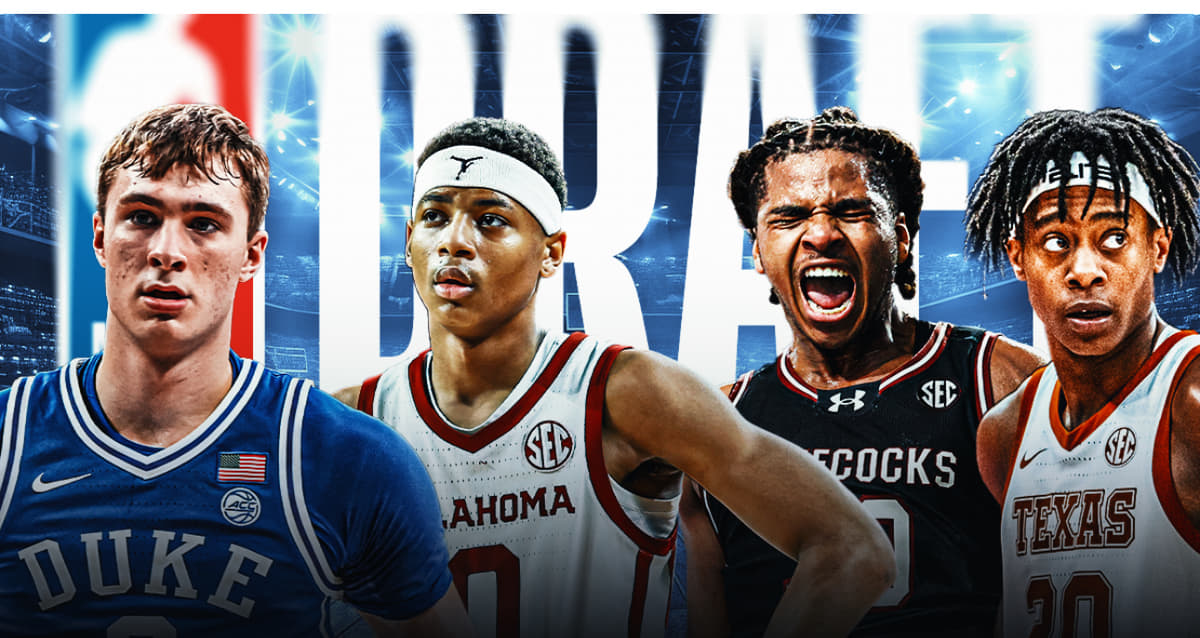
By Vince Carter, Soraya G. and Maya Ruiz
The Trade Tsunami
Disrupting the Timeline: Who’s Setting the Culture and Who’s Just Collecting Chaos?
Let’s not sugarcoat it this McCollum/Olynyk for Poole/Bey trade wasn’t your classic “basketball move.” This was a vibes correction. And in true NBA fashion, it’s the kind of deal that tells you what front offices think about their locker rooms, their young guys, and maybe, themselves.
First up: The Wizards.
You drop CJ McCollum league statesman, walking TED Talk, never seen a suit he couldn’t pull off into a locker room with three kids barely old enough to rent a car. Alex Sarr, Bub Carrington, Bilal Coulibaly high motor, high ceiling, but absolutely not high guidance. Washington didn’t just need a point guard; they needed a grown-up who’s survived 82-game marathons, injury slumps, and Twitter cycles without losing his mind. CJ isn’t here to pad stats. He’s here to teach Sarr the difference between “taking over” and “taking bad shots.” He’s the filter between teenage chaos and an actual NBA offense.
Kelly Olynyk? He’s the walking definition of a connector. The dude just fits. Stretches the floor, plays his role, keeps bench units from melting down. A locker room grown-up with the hair of a rock star and the sensibility of your favorite middle school math teacher. Is he a superstar? Nah. Is he essential for a team trying to figure out if they even have an identity? Absolutely.
Flip it to the Pelicans.
Here comes Jordan Poole hooper’s hooper, irrational confidence all the way up. Some nights he’ll torch you for 35; other nights he’ll shoot your playoff hopes into the Gulf. There’s a reason Golden State told him “nah, we’re good” after a title run. Now, in New Orleans, with Zion and Trey Murphy and Herb Jones? He can’t just play his own mixtape. He’s the chaos agent. If he buys into structure, you got instant offense. If not? There’ll be memes.
And Sadiq Bey? Low-maintenance, high value. He’ll give you effort, defense, and a corner three he’s a glue guy, but not a culture-setter.
So what does this all mean?
The Wizards are chasing structure; the Pelicans are embracing volatility. You’ve got one team buying blue-chip stability and another buying lotto tickets. And if you’re asking who wins? Sometimes, it’s just about which kind of mess you want. This trade? Pure NBA soap opera, and you can’t look away.
Spotlight on Flagg & Harper
Breaking Down the Difference Between “NBA Ready” and “Developmental Bet”
It’s draft season, so let’s cut through the noise and get to the heart of what teams are actually drafting at the very top. Because there’s a world of difference between a sure thing—think plug-and-play, give him the ball from day one and the classic “project” whose future is all about upside, patience, and hope.
Cooper Flagg is that rare “sure thing.”
If you’re Dallas, you’re not asking whether Flagg can handle NBA minutes. You’re asking who you want flanking him in the pick-and-roll on opening night. Flagg’s résumé? Advanced defender with the kind of anticipation you usually only see from veterans, not teenagers. He’s not just blocking shots he’s reading the next two passes. Offensively, he’s an all-court connector: he can finish above the rim, operate as a secondary playmaker, and stretch the floor enough that defenses can’t sag.
Stat-heads love him for a reason. Per 36 at Duke, Flagg posted a defensive rating in the low 90s a number you just don’t see from 18-year-olds in a power conference. You look at his on-off splits, and it’s like the team got 25% better the second he stepped on the floor. His wingspan, anticipation, and nose for the ball translate everywhere: transition, half-court, scramble situations. And let’s be real there’s a mental edge here. The “dog” is real. Flagg doesn’t coast; he competes on every rep, every film session, every possession. There’s no wonder he’s the consensus #1.
But there’s no such thing as a can’t-miss. Every prospect has to make the leap. The bet on Flagg? He’s so advanced defensively and so competitive that even if his scoring lags, he’s a plus player immediately. That’s a foundation teams pay anything for.
Dylan Harper, meanwhile, is a different flavor of franchise bet.
He’s not the nuclear athlete, but he’s got a quarterback’s mind and a chess player’s feel for tempo. The Spurs didn’t just draft a point guard; they drafted a decision-maker a player who can control the rhythm of a game and make the right read under pressure. Harper’s best skill might be his patience. He’s unflappable. That matters for a team that, frankly, looked chaotic and out of sorts in big moments last season.
The stats are promising high assist rates, low turnover percentages, and a knack for scoring when the team needs it, not just when it’s easy. Harper’s also got the build: big, strong, tough to knock off his spots. He’s already shown the humility to fit into a system but the confidence to take it over when needed.
So what separates these two?
Flagg is the rare “ready now” talent plug him in and build around him. Harper’s ceiling is just as intriguing, but his path is steadier, built on poise and leadership. One’s ready to headline the marquee; the other’s built to steady the ship and raise the floor. Both are foundational, but their impact will be felt in different ways, right from day one.
Ace Bailey & The Tools Bet
The Allure (and Headache) of Raw, High-Ceiling Prospects
You can spot a tools bet from a mile away and Ace Bailey might be the biggest one in this class. Every June, front offices get hypnotized by wings with length, bounce, and flashes of shot-making. They talk themselves into upside and athletic gifts, hoping that in a league obsessed with versatility, raw clay can be sculpted into a franchise-changer.
Here’s what the tape says:
Bailey is a 6’7” live-wire with a 7’1” wingspan, a 34-inch max vert, and a scorer’s mindset. He can get his own bucket at every level—mid-range, deep three, attacking closeouts. His footwork is advanced for his age, and he’s never shy about launching. “Bag” is the right word: he’ll show you a stepback one possession, blow by his man the next, and drop a sneaky floater when you least expect it.
But with all that talent comes a string of red flags that only get louder in the NBA. Jay Bilas would call it “immaturity of approach.” The scoring comes in bunches so does the tunnel vision. Bailey hunts his own shot relentlessly; passing is often an afterthought. Defense? On paper, he’s got the tools, but in practice, it’s mostly “see ball, chase ball.” The motor isn’t in question, but the focus? That’s the real swing skill.
A Western Conference Player development staffer broke it down like this: Bailey’s ceiling is star, but his floor is “out of the league by his second contract if the light never turns on.” He’s raw, both physically (light at 203 pounds) and mentally (doesn’t always share the sugar, struggled coexisting with other high-usage guys at Rutgers). Scouts rave about his confidence borderline delusional in the best possible way, but will he adapt to a locker room where he isn’t The Man?
There’s also the environment question. Put Ace in a stable system with veterans and a patient coach, and maybe you get the next volume-scoring wing. Put him in chaos, and you’re just fueling the streaks and the drama.
The allure is obvious. Bailey can light it up, fill seats, and maybe win you a playoff game or two just on audacity. But the risk? He can shoot you out just as quickly. Every year, the NBA drafts “tools bets.” Sometimes you get a star. Sometimes you get a headache. Ace Bailey is both, and it’s on his new team to decide which one shows up.
Defensive Wings Anyone...
How Edgecombe, Bryant, and the “Glue Guys” Shape Contenders
Let’s be honest: everybody wants to talk about the future All-Stars and who’s next to get their own sneaker deal. But if you’ve watched enough playoff basketball, you already know rings are won by the guys you barely notice until the game’s on the line. We’re talking about the switchable wings, the energy guys, the ones who’ll guard your best player, hit a corner three, or blow up a play with pure hustle.
Look at VJ Edgecombe.
The kid out of Baylor is what we call a “dog” in the best way. He’s 6’5” with a plus wingspan, elite vertical pop, and a nonstop motor. Gilbert would say, “That’s the type of guy who’ll try to lock up your favorite scorer, then get a tip dunk on the other end.” Edgecombe is built for today’s league: switch everything, chase shooters, and keep that ball moving. You need a plug-and-play defender who’s never out of a possession? He’s your dude.
But it’s more than just hustle. The man is fearless Jalen would point out how VJ’s not scared to go toe-to-toe with big names, or dive on the floor for a 50/50 ball when the crowd’s asleep. That energy becomes contagious, and suddenly your star player isn’t doing all the dirty work alone. He’s still learning the game—reads, rotations, when to gamble and when to stay home but the tools and mentality are there.
Then there’s Carter Bryant.
A “Swiss Army knife” forward from Arizona who makes every bench unit better the second he steps on the floor. Maybe he’s not filling up the box score, but Bryant does little things that coaches love cutting at the right moment, spacing the floor, communicating on D. Jalen might call him “the glue that keeps the locker room together,” while Gil would shout out his ability to adapt: one night you need rebounds, next night you need to switch onto a guard, Carter’s not blinking.
Here’s the thing these aren’t guys you put on the poster. They’re the ones who get you a win in Game 5 because they outworked, out-talked, and out-smarted someone who was “supposed” to be the difference-maker. Every year, there’s a contender built on role players who rise up when the stage gets bright. Don’t sleep on Edgecombe, Bryant, or their blueprint. Championships are built in the margins, and these guys are pure gold.
The Big Man Test: Yohan Berenger vs. Thomas Sorber Draft Night’s Litmus for Front Office Nerve
Ask any NBA decision-maker to explain what keeps them up the night before the draft, and they’ll give you a half-smile and say, “Big men.” Projecting bigs is never just about measurements, or even skill. It’s a referendum on front-office courage, risk appetite, and a GM’s willingness to squint and see something only they believe is real.
This year, the debate comes to life in two radically different flavors: the all-potential Frenchman, Johan Berenger, and the old-school, plug-and-play American, Thomas Sorber.
Johan Berenger: The 7’5” Wingspan and the Walkout
Let’s start with the mystery box. Yohan Berenger is 6’11”, 230 pounds, and just 18 years old, but it’s his 7’5” wingspan that has NBA scouts salivating. Run his tape, and you’ll see a kid who started basketball late but covers ground like Giannis on a Red Bull. He’s an NBA athletic profile generator’s fever dream—toolsy, twitchy, and defensively versatile enough to anchor a drop or switch out to the perimeter in a pinch.
Here’s the catch: offensively, he’s…a work in progress. The jumper’s not there, he can’t post up yet, and his passing reads are where you expect from a kid who picked up the game on YouTube. Berenger can rim roll and clean up lobs, but half-court sets quickly reveal his inexperience.
But what’s really got scouts, execs, and Twitter abuzz isn’t what Berenger does on the court—it’s what he did off it. He left his German club, Sedita Vita Olympia, in the middle of their league finals to jet off to New York for the NBA Draft. Imagine that: your team’s chasing a championship, and you’re ghosting group texts to grab a seat at the green room.
Some old heads call it a red flag for maturity. Quiet quitting on your teammates? “Would Luka have done that?” they ask. Others, maybe closer to Berenger’s age, shrug and say: business is business. He was leaving anyway, the NBA is a once-in-a-lifetime leap, and who wouldn’t want their draft-night moment?
So, where do you land? Is it an unforgivable sin or just Gen Z ambition? Is this a test of the front office’s ability to separate character flaws from culture shock? The answer probably depends on how much you love wingspans and how much you believe that commitment to winning is a teachable trait, not a prerequisite.
Thomas Sorber: The Old-School Anchor with a Modern Brain
Now, take a look at Thomas Sorber. At 6’9” (give or take), with a 7’6” wingspan, he’s not just physically imposing he’s built for the grind. But it’s not all elbows and box-outs: Sorber’s got a massive frame, yes, but also feather-soft hands, good touch around the rim, and an IQ that’s quietly advanced for his age.
What you’re not getting: perimeter switchability. Sorber is a drop-coverage big through and through, best when you keep him home as a paint deterrent. In a league that fetishizes versatility, he’s almost retro. You’re drafting him not to guard five positions, but to anchor the middle, rebound, and make the right pass to a cutter. If he goes in the late teens or falls to the 20s, there are going to be front offices that wake up the next morning already regretting their priorities.
But here’s the Eastern Conference Scout twist: Sorber is the kind of player who quietly fixes a team’s backbone. He might never have an All-Star campaign he’s not going to pop on social media or make the first cut of a House of Highlights reel—but he could be the reason a team climbs from 22nd in defense to 11th. He’s the “oh yeah, he’s still in the league and still starting” guy that the analytics crowd and the coaches’ room both respect.
Draft Night Decisions: Ceiling vs. Floor, Hype vs. Substance
So, you’re a GM. Berenger is all upside, all risk, and you have to trust your development staff and maybe your therapist to see that through. Sorber is all substance, a known commodity who could give you eight years of competent, unflashy work. One is a bet on the future, the other is a hedge against getting fired for missing the obvious.
The NBA is littered with both types of bets. For every Giannis, there’s a project who never puts it together. For every Steven Adams, there’s a “sure thing” who can’t stay on the floor in the playoffs. Tonight, the draft room will be a master class in risk management, ego, and who blinks first.
The real question for fans and front offices isn’t just “Who do you draft?” but who do you want your franchise to be?Are you the team that chases the next big thing, or the one that outsmarts the room by scooping up the backbone everyone overlooked?
Maybe the answer, this year, is hiding in plain sight somewhere between a wingspan and a work ethic, in the unsexy science of big man projection.
Cedric Coward (Vince’s Guy) Late Bloomer, Big Numbers, Bigger Questions
Let’s get this out of the way: If you’re looking for the guy who took the obvious path—blue-chip prep, blue-blood school, projected lottery pick Cedric Coward isn’t your guy. And that, depending who you ask, is either a feature or a bug. This year’s version of Desmond Bane... Vince (Host of FRPC) finds one guy each draft season that becomes enamored with! In 2025 NBA Draft it is Coward with a bullet!
Coward’s résumé is one of the strangest you’ll see among draftable wings: a stint in Division III at Willamette, a jump to Eastern Washington (where he dominated), and finally a six-game cameo at Washington State that ended with a shoulder injury. Across all stops, the production was consistent 17.7 points, seven boards, 3.7 assists, and a wild 40% from three. Throw in a 7’3” wingspan, a 38.5-inch vertical, and an old-school willingness to rebound and defend, and suddenly you see why some scouts circle his name every year as “my guy.”
There’s always this prospect the one who pops in every metric, does a little bit of everything, but played his best ball out of the spotlight. “Is he just a big fish in a small pond?” Russillo would ask. “Or is there something real here that translates up?” For Coward, that’s the tension. His age (he’s already 21) makes some teams pause. But he’s a vet, not just in years but in how he plays knows his role, doesn’t chase highlights, rebounds in traffic, works for the extra possession.
Then there’s the Sam Vecenie perspective, which starts with pedigree and competition. Vecenie’s a résumé builder. He’ll ask: Did Coward face enough top-tier talent? Did he adjust his game when he jumped levels? The six games at Washington State were a tease he was good, but not long enough for a sample size that puts all doubts to rest. But then again, every year there’s a guy from nowhere who proves the stage wasn’t too big. Look at Desmond Bane, look at CJ McCollum, look at Damian Lillard. Are those the comps? Not quite, but Coward belongs in that “prove-it” bucket: can he be more than the sum of his stops?
Most analysts that I spoke with came in here with the breakdown: “Here’s what I see on tape good size for a wing, plus defender, floor spacer, can create a bit for others. He’s a leader by example and by voice. The basketball IQ checks out. His handle is functional, his shot’s real, and he has a track record of figuring out every level.” Bilas would add: “The only knock? Experience against top-tier talent. But I’ll take the guy who dominates lesser comp over the guy who fades at the top every time.”
So what do teams actually do? In a league that constantly misses on “winners” because they don’t fit the model, Coward is this year’s test case. Is it better to bet on production and intangibles, or does pedigree always win out? History tells us there’s real value in the guy with the chip on his shoulder. The real question: which GM has the guts to look past the résumé, trust the tape, and give Coward a shot?
Liam McNeely: The Numbers Lie, The Fit Wins
Here’s my confession I love players like Liam McNeely because every year, draft Twitter gets way too obsessed with numbers and forgets that fit, IQ, and team concept can still win you playoff games. McNeely? He’s the kind of guy you steal at the end of the first, plug into a healthy roster, and three years later you realize, “Wait, why is every coach in the league running sets for this dude?”
Let’s set the scene: UConn’s season was chaos. Injuries everywhere. Suddenly, McNeely who’s always been a high-feel connector, never a “get-me-30” alpha had to run point and basically drag a patchwork Huskies lineup through the Big East. That’s like asking Steve Kerr to suddenly start jacking up 18 shots a night; it’s not his game. So yeah, his shooting numbers (32% from three) don’t pop, but check the free throws—86.6%. That’s your canary in the coal mine for future NBA shooting. You can fix a jumper, but you can’t fix basketball IQ.
Now cue Soraya, highlighter out: “McNeely is a mover. He’s constantly relocating, cutting, screening, finding seams. He leverages gravity. He sees the next pass before the defense reacts. On offense, he’s a glue guy keeps the ball humming, never gets stuck in mud, rarely takes a bad shot. He’s not a primary, but he’s the reason your primary gets easier looks.” Bilas might say the defense is a work in progress. True. He’s not a lockdown guy, but you never see him lost, ball-watching, or out of rotation. Good size, smart with angles, willing to buy into the system.
Let’s go back to Simmons for a second: If you’ve ever watched a playoff series where the offense clogs up because everyone stands still then suddenly some “role player” back-cuts his way to three easy buckets in the third quarter THAT’S McNeely. He isn’t going to be on a ton of All-Star ballots, but he’ll swing a playoff game or two, and you’ll be texting your group chat: “Yo, Liam McNeely just saved their season.”
Stat heads will nitpick the lack of explosive athleticism or the “average” creation. Fine. But coaches? Coaches will gush about his processing, how he buys in, how he doesn’t care about the box score. Sometimes you need a star; sometimes you need a guy who makes the stars shine. Don’t judge the numbers judge the fit.
Blazers’ New Blueprint: Mentorship Over Star Power
If you’re tracking the pulse of Portland basketball, the Simons-for-Holiday swap might look, at first glance, like the kind of transactional move that buries a team further into the West’s crowded middle. No franchise billboards, no All-Star sizzle, no delusions of leapfrogging Denver, OKC, or even the surging Kings in one summer. But look again: this is less about box scores and more about blueprints. It’s about what’s happening in the practice gym and, maybe more importantly, in the locker room where the real culture change begins.
JrueHoliday isn’t just an elite defender on the back nine of his career, he’s the definition of a culture setter. And if you talk to people around the league and you hear the same thing: every young guard who’s been around Holiday leaves with a sharper edge. The guy just works, competes, and leads by example. For a Blazers team searching for an identity post-Dame, this is an intentional reset. It’s no longer about chasing the empty-calorie stat lines. It’s about giving Scoot Henderson, the still-raw point guard prospect with a superstar’s confidence and a rookie’s learning curve, the kind of on-court mentor and off-court guide that most teams dream about.
This is how you reorient a franchise. Put Scoot and Shaedon Sharpe in a backcourt next to one of the league’s most respected professionals and watch the development curve accelerate. Holiday isn’t just there to take the toughest defensive assignment every night; he’s there to show these guys how to prep, how to communicate, how to handle rough shooting nights and brutal road trips. It’s the “passing down of the playbook” that’s rare in today’s transactional NBA.
In a league obsessed with instant results and gaudy numbers, Portland’s play here is quieter but no less strategic. Let Holiday mentor Scoot on the floor, take Sharpe under his wing, and set a tone for accountability. It’s not a move that lights up the highlights, but talk to coaches, execs, or even past teammates, and they’ll tell you: this is how you build something real.
Culture isn’t a stat, but for the Blazers, it just became the cornerstone of their rebuild.
Gap Year in Beantown: Survive, Reset, Reload
Look, if you’re a Celtics fan, you already know the deal. Nobody’s putting up banners for “nicely managed second apron compliance” or “most creative tax savings.” But this let’s call it what it is this gap year is pure basketball pragmatism with just a dash of “please, basketball gods, don’t let Tatum’s Achilles be a Greek tragedy.” And if you listen to Boston radio, everyone from the North End to Mattapan is in their feelings, but let’s be honest: you’re not sniffing another Finals until #0 is back dropping 30 and mean-mugging the sideline.
I would say it’s a “half-tank, half-Flex Seal year.” The vibes? Weird. The logic? Impeccable. You shed Drew’s aging legs and $104 million in future money, land Simons (who’s basically a souped-up C.J. McCollum with a 30-second memory on defense), and, most important, open a war chest of cap flexibility that Brad Stevens can use like a real-life 2K GM. This isn’t a youth movement it’s a chess move. You’re not trying to win the press conference, you’re setting up to win the next actual playoff series that matters.
Now, let’s crank up the Gilbert Arenas truth serum: half these moves are “keep the lights on” stuff. You think Stevens is banking on Simons as a future franchise pillar? Come on. He’s an expiring contract, a trade chip, maybe a guy who lights up the scoreboard in January when it’s snowing and the Bruins are stealing headlines. But in Boston? He’s here to keep the offense afloat, get flipped for picks, or help balance out the cap when the next big trade call comes in. Porzingis? His contract is like a ticking clock in a spy movie. If his knees hold up through Christmas, he’s either traded or lining up next to Jalen for one last run before they cash out.
Real talk: This is a holding pattern with ambition. Boston’s just waiting for the market to go haywire—a distressed star, a surprise draft fall, something that lets them jump back into real contention the second Tatum’s back. Until then? It’s survive, keep the receipts, reload, and hope the basketball gods don’t prank you twice in a row.
Welcome to the gap year, Boston. This isn’t surrender; it’s the long game.
The Porziņģis Pivot: Celtics Cash Out and Get Crafty, Nets Stock Up, and Boston’s Bet on Flexibility
So here’s what happens: you wrap a podcast, you start uploading files, and then bam Brad Stevens ( Trader Brad or Big Brain Brad) does it again. News breaks that the Celtics, Hawks, and Nets have finalized a three-team trade, sending Kristaps Porziņģis out of Boston. The ripple effect hits not just Boston, but the whole Eastern Conference, a luxury tax spreadsheet, and maybe, sneakily, the entire direction of the 2025 offseason.
First, the why. For Boston, it’s all about the money. After a championship season (and what looked, at moments, like a Big Three era about to roll for a few years), the Celtics were staring down the barrel of a full-on cap crunch: second apron, luxury tax, repeater worries, the whole CBA headache. Porziņģis’s contract was guaranteed for two more seasons. Jrue Holiday’s deal? Three years, $104.4 million left.
But instead of shuffling the obvious cards trading Jaylen Brown or Derrick White—Stevens somehow thread the needle. Out go Porziņģis and Holiday, in come expiring deals in Georges Niang (from Atlanta) and Anfernee Simons (from Portland). The kicker? Boston didn’t have to attach any draft capital to clean their books. In a league where getting off big money often costs a first-rounder, the Celtics gave up stars, not picks, and now sit a shade under $4.5 million below the second apron. Financial wizardry, or just old-fashioned “we’re the champs, let’s see who wants in”?
It’s the rare “win the title, flip the script” summer. No panic, just cold, calculated asset management. If you’re a Boston fan, it stings Porziņģis was huge in spots, Holiday is still a top-10 defender, and nobody prints “Team Chemistry” t-shirts in July. But with Jayson Tatum rehabbing a torn Achilles (and probably missing significant time), the Celtics suddenly had an excuse no, an opportunity to reset the machine before the new CBA bites even harder. The fanbase will grumble, but this isn’t a white flag. It’s a pivot, a chance to dodge the “repeat offender” luxury tax in 2025-26, and save north of $200 million in future payments. That’s not just “avoiding the apron.” That’s future-proofing.
It’s not just about ducking the tax Boston managed to pull this off without shipping out their remaining first (No. 28 overall). They offload $104.4 million owed to Holiday, and Porziņģis’s salary, while only taking back expiring deals. This clears the decks, gives them a shot at dropping under the tax line entirely if they move Simons or Niang again, and, crucially, resets the repeater tax clock. The Celtics could go right back to spending big in two years, but without the handcuffs that have doomed superteams since the new CBA dropped.
Meanwhile, Brooklyn quietly wins the “Danny Ainge Award” for Asset Hoarding: The Nets grab the No. 22 pick in this deal, their fifth first-rounder, in a week where controlling draft capital is the new arms race. Only Boston (No. 28) keeps its original first-rounder among the final 18 picks in the draft. The league has entered its “pick swap” era. If you don’t have your own, you’re probably trading for someone else’s.
So what’s next?
Stevens isn’t done. Simons could move again, the roster’s not settled, and Boston is poised to escape the luxury tax altogether for 2025-26. If they do, they not only dodge the financial bullet, but buy themselves breathing room for whatever Tatum’s recovery looks like and maybe another run if the core stays healthy.
The big picture:
This is the modern NBA: Champions don’t rest, they retool. Boston just turned a potential cap disaster into a menu of options less star power, sure, but a war chest of future flexibility. The Nets stockpile picks, the rest of the league takes notes, and somewhere in the league office, an accountant finally smiles.