By Vince Carter
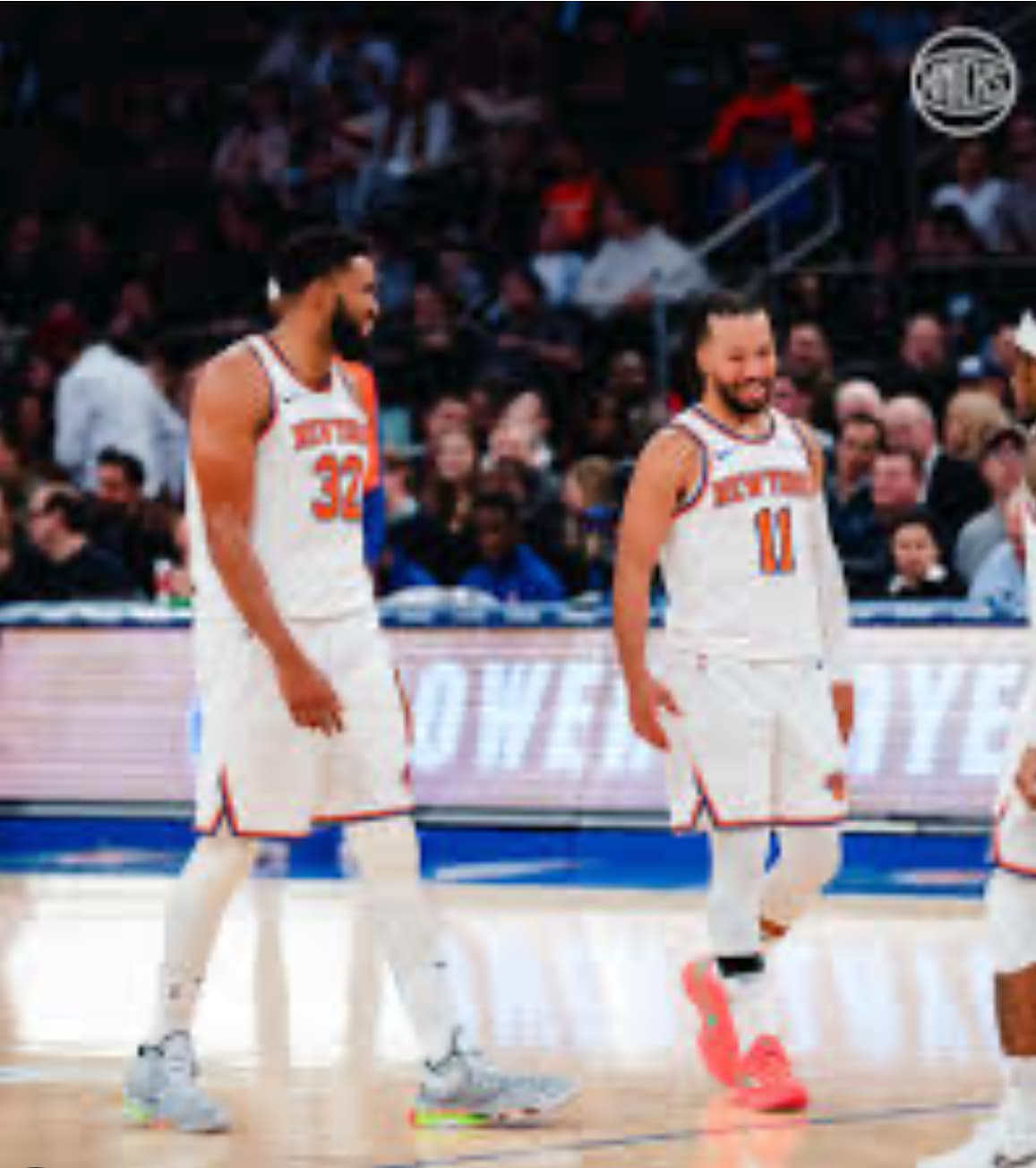
The Garden Reactivated – Knicks Force Game 6
You can’t fake desperation, and in Game 5 at Madison Square Garden, the Knicks didn’t bother trying. From the opening tip, the urgency was thick enough to taste. This wasn’t about executing a game plan—it was about reclaiming a pulse, a rhythm, and a crowd that had been holding its breath since the Game 4 flatline.
Jalen Brunson didn’t warm into the moment. He walked in already boiling. Fourteen points in the first quarter, most of them off reads so quick you’d think he had the Pacers’ defensive playbook in his sock. After a sluggish, ghost-like performance in Indiana, Brunson returned to MSG looking like someone had reminded him of his own name in capital letters. He wasn’t just scoring he was dictating reality. Everything bent around him. Angles. Tempo. Emotion.
The Knicks rode that opening burst like a subway car catching green lights. It wasn’t clean. It didn’t need to be. The Garden was vibrating. This wasn’t just a crowd it was a co-conspirator. Yes, the celebrity seats were packed (Spike doing Spike things, of course), but the real juice came from every off-ball deflection, every successful closeout. It felt primal. And it felt familiar, in a “this building remembers what May is supposed to feel like” kind of way.
Indiana tried to settle. Tyrese Haliburton found a few cracks, but the Knicks’ defensive rotations snapped tighter than they’ve been all series. Physical without fouling. Aggressive without gambling. Even when the Pacers made small runs, they never looked fully invited to the party.
That said, Benedict Mathurin gave the Knicks more than a few things to think about. His second-quarter surge—a mix of off-the-bounce creativity and controlled chaos—briefly shifted momentum. He attacked the rim with a mix of fury and finesse, drawing fouls, getting to his spots, and reminding everyone that Indiana’s not just here for seasoning. They’re here to swing back.
Still, every time the Pacers blinked, Brunson recalibrated. Each run was met with pace control, a mid-post possession, or a skip pass to force a rotation. The Knicks weren’t just staving off elimination—they were dictating who got to feel comfortable. And MSG, restless and roaring, nodded in approval.
Karl Anthony Towns: Weapon or Wildcard???
There’s a version of Karl-Anthony Towns that helps you win playoff games. He stretches the floor, forces matchup problems, and makes defenses account for him before the ball even swings. Then there’s the other version. The one that racks up fouls like he’s playing a different sport. Game 5 had both. And that’s the problem.
Towns started strong. Hit an early three. Made Indiana’s bigs think twice about helping off the weak side. His presence gave Brunson the kind of driving room that doesn’t exist when Isaiah Hartenstein is the five. It felt like a chessboard opening the way you want pieces moving, tempo favorable, initiative secured.
But midway through the third, it turned. A lazy reach. Then a frustration shove. Two fouls in under ninety seconds. Not hustle plays. Not bad whistles. Just empty calories. The kind of fouls you commit when you’re playing more emotional than intelligent. That’s the KAT who gets you beat in May.
Towns admitted as much postgame. Sitting across from Shaq and Barkley on TNT’s Inside the NBA, he did the thing he always does. He nodded, he agreed, he took the blame. But we’ve seen this movie. The performances change, the jerseys change, but the script stays the same. Barkley practically begged him to stop fouling like he’s a backup trying to earn minutes. It didn’t feel like criticism. It felt like an intervention.
What makes it worse is how much the Knicks need the other version. When KAT is composed, he alters everything. He pulls defenders out, clears the paint, and gives the offense a rhythm that doesn’t exist when they go small. Defensively, he’s not elite, but he can hold space when he’s not hacking guys in transition.
He’s not the villain. He’s the variable. That’s what makes this so maddening. One version makes the Knicks feel like a second-round threat. The other makes them look like they’re holding a live grenade every possession.
This isn’t about stats. This is about judgment. Towns has all the tools. But if the fouls keep piling up, none of it matters. The game gets smaller. The margin evaporates. And the guy who could change everything ends up watching it slip away.
Indiana’s Bench Answers Back!
If Indiana had any chance of keeping Game 5 within shouting distance, it wasn’t going to come from a Haliburton scoring outburst. Not this time. The Knicks had adjusted their coverage and taken away the easy reads. So Rick Carlisle turned to a different equation: give the bench real run and see if someone lights a match.
Bennedict Mathurin struck first. He came in with pace and edge, the kind that cuts through playoff noise. He wasn’t hunting highlight plays. He was hunting space, and more often than not, finding it. A pair of downhill drives, a strong corner three, and suddenly MSG was shifting in its seat. His ten-point second-quarter spark didn’t flip the game, but it froze the momentum. That’s all you can ask of your second unit on the road in May—buy time, force attention, maybe even sneak in a run.
Then came T.J. McConnell, doing what T.J. McConnell always does. He didn’t just push pace; he agitated the rhythm. Picked up full court. Got under people’s skin. His stat line won’t scream, but anyone watching knew exactly what his minutes meant. The Knicks had to account for him in transition and early action. It disrupted their flow, especially in moments when Brunson rested.
Carlisle didn’t reinvent the wheel. He leaned on matchups and trusted that his guys would scrap. Obi Toppin gave decent minutes on both ends. Isaiah Jackson flashed some interior switchability. And while none of it was seismic, it reminded everyone that Indiana isn’t just built on its stars. This roster can throw bodies at a problem until one of them sticks.
That depth is what kept the Pacers from spiraling. New York had its runs, yes. But Indiana’s bench responded with the kind of steadiness that playoff teams need once the series hits that fatigue wall. It wasn’t sexy. It wasn’t explosive. It was functional.
In games like these, where your starters are getting keyed on and MSG is thumping with every stop, having a bench that won’t melt matters. Indiana didn’t steal the game, but they stayed in it long enough to believe they could. That belief, especially coming out of a loss, might be more dangerous than a win.
Draft Radar – The Rise of Guard U
If the playoffs are about proving what already works, the NBA Draft is where front offices go searching for what might. And right now, that search is circling back to one key question: Who’s got the next great guard?
The 2025 class doesn’t just have depth. It has profiles. Archetypes. Players with elite traits, not just production. Leading the conversation is Dylan Harper, a name that’s been rising steadily since his high school days. His size and poise at the lead guard spot make him one of the safest bets at the top of the class. What stands out isn't just the feel it's the control. He gets to his spots without needing to break down defenders with flashy moves. Think Brunson, but with more vertical pop and better early passing instincts.
Tre Johnson, on the other hand, is a shot creator in the classic sense. Give him space, and he’ll manufacture points. The midrange is polished, the footwork is advanced, and he doesn’t shy from contact. His defensive motor needs to catch up to his offensive identity, but the ceiling is there. He fits the mold of a top-three pick if he lands in a system that lets him create without overextending.
Then there’s VJ Edgecombe. Raw? Yes. But the tools are loud. Length. Burst. Defensive upside that projects well across multiple schemes. He doesn’t need the ball to impact a game, which makes him a cleaner fit for teams already stocked with creators. If he tightens the handle and finds a rhythm from deep, he could vault past more polished names by June.
What separates this guard class is the variance in skill sets. These aren’t carbon copies. You’ve got combo guards who can run offense, wings with secondary creation chops, and athletes who can guard multiple positions without sacrificing feel. That’s why teams are circling early. It’s a class with flexibility and fit potential.
Every draft has its buzz. This one has layers. Whether you’re picking top three or looking for a contributor in the late lottery, the guards in this class offer a real chance to shift identity, not just fill a role. The next franchise floor general might not be the flashiest name, but he’s probably already on tape. And he’s likely in this group.
Player Comps, Draft Volatility & What Comes Next?
This is the part of the process where certainty gives way to projection. With the guard class in focus, the comp game has officially kicked off. And like every year, it’s a mix of overreach, wishful thinking, and the occasional lightning strike of accuracy.
Dylan Harper gets the most responsible comparison treatment. Analysts keep circling back to a sturdier version of Jalen Brunson. Same mid-post patience. Same timing. But Harper brings more above-the-rim threat and sees the floor with a bit more width. He won’t wow with burst, but he rarely makes the wrong read. The Spurs feel like a natural fit. They need a guard who doesn’t dominate the ball but still organizes everything.
Trey Johnson, depending on who you ask, is either Brandon Roy without the defense or Jamal Murray with a quicker trigger. His scoring is the loudest in the class. He creates space with ease, has a pull-up package that’s already NBA-ready, and doesn’t shy from late-clock situations. If he lands in a place like Charlotte or Utah, he’ll get the green light early. Whether he becomes efficient in those settings is the bigger question.
VJ Edgecombe is harder to pin down. The raw ability is undeniable. The closest comp might be a young Jaylen Brown in the way he operates downhill, but Edgecombe is more instinctive on defense and less polished as a creator. Teams in the mid-lottery are trying to figure out if he can plug in now or if he needs a G League runway first.
Draft volatility always picks its favorites. One month you’re hearing a guy is a lock at four, and three workouts later, he’s sliding into double digits. Agents start controlling matchups. Teams hold medicals. Everyone starts looking for the next riser.
What’s clear is this: the guard class will shape how the first round unfolds. There’s no consensus at the top, just preference. If a team needs a stabilizer, Harper’s the play. If they want buckets now, Johnson’s hard to pass up. If they’re building for three years from now, Edgecombe could be the swing.
The margin between the best version of these guards and the worst version of their landing spot is thin. A team misreads their roster, puts a score-first guy in a system built on movement, or hands the keys to a rookie without support, and it’s over before it starts. Get it right, though, and you’re not just drafting a guard. You’re resetting your identity.
That’s the swing this year. High stakes, no safety nets, and just enough tape to believe somebody’s about to change everything.
BE A FRIEND AND TELL A FRIEND!!!
Podcast Link!!!
https://open.spotify.com/show/51uKei1Abdkd7fOmr7Fjkv?si=c18519ebff2d44d6
Social Media and Handles:
X - Twitter Handles
Blue Sky Handles
YouTube
https://www.youtube.com/@FRPCVince