By Vince Carter
Toronto’s 13–5 Mirage Check: Masai’s Receipts, Bobby’s Decisions, and the Real Raptors Test
The Toronto Raptors are 13–5. They’re sitting second in the Eastern Conference. They rank in the top six in both offense and defense, with a net rating of plus 6.9. They score around 120 points a night and give up about 113. On paper, that looks a lot closer to “contender” than “cute early-season story.”
But that’s not the league most people thought they were walking into. Before the season, the Eastern Conference conversations were about everybody else. The Cleveland Cavaliers coming off a 64-win season. The New York Knicks, fresh off a run to the conference finals and breaking in a new coach. The Milwaukee Bucks with a reworked roster and all the questions that come with it. If you were talking about Toronto at all, it wasn’t in the same breath as those teams.
The Raptors were supposed to be the awkward one. The roster without real floor balance. The team that had overpaid to stay mediocre. Brandon Ingram was the “needs the ball all the time” wing, supposedly stepping on the same real estate where Scottie Barnes’ playmaking superpower lives. The idea of sharing an offense between a ball-dominant mid-range scorer and a young point-forward who thrives with the ball in his hands felt more like a spacing problem than a solution.
That’s what makes this start so jarring. Once you start tracing how they got here, who actually built this roster, and what the underlying numbers are really saying, the picture gets a lot messier. This season is either the foundation of the next real contender in Toronto, or the cleanest 50-win mirage you’ll see all year—and that tension is exactly where FRPC is living with this team right now.
Masai Built the House. Bobby Has to Live in It.
Here’s the twist that makes this whole thing fascinating: the core of Toronto’s hot start belongs to a man who no longer works for the organization. The rise is being driven by Brandon Ingram, Immanuel Quickley, RJ Barrett, and Jakob Poeltl. Those are Masai Ujiri bets, the same gambles people were side-eyeing a year ago when this team looked like one of the most expensive play-in regulars in the league.
Ownership moved off Masai this past offseason while those decisions were still maturing. Now Bobby Webster is the one in charge, inheriting a roster that suddenly looks coherent and dangerous. The most-used starting lineup in the league has already logged over 160 minutes together, is outscoring opponents by about five points per 100 possessions, and is posting an offensive rating north of 121 with an assist rate hovering around 68 percent. The old regime placed the chips; the new regime has to manage the risk.
From Vince’s point of view, this is not some cute overachiever—it’s a very expensive experiment. At the top of the cap sheet you’ve got Scottie Barnes at roughly $38.7 million, Brandon Ingram just over $38 million, Immanuel Quickley at $32.5 million, RJ Barrett around $27.7 million, and Jakob Poeltl at $19.5 million. That’s real-money commitment to a group that was supposed to be awkward on paper and has only just started to look like a finished idea.
So yeah, it’s good to see the Raptors get off to a fast start. But the real question hanging over this whole thing is simple: is this 13–5 burst a reflection of who they actually are, or is it the product of an easy early schedule and opponents going ice-cold from three?
What It Actually Looks Like When It Works
On the pod, we didn’t just talk numbers. We talked about role clarity, about what it looks like when a team finally figures out who it is.
Start with Scotty Barnes. At twenty-four, he already has the statistical profile of an early franchise cornerstone, with efficient scoring, a positive box plus minus, and a healthy win share rate. More important than any individual number, he plays like the defensive quarterback. He lives in passing lanes, calls things out on the back line, and turns defense into instant offense. He doesn’t have to declare that it’s his team; everyone can feel it.
Then there’s Brandon Ingram. His path has never been simple. He started in Los Angeles caught up in the noise of the LeBron era. He moved to New Orleans expecting a clean one-two star partnership, only to find himself stuck behind Zion Williamson as the permanent face of the franchise, even when Zion was barely available. The message was always that Ingram was important, but not quite important enough.
In Toronto, the hierarchy is finally clear. This is Scotty Barnes’ franchise. Ingram is four years older and yet is clearly the number two. That might sound like a demotion, but it looks like a fit. His true shooting percentage sits in the high fifties, his usage around twenty-seven percent, and he is comfortable living in the mid-range, taking and making tough shots on demand. The Cleveland game is the perfect illustration. The team only hit five threes all night, the offense looked ugly, but Ingram still finished with thirty-seven points on thirty shots. Coming off an ankle layoff, he said he would do whatever the team needed on a nightly basis. For a high-usage wing in that spot, that’s exactly what you want to hear.
Immanuel Quickley gives them something different. At twenty-six, with a true shooting percentage closing in on fifty-nine percent, a heavy three-point profile, and an assist rate around twenty-six percent, his numbers look like a starting guard. He’s not the traditional nine-assists-a-night floor general, but he’s the tip of the spear defensively at the point of attack, and he provides enough playmaking and off-the-bounce scoring to keep the offense alive when things bog down. He’s the guy you throw at opposing guards and also the guy who can quietly swing a quarter with a stretch of shotmaking.
RJ Barrett is the long-running project finally looking grown up. Back home as a Canadian, he’s getting a little more grace than he ever got at Madison Square Garden, and for the first time the efficiency is living up to the usage. His effective field goal percentage has climbed into the high fifties, his true shooting has broken the sixty percent mark, and his usage rate is sitting in that comfortable mid-twenties band where he can be aggressive without hijacking the offense. This is the cleanest, most polished version of RJ Barrett we’ve ever seen.
And then there’s Jakob Poeltl, the quiet glue. He’s finishing over seventy percent of his shots from the field, almost all of them within three feet of the rim. His true shooting percentage pushes past seventy-two percent and his win share per forty-eight minutes sits just shy of that magic point-two line that screams “high-level starter.” He sets screens, rolls hard, finishes everything, and gives every ball handler an easy outlet.
When all of that is working at the same time, you get a starting group that no longer drags you into early deficits, knows where shots are supposed to come from, and has a built-in pressure release in Ingram. If the opponent goes on a run, he can get to a spot and manufacture a good look, even if it’s a contested mid-range jumper. It’s not always pretty, but it’s reliable, and this team has not had that kind of stopper since Kawhi Leonard.
The Identity That Travels… and the Cracks in the Math
Beyond the names, the Raptors finally have a clear identity. They play fast without playing dumb. They are near the top of the league in forcing turnovers and near the top in limiting their own giveaways. The assist-to-turnover ratio is the best in the NBA. They get out in transition as well as anybody, but do it with control instead of chaos. On most nights, it feels like a veteran team in the way the ball moves and the way possessions are valued.
All of that matters a lot when the calendar flips and games get tighter.
But there are cracks in the foundation that you can’t ignore.
The biggest red flag is the shooting math. Opponents are hitting just over thirty-two percent of their threes against Toronto, one of the very worst marks in the league from the offense’s perspective. That’s great for the Raptors, but it’s almost impossible to maintain over a full season unless you have an extreme scheme and elite perimeter personnel. Toronto might get to some of that with time, but right now, it’s fair to wonder how much of this is real and how much of it is early-season variance.
On the other side, the Raptors themselves are hitting almost thirty-nine percent from three, but they’re doing it on relatively low volume. When your own three-point percentage is inflated and your opponents’ percentage is depressed, you can stack wins early. It just rarely stays that way when everyone has eighty-two games to work with.
The rebounding is another quiet issue. Even with Poeltl and Barnes on the floor, they’re below average on the glass. When those two sit, it can get ugly quickly, with second-chance points piling up for the opposition. That’s the kind of flaw that doesn’t always bite you in November against lottery teams, but it absolutely shows up in a seven-game series.
Then there’s the schedule. Right now, Toronto is five and one against teams under .400, which is exactly what a good team should be doing. They’re supposed to beat bad teams soundly, and they are. The other side of that coin is that they are winless in two tries against teams with top-six records and have been handled both times. They haven’t touched the West Coast yet. The real gauntlet, starting with that Laker game on January 18, is still sitting out there like a midterm exam they haven’t taken.
Put all of that together and you get a profile that looks like a contender in the spreadsheet and like a strong but untested playoff team when you zoom out to context.
Three Things That Decide Their Ceiling
On the podcast, we boiled all of this down to three big conditions that separate “genuine problem” from “nice team you still pick against.”
The first is Scottie Barnes. He has to keep leveling up into an unquestioned two-way engine. It’s not just about counting stats; it’s about sustaining defensive intensity, continuing to value the ball as his offensive responsibility grows, and being the guy who dictates the team’s identity on both ends. If he hits that level, everything else gets easier.
The second is the development of a second closer behind Ingram. At some point, Immanuel Quickley or RJ Barrett has to be the player who can punish playoff defenses at the end of games when scouting reports are dialed in and first options are taken away. Quickley can get there by increasing his three-point volume without sacrificing efficiency and leveraging his craft off the dribble. Barrett can get there by holding this efficiency level while giving them just enough on defense to stay on the floor in high-leverage moments. If neither becomes that guy, the Raptors are forced to lean too heavily on Ingram’s mid-range diet, and that is where things went sideways in New Orleans when the shots stopped falling.
The third is Bobby Webster ability to fix the rebounding and maintain flexibility. He can go externally and find a smart in-season move to shore up the glass, or he can double down on internal options like the rookie big Collin Murray-Boyles, described as a bowling ball with knives, along with other high-motor forwards who can eat minutes and hit bodies. The complicating factor is that Quickley and Barrett have now been paid for this level of production. If they regress, those contracts are harder to move. If they sustain or improve, they’re either part of the future core or the kind of peak-value trade chips that can reshape the roster again.
Hovering over all of this is the lesson of last season’s version of the Raptors, the team you called the most expensive play-in treadmill in recent memory. The organization cannot afford to be rigid again. If this version starts to slide, they have to be as flexible as Masai sometimes wasn’t, willing to pivot before the gravity of the cap sheet drags them back into mediocrity.
So, What Are They Right Now?
For now, the fairest description might be this: the Raptors look like a legitimate fifty-win team, a hard out in any series, with a real chance to grow into something more if their habits hold and those three ifs break the right way.
They’re absolutely better than the messy, expensive group you were yelling about last season. The core fits. The roles make sense. The metrics back up what your eyes are seeing most nights. But the shooting luck is too good to trust blindly, the schedule hasn’t really punched them yet, and the rebounding remains a problem that will either force Bobby Webster to act or expose the limits of this build.
On FRPC, the line in the sand was pretty simple. If Toronto is still in the top eight in net rating after the West Coast trip, and the shooting percentages on both sides have cooled into a more normal range, that’s when it’s time to call them a real threat with your chest. If, instead, the cracks widen and the story of the season shifts to whether Bobby is willing to make the hard, non-sentimental decisions that Masai waited too long to make, then you’re back to living on that expensive treadmill with nicer box scores.
Raptors fans, that’s the question we’re putting in your hands. Do you believe this version of the team is the start of something real, or are you bracing for the moment the numbers come back to earth and the front office has to choose between flexibility and comfort?
Sacramento Kings: Light the Beam, Kill the Illusion
If you love the Sacramento Kings, you don’t just follow this team, you live with it. You remember the 2002 Western Conference Finals like it was last month. You remember when “Light the Beam” turned a purple laser into a civic mood ring. You watched De’Aaron Fox end a 16-year playoff drought and, for a moment, it felt like the payoff for every lost year finally arrived.
The vibes were real. Sabonis was orchestrating dribble handoffs, the building shook again, and the beam in the sky felt like a promise.
Two and a half years later, that promise is gone. Fox is in San Antonio after forcing his way out in part because he didn’t want to wear the stain of Mike Brown’s firing. The roster has been spun into a three-team contraption that leaves Zach LaVine and DeMar DeRozan wearing Kings jerseys and the whole thing looking suspiciously like “Chicago West.” Brown is out, Doug Christie is in, and the vocabulary now is “toughness” and “accountability.”
Strip away the nostalgia and the cute branding, and you’re staring at a 5–13 team with a net rating around minus 11.1, the 27th-ranked offense and 26th-ranked defense. The Kings are scoring about 112 points per game while surrendering nearly 124. Opponents are hitting 50 percent from the field, over 60 percent on twos, and getting to the line more efficiently than Sacramento. They’re beating the Kings on the glass as well, pulling down over six more rebounds per game. There’s no mystery here. We don’t have to waste time asking if they’re bad. The standings and the spreadsheet already answered that.
The real question is whether this is finally the moment the franchise is honest enough with itself to stop chasing the next beam meme and start building something that can survive when the lights are off.
Scott Perry’s Honesty Test
Into all of this walks Scott Perry, first-year general manager, and he does something Kings fans haven’t heard in a while: he speaks plainly. He calls this an evaluation season. He keeps coming back to “identity” and “sustainable winning,” and he leans on that word sustainable so hard you can feel how much he’s trying to separate himself from the last era.
He talks about autonomy from Vivek Ranadivé, about having real authority to make necessary decisions instead of just rubber-stamping whatever ownership wants to try next. He tells fans Rome wasn’t built in a day and asks for patience. For most franchises that would sound like GM boilerplate. In Sacramento, where patience has been used as a shield for bad decision-making for two decades, it lands differently.
The last time people were asked to trust a long view, they were told to talk themselves into Tyrese Haliburton for Domantas Sabonis, to buy the idea that a Fox–Sabonis axis was the path back to relevance. Now Haliburton is a star in Indiana, Fox is gone, and the only thing left from that bet is Sabonis and his money. When Perry says sustainable, Kings fans are right to ask if he actually has the room to tear this thing down properly, or if this is just another regime speaking in big words while the hamster wheel keeps spinning.
An Expensive Lesson in Who You Are
Part of Vince’s point on the pod is that this isn’t some scrappy rebuild. This is a team that has already spent big and is now paying the price.
Domantas Sabonis is in his age-29 season, playing an efficient offensive game, above-average true shooting around the mid-.560s, strong rebounding with a total rebound rate over 20 percent, but his impact metrics are hovering in the negative on defense. He’s owed roughly ninety-plus million over the next two years. That is real money for a center who doesn’t protect the rim and doesn’t stretch the floor.
Zach LaVine is 30, logging over 30 minutes per night with a true shooting percentage around .632 and jacking threes at a high rate, almost half his field-goal attempts coming from beyond the arc. His scoring sits in the low twenties, the efficiency is clean, but the defensive metrics are ugly. His defensive box plus-minus is deep in the negative, and his overall BPM is underwater. Add in that huge player option in the high forties and you’re looking at a salary slot that screams “third option,” occupied by a guy who still thinks he’s a one or a two.
DeRozan, at 36, might be the most straightforward success story in the room. He’s giving Sacramento almost 19 points per game on a true shooting percentage north of .600 with a PER in the mid-17s and a positive win share rate. The defense isn’t great, but he holds up positionally, makes the right reads, and still has enough juice to carry an offense in stretches. At this age and efficiency level, this is very close to the top of his trade value.
Then you get to the supporting vets. Dennis Schröder is playing over 29 minutes a night with an assist rate near 30 percent, still capable of organizing an offense, but his true shooting is stuck below .500 and his overall impact metrics are negative. Russell Westbrook is giving them counting stats and some playmaking, but at age 37 you’re not rebuilding around him; you’re hoping he provides professionalism and a pulse when he’s out there.
All told, this is not a cheap, scrappy fivesome. It’s a veteran-heavy, expensive roster being outscored by more than 11 points a night, allowing opponents to shoot efficiently from everywhere, and losing the math battle from the arc to the free-throw line.
What LaVine, DeRozan, Monk and the Role Guys Really Are
The nuance comes when you get past the raw salary numbers and look at who these guys actually are as players.
LaVine remains the talented but miscast scorer. The .632 true shooting and nearly .500 three-point attempt rate scream high-level offensive talent. But the assist percentage, turnover rate, and defensive BPM tell the same story they’ve told for years: he doesn’t see himself as the third option his game suggests he should be. If he ever accepted a role where he lives off second-side actions, spot-ups, and selective attacks, surrounded by creators who bear the primary burden, his numbers could be devastating in a good way. Sacramento is not currently that environment.
DeRozan is the shape-shifter. A 17.3 PER, .601 true shooting, almost 17 percent assist rate and positive win share numbers at 36 speak to a player who still knows exactly how to help an offense. When he needs to be a playmaker, he can. When he needs to get you thirty, there are still nights he can. He rebounds well enough, manages possessions, and has figured out how to extend his career by playing to his strengths.
Monk is the classic modern sixth man. He’s in his prime at 27 with a true shooting percentage in the high .570s, a heavy three-point profile, and enough playmaking to function as a secondary creator. He doesn’t need the ball every possession, but he absolutely can take over for pockets of a game. That kind of profile, efficient, volume-capable bench scorer with some passing juice, is exactly the type of player contenders overpay for at the deadline.
Below them, you see the outlines of what this team should actually be leaning into. Keon Ellis is quietly posting a .600 true shooting percentage with a massive three-point attempt rate over .700. He doesn’t do a lot with the ball, but he doesn’t have to; he defends at the point of attack and spaces the floor, exactly the kind of role player every good team needs. Nique Clifford’s efficiency isn’t there yet, but the mix of size, rebounding, and stretch potential is real. Precious Achiuwa and Drew Eubanks both bring energy, rebounding, and finishing inside the arc, even if the box score doesn’t always pop.
That’s where the tension lives: the guys who should be core to the next version of the Kings are mostly playing around the edges while the veteran money eats the possessions.
Small-Market Reality, Big Draft War Chest
This is where reality checks in. Sacramento is not a destination. There is no weather bailout coming. There is no “we’ll fix this in free agency” button. If you live in a mid-to-small market, you have to live with what that actually means.
The good news is that the Kings are not asset-poor. They own their own first-round picks in 2026, 2028, 2029, 2030, and 2032. In 2027, they not only control their own pick but also hold San Antonio’s first-rounder if it lands outside the lottery protections. In 2031, they’re lined up to receive a Minnesota first via San Antonio, plus a swap scenario that could leave them with either their own or San Antonio’s pick, whichever is more favorable.
On the second-round side, they’ve got Charlotte’s 2026 and 2027 seconds in the mix, a least-favorable-of-three scenario coming from Detroit, Milwaukee, and New York in 2029, and their own 2032 second. They owe some picks out in 2028, 2030, and 2031, but overall, this is not a bare cupboard. It’s a complicated, but promising, draft-pick economy.
What all that means in plain language is that Scott Perry has something to work with. He isn’t trying to rebuild with no picks and no flexibility. He’s trying to realign a roster that has actual draft equity attached to it.
The choice is whether those picks get used to prop up an aging core for one more fake push, or whether they become the backbone of a real multi-year build around younger players like Keegan Murray, Ellis, Clifford, and whatever they can get out of their 7’2 project in Max Rénaud.
Doug Christie and the End of Comfortable Lies
Doug Christie is more than a nostalgia play. He’s a connective tissue between the glory days and whatever comes next, but he’s also a second-year head coach with a steep learning curve and a lot of noise around him.
Scott Perry has described him as passionate, emotional, a natural leader with a deep love for the franchise. In press conferences, Christie has sounded like a man who understands the assignment. Before a recent game, he admitted the Kings are not where they want to be, that they haven’t shown the identity necessary to create a sustainable winner. There was frustration and urgency in his voice, but not delusion.
For a fanbase that has spent decades living on conspiracy theories, referee grudges, and memes about purple light, that kind of factual self-awareness matters. This isn’t about pretending they’re one adjustment away from the three-seed. It’s about admitting that what’s on the floor right now is a 5–13 team with bottom-five metrics on both sides of the ball, anchored by veterans whose trade value might never be higher than it is at this moment.
What “Sustainable” Has to Mean in Sacramento
When you look at the numbers you brought in, DeRozan at .601 true shooting, LaVine at .632, Sabonis rebounding everything in sight, Monk quietly efficient off the bench, it’s clear these vets can still play. In isolation, none of them is the problem. Together, at these prices, in this market, on a team ranked near the bottom in offense and defense, they represent a dead end.
This is the zenith of their value. The blemishes are obvious, but so is the production. That’s exactly when a front office with a long-term vision moves, not when it waits for gravity to pull everything back down.
If Scott Perry truly has the autonomy he says he does, sustainable has to look like this: turn LaVine into a package that fits his real role on a contender and returns picks or second-draft guys. Move DeRozan before the efficiency dips and the legs go. Shop Monk to teams desperate for bench scoring and squeeze every ounce of leverage out of his contract. Work the phones on Sabonis only with teams that have the defensive infrastructure to hide his weaknesses and the shooting to amplify his strengths, and be ready to take back “unsexy” contracts plus draft equity if that’s the door that opens.
At the same time, carve out enough space to finally answer the questions about Keegan Murray’s ceiling, to let Keon Ellis and Nique Clifford grow into the roles their tools suggest, and to give your future picks a chance to matter instead of propping up the illusion of competing.
Because that’s really the fork in the road. Either this is the moment the Kings strip away the beam myths and 2002 ghosts and accept that they’re a 5–13 team with some nice vets and a real draft war chest… or this is just another season on the hamster wheel, another chapter in the same book.
FRPC’s stance is simple: if “sustainable” is going to mean anything in Sacramento, it has to start with telling the truth about who you are on the floor, what your numbers actually say, and what this roster’s ceiling really looks like.
Royal Draft Options
If you’re a Sacramento fan staring at 5–13 and a messy cap sheet, this is the upside play: somewhere in the next couple of drafts, guys like this are coming. Big wings. Jumbo forwards. Real creators. Two-way engines. Let yourself daydream a little. The standings are ugly; the talent pipeline doesn’t have to be.
Darryn Peterson – The “What If Our Anthony Edwards?” Dream
Picture a 6'6 guard who moves like the game is on 1.25x speed and everyone else is stuck in normal time. That’s the Darryn Peterson vision.
When he’s right physically, he glides into his spots, slithering through gaps, rising into jumpers that look way harder than he makes them. The off-ball shooting is real, catch, rise, splash and he’s already showing that classic “you can’t speed me up” scorer vibe. Defensively, he doesn’t just survive; he hunts. Jumps passing lanes, blows up actions, turns mistakes into instant transition points.
If you’re a Kings fan tired of “fake No. 1 options,” this is the kind of guard you dream about: three-level scoring, real perimeter juice, and enough defensive edge to change the temperature of a game.
Cameron Boozer – The Grown-Up at Power Forward
Imagine a 6'9 forward built like a tank but wired like a point guard.
Cameron Boozer isn’t just bullying college kids; he’s processing the floor like a veteran. Teams send doubles, and he calmly hits shooters. He grabs and goes in transition, pushes pace, and finds teammates in stride. The box-score impact is ridiculous, points, boards, assists, stocks, because he’s constantly in the middle of the play.
He’s not an above-the-rim maniac, and he does lean on strength, but this isn’t just “back you down and pray.” He’s stepping out for threes, attacking closeouts, putting the ball on the floor with real control. For a franchise that’s been searching for a forward who combines IQ, toughness, and skill, Boozer is the “this is what a modern Kings cornerstone four is supposed to look like” fantasy.
AJ Dybantsa – The Wing Who Decides Your Fate
Think big wing, 6'9, with enough force downhill to make help defenders reconsider their life choices.
AJ Dybantsa plays like he already knows he’s the best athlete on the floor. When he attacks, he’s using length, strength and control, not just speed. The mid-range bag is deep: advanced footwork, step-backs, fadeaways, all created with sharp, clean separation. His jumper looks unbothered because his size and release point just erase contests.
He’s still learning how to dial back the tough shots and simplify the game. The handle in tight crowds can tighten up, and he’s not living off off-ball actions yet—it’s a lot of pick-and-roll, iso, post, and transition. But if you’re a Kings fan picturing a true “wing star” who doesn’t need a screen to get a bucket, this is the type your brain should be looping on.
Caleb Wilson – The Scottie-Barnes-Type Cheat Code
Caleb Wilson is the “what if we had a 6'10 playmaker who could do a bit of everything at once?” fever dream.
He’s putting up video-game lines: high-efficiency scoring, double-digit boards, real assist numbers, and defensive destruction across steals and blocks. The athletic pop shows up in the dunks, he’s living above the rim more than anyone, but there’s more than just bounce. He’s beating bigs off the dribble, gliding into the lane, spinning into hooks and touch shots, then stepping out to show glimpses of range.
Defensively, the tools are loud: length, mobility, instincts. Offensively, you see flashes of a high-IQ connector who can also go get his own. For a fanbase that watched the Sabonis experiment stall out at the rim-protection/playoff-ceiling level, Wilson is the blueprint of a multi-positional forward who could anchor both sides of the ball.
Nate Ament – The 6'10 Sniper on the Wing
Nate Ament is the “close your eyes and picture a 6'10 wing just shooting over everyone’s soul” prospect.
His first selling point is simple: at that height, with that release, contests often don’t matter. He can rise up from mid-range or three and just let it go. As the handle catches up, he has a chance to become the kind of tall shot-creator you almost never get access to unless you’re drafting near the very top, one-dribble pull-ups, side steps, and high-arcing jumpers that barely see defenders.
He’s still raw. The strength is coming along, but he’s not living through contact yet. The decision-making off the bounce can be hesitant, and there are matchups where he’ll look light. But for Kings fans tired of watching undersized scorers struggle to get clean looks, the idea of a 6'10 wing who can simply turn, rise, and fire over the top is pure holiday wish-list material.
Koa Peat – The Grown Man Scoring Package at 18
Koa Peat is that old-head game in an 18-year-old body.
He’s 6'8, 235, and plays like he’s spent a decade figuring out every angle around the paint. Veteran bigs have already found out the hard way that his footwork, touch, and strength combo is a problem. He carves out space, pivots you to death, then leans into short jumpers and fallaways that look straight out of an older era. And then, just when you think it’s all bully-ball, he finishes over the top.
The range is still a question. He’s living more in that mid-range and short-jumper world than bombing from deep, and some scouts will always wonder how that translates for a 6'8 four. But when you’re this productive, this composed, and this polished at his age, teams start imagining him as the reliable, grown-up frontcourt piece you plug in and never worry about again. Kings fans craving steadiness and maturity in the frontcourt? This is the type of profile that scratches that itch.
Mikel Brown Jr. – The “Our Own Walking Heat Check” Guard
Mikel Brown Jr. is the “what if our lead guard played like a mixtape but with real control?” fantasy.
At 6'5, he’s got that bouncy, shifty handle where you can see defenders reacting to him, not the other way around. The change of pace, the in-and-out, the stop-start, he plays like he’s dictating every step of the possession. When the jumper is on, it looks devastating: deep pull-ups, quick-trigger threes, shots that flip a game’s energy in a heartbeat.
He’s still young enough to lean into some hero-ball, deep, low-percentage threes, ambitious passes, turnovers that come from believing he can thread every needle. Inside the arc, he’ll need to add more counters: floaters, mid-range pull-ups, craft finishes, not just hard drives hoping for contact.
But for a fanbase that’s watched too many “safe” guards come through, the idea of a 6'5 creator with real swagger, real shot-creation, and the ability to hang 29 on a high-major rival? That’s the kind of talent you can absolutely picture running a future Kings offense.
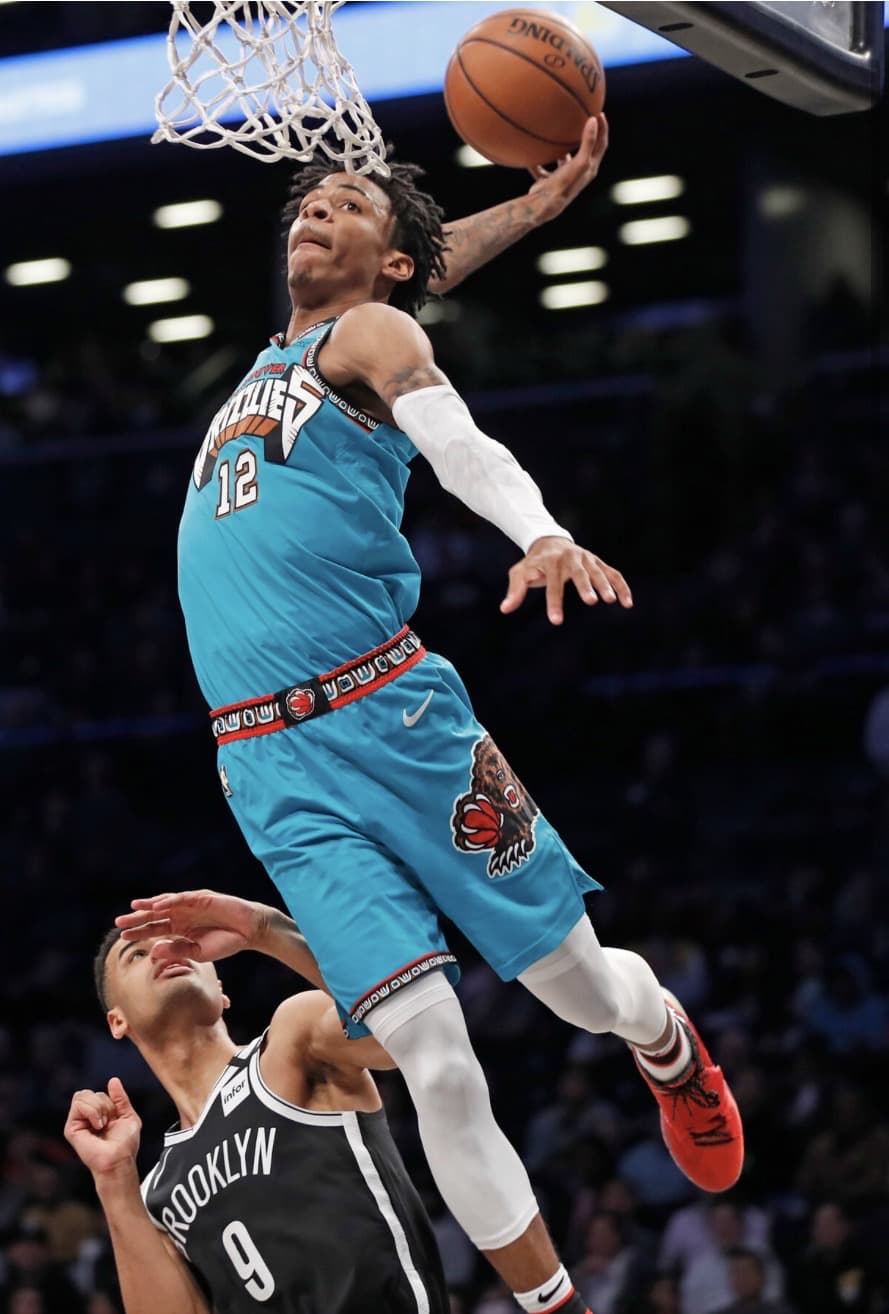
Ja Morant got “sonned” by Klay Thompson
Damn, homie. It’s like that?
Klay didn’t raise his voice, he didn’t go on a rant, he just started dropping truth bombs in full sentences. And he did it in a way where any rebuttal from Ja would look loud, defensive, and honestly a little ridiculous. This wasn’t some random role player talking crazy; this was a four-time champ basically saying, “You talk way more than you play, and we’re tired of hearing it.”
We’re a long way from the days when Ja was one of the league’s must-see attractions, the human highlight that made League Pass worth the money by himself. Now, depending on who you listen to, he’s either an often-injured shell of that player or a star quietly sandbagging his way out of Memphis. Neither version is pretty.
So in this section, we’re going to do two things:
lay out the numbers that quietly back up everything Klay implied…
and see if those receipts might finally force Ja Morant to have that “man in the mirror” moment.
Sh’mon. Ehee heeeee.
You Can’t Inherit Grit and Grind
The original edition of Memphis basketball was Mike Conley Jr., Marc Gasol, Zach Randolph and Tony Allen. That group earned respect the hard way. They played through pain. They won ugly. They made sure every scouting report came with something bloody on it by the end of a series. They didn’t ask to be feared, they made it miserable to play them.
Ja’s version of the Grizzlies has tried to inherit that same respect without walking the same road. The persona showed up before the résumé did. Fast-forward to right now: Ja is twenty-six, and instead of talking to us through his play, he’s back in the headlines in street clothes, chirping at Klay Thompson in a tunnel. After the game, Klay was asked what Ja said, and his answer was brutal in its simplicity, he basically called it empty noise. Nothing of real substance, just a lot of talking from a guy who hasn’t been on the floor enough to justify all the chatter.
When a four-time champion and one of the greatest shooters ever is effectively saying, “You’re more mouth than tape right now,” that’s not just shade. That’s a veteran voicing the disappointment a lot of hoop people feel but don’t always say out loud. And the uncomfortable part? It’s hard to argue with him.
You don’t redeem respect like it’s points on an Amex card. The Grit and Grind era was built off the backs of Randolph, Allen, Conley and Gasol. Ja Morant doesn’t get to show up, stack a couple of electric seasons and live off their legacy. Trying to cash in on that culture without matching their sacrifice isn’t toughness, it’s fraudulent behavior.
From “Face of the League” Trajectory to “Where Is This Going?”
Ja’s first few years were the exact opposite of empty.
As a rookie in 2020, he put up 17.8 points and 7.3 assists on almost 48 percent shooting at age twenty. By year three, he had exploded to 27.4 points and 6.7 assists with a 24-plus PER and efficient scoring. He made All-NBA second team, finished top seven in MVP, and looked every bit like a future face of the league. The next season, he followed it with 26.2 points, 8.1 assists, another strong PER, another top-12 MVP finish. There was Rookie of the Year. There was Most Improved. There were numbers you only attach to real stars.
On paper, the max contract made sense. This was a franchise guard with highlight packages that felt like weekly events.
Since then, everything around him has gotten louder while the basketball has faded into the background.
There was the first suspension for flashing a gun on social media. There was the second incident, throwing up gun-themed gestures after the league had made it very clear he was already on thin ice. There was conduct detrimental to the team. There was the latest right calf strain. Over the past three seasons, he’s managed only seventy-one games total. This year, the production that’s usually the safe space isn’t safe either: 17.9 points per game on 35.9 percent shooting from the field and 16.7 percent from three. His efficiency has cratered to the worst levels of his career, and the advanced metrics that used to scream “superstar” now have him underwater with a negative box plus-minus.
Stylistically, the gifts are still there. He hasn’t lost the first step. He can still live in the paint. He still warps defenses in pick-and-roll, still creates lobs for bigs, still posts an assist rate north of 36 percent. He’s still drawing fouls, still living at the line and knocking down free throws at an elite clip.
But the rhythm is gone. The efficiency is gone. The decision-making has regressed. The gap between Ja the brand and Ja the box score has never been this wide.
So when he pops into a teammate’s postgame interview and cracks a line about who the real best shooter in the building is, all while he’s not in uniform, that’s not trash talk anymore. It plays like a caricature of his own marketing.
Respect Is Rented, Not Inherited
Klay Thompson even drew a line between eras. He went out of his way to show love for the old Grindhouse teams. Conley. Gasol. Z-Bo. Tony Allen. He talked about how hard they were to beat, how real the battles were. Then he turned the lens on the current version of the Grizzlies and basically said: they talk a lot and don’t back nearly enough of it up.
It’s jarring because Klay isn’t usually the one stirring things up. If he’s saying it on the record, imagine what’s being said off it.
The truth is simple. Respect in this league is rented. It is not inherited. You don’t get the same reverence as Conley and Zach Randolph just because you share the logo and the building. You earn it by being available, by locking in, by stacking seasons where people know exactly what they’re getting from you every night.
Ja hasn’t played more than sixty-five games since his rookie year, when he hit sixty-seven. We’re only eighteen games into this season and he’s already missed a third of them. When you pair that with multiple suspensions and now a seriously ugly shooting profile, the narrative stops being about potential and starts being about reliability.
Right now, he isn’t the grim reaper of the West. He’s a storyline in street clothes.
Memphis’ Dilemma: Max Money, Minimal Leverage
From the front office side, this is nightmare math. The Grizzlies didn’t just see Ja as a star. They saw him as a franchise elevator, the kind of talent you clear the deck for and tether the next decade of your timeline to. That’s why they gave him the max. Now Ja Morant’s game hasn’t progressed and factually it has regressed to the alarming depths, that it makes Morant’s value unpalatable, which put the Memphis front office in an un comfortable position. Or is this the most Vince Carter - esque circa Toronto Raptor - Air Canada Vince Carter days, where as soon as he left for New Jersey (now Brooklyn), Carter went off and was perfectly healthy and productive.
Privately, you know they’re sitting there now asking, “What would we even get if we put him on the market tomorrow?” The answer is ugly. Yes, the name still has juice. But teams are ruthless. They’re going to look at the shot chart, the games played, the suspensions, and they’re going to lowball. You’re talking maybe one protected first, maybe a swap, maybe some questionable contracts coming back. You are not getting blue-chip prospects and a mountain of picks for this version of Ja.
And that’s the point I kept circling on the podcast: you don’t start with the trade. You start with the foundation. You rebuild trust and structure around him. You set clearer boundaries. You re-center him on basketball and accountability. You stress-test the entire timeline. You give him the space and the support to walk it back, and at the same time you’re brutally honest internally about whether his habits and his health justify staying tied to him long term.
If the goal is to restore his value, you need him playing in a way that makes other teams forget the headlines and focus on the box score again. Right now, 17.9 on bad efficiency and 16.7 percent from three is not it.
What “Walking It Down” Actually Means
The path back isn’t complicated, even if it’s hard.
On the court, he has to stack seasons where the most controversial thing about Ja Morant is that he went 9-of-24 in a random road game in February. He has to be the dude you pencil in for close to seventy games, twenty-four to twenty-six points a night on real efficiency, seven or eight assists, and constant rim pressure. No more suspensions. No more conduct-detrimental headlines. No more seeing his name trending for anything other than basketball.
Off the court, it’s about maturity, but not in the Instagram caption way. It’s about understanding that when you’re the franchise guy, you don’t just carry your own story; you carry the city’s, your teammates’, your organization’s. Klay’s comment cut because it sounded like a disappointed dad more than a rival. “I thought you were going to be better than this” energy. When a guy who’s been through injuries, comebacks and four titles says that out loud, it’s a mirror.
The other piece and this is something I spoke on from my own life, is that you don’t outrun yourself by changing teams. You take you with you.
I talked on the show about being almost nine years sober, about spending thirty years being someone I’m not proud of: drinking, lying, cheating, being devious and unreliable. None of that magically disappeared because I moved cities or changed jobs. It only changed when I treated it like a daily decision, one step at a time, over and over. You stack good days. You let the new version of you outnumber the old until the book looks different.
That’s what Ja is facing. He already has a couple of loud chapters written about him, and not the ones you want headlining a career. The only way to change the arc is to walk it down one day at a time, one season at a time. Fewer headlines, more hoop. Less bluster, more box score. Less “I want all the smoke,” more “I’ll see you for seventy-plus games and we’ll let the tape talk.”
Whether he’s in Memphis, Miami, Toronto, Sacramento, or anywhere else, the constant is him. The league has seen the talent. Nobody questions that. What people are questioning now is everything around it.
Klay just said the quiet part in public. What Ja does with that is the part that will decide what the next ten years of his story look like.
BE A FRIEND AND TELL A FRIEND!!!
Social Media and Handles:
X - Twitter Handles
Be included in the podcast!!! Drop us a line and the best ones will get read on the podcast!!!
Blue Sky Handles
Be included in the podcast!!! Drop us a line and the best ones will get read on the podcast!!!