By Vince Carter
Strategic Stillness: The Celtics’ North Star and the Art of Not Panicking
The NBA’s noise level never dips below “storm warning” especially when a contender’s window is at stake. But this summer in Boston, while the league’s headlines screamed trade rumors and panic pivots, the Celtics’ front office moved with the quiet confidence of a chess grandmaster: slow, steady, eyes on the endgame.
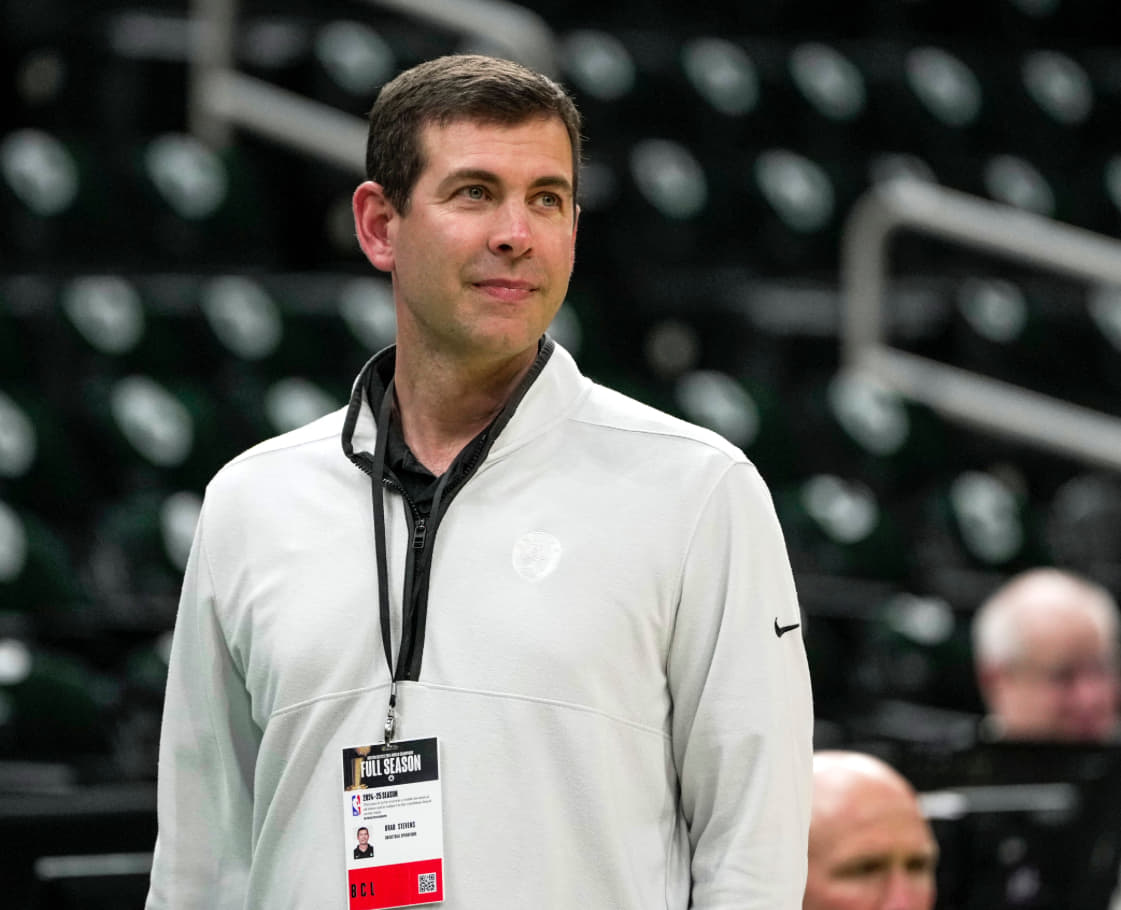
Brad Stevens and his “North Star Doctrine” are doing what few can stomach: playing the long game when the short-term could tempt even the bravest GM into a panic move. The Celtics, just a season removed from banner #18 and with a fresh owner in the building, lost four vets, watched Kristaps Porziņģis and Jrue Holiday walk, and have their franchise cornerstone Jayson Tatum rehabbing on crutches. The temptation to go big or go home is real. But Stevens has a different definition of aggression.
Let’s get tactical: Boston is pressed up against the new CBA’s “second apron,” limiting their ability to add talent via trades or exceptions. Instead of mortgaging the future for a patch job, the Celtics chose strategic subtraction shipping out expiring deals, declining to chase short-term help, and resisting the urge to overpay just to keep pace with East rivals.
This isn’t just cap math, it’s culture maintenance. “The most important acquisition is getting Tatum out of a boot,” Stevens told the press. That’s the North Star every move or non-move points toward a fully healthy core in 2026, not a headline in July.
There’s a bet here: that internal development Jaylen Brown evolving, Derrick White taking on a bigger torch, new faces like Anfernee Simons and Georges Niang buying into the program matters more than a panic buy or a first-round reach. The patience is palpable, but so is the purpose.
Is it risky? Absolutely. There’s no guarantee that draft picks or depth pieces will pop, or that Tatum comes back the same player. But by not sacrificing future flexibility, and by keeping the locker room’s faith in the mission, Boston’s built a bridge instead of a lifeboat.
FRPC’s Second Screen Q:
If you’re Boston’s GM with Tatum out, do you swing big or play the long game? What’s the one move you’d make or avoid at all costs? Sound off below or tag @Raya_FunchFRPC or @frontrunnerpc - Best comments get read on Tuesday’s podcast! Use the hashtag In Stevens we trust.
Move Tiers: Simons & Niang vs. Brown & White: Asset Play or Core Gamble?
Every NBA front office talks about “flexibility” and “asset management.” But when the dust settles, only a handful of moves truly change a team’s destiny. In Boston, the difference between flipping Anfernee Simons or Georges Niang and trading a core pillar like Jaylen Brown or Derrick White isn’t just about the trade return—it’s about what you’re willing to risk, and how you define your window.
Let’s start with the easy moves: Simons and Niang. Both are expiring contracts, both can score, both have real value just not the kind of value that bends a playoff race. Simons is a three-time 20-point scorer, a microwave on offense, but limited defensively and seen by rivals as a “one-year audition.” Niang is the archetypal stretch four: he’ll knock down threes and compete, but playoff defenses know how to target him. Package them together, and maybe Boston gets a late first or a unrefined young piece that Stevens may have had his eye on in previous draft cycles, but don’t expect a rotation-changing star to walk through that door. These are salary plays, lottery tickets moves to fine-tune the cap sheet, not rewrite the script.
Then come the core-altering decisions. Jaylen Brown, still in his prime, is the “win now” piece every desperate contender dreams about. But with Tatum hurt, Boston’s leverage is compromised and moving Brown is only an option if you get the “Godfather offer”. If he’s dealt, the return must be massive: unprotected firsts, blue-chip prospects, or a package that gives Boston a new young core. Anything less? You risk franchise credibility and a step backward that fans and locker room leaders will feel for years.
Derrick White? The league’s most underrated glue guy. Elite defender, two-way presence, culture carrier. Sure, he could net a late lottery pick or a premium young player from a contender but trading White is more than numbers. It’s a risk to team chemistry and identity. Unless Boston is overwhelmed by an offer, the calculus is simple: keep what makes you Boston.
So where does that leave the Celtics? Make the easy moves for cap health. Hold the core unless the market gives you no choice. It’s not flashy, but it’s how perennial contenders survive the NBA’s ever-shifting tides.
FRPC's Second Screen Q:
You’re Brad Stevens for a day: do you flip Simons/Niang, gamble on trading Brown or White, or run it back and trust the locker room? What’s the one move you make—or refuse to make? Drop your “war room” takes below or tag @Raya_FunchFRPC + @frontrunnerpc - best comments get read on Tuesday’s podcast! Use the hashtag Celtic Decisions!
Are the Cavs Finals-Proof or Just Finals-Favorites?
For years, the Cleveland Cavaliers were a one-man show or a shadow of one, haunted by the ghosts of LeBron’s banners. Now? They’re the East’s most balanced, quietly confident, and maybe the least dramatic true contender in the league. The question, though, isn’t whether the Cavs are “good.” It’s whether they’re built to withstand the crucible of playoff basketball or if they’re simply regular-season royalty.
Let’s start with the foundation: defense and buy-in. With Evan Mobley anchoring the back line, Jarrett Allen cleaning up mistakes, and a bench full of pros who know their roles, the Cavs allowed just 109.6 points per 100 possessions last year when Mobley and Allen shared the floor best in the East by a comfortable margin. This isn’t just rim protection, it’s a scheme. Everyone rotates. Everyone closes out. No weak links, no egos.
But the real “new face” here is growth. Donovan Mitchell has gone from solo scorer to vocal leader, and the addition of Lonzo Ball (health-permitting) brings connective tissue to an offense that was too often “Mitchell-or-bust.” This year, the Cavs have ball movement, IQ, and on paper answers to their previous playoff flaws. Mobley’s reading plays earlier. Max Strus and De’Andre Hunter bring shooting and switchability. Even the depth signings, like Nance Jr. and Sam Merrill, fit a clear profile: low maintenance, high feel, playoff experience.
And yet, for all their IQ and defense, the same old question lurks: Do the Cavs have enough offense when defenses lock in? When Garland misses time (toe surgery), can Ball’s passing and his connectivity hold down the fort? The more pressing question is two fold. One, is Garland starting to hit the level of injury prone? Second, Are the Cavaliers playoff “Tough Enough”???
Their floor is higher than anyone’s in the East but their ceiling may come down to health and the leap of one or two supporting pieces. One more veteran shooter or wing at the deadline could be the last nudge they need.
FRPC’s Second Screen Q:
Are the Cavs truly Finals-proof, or do they still need another creator or wing to make it out of the East? Who has to step up most Mitchell, Mobley, Ball, or someone else? Hit reply or tag @Raya_FunchFRPC + @frontrunnerpc - best comments get read on Tuesday’s podcast! Use the hashtag Tough Enough Cavs.
Knicks on the Brink: Defense, Depth, and the Locker Room Wild Card
Let’s get one thing straight: no team in the East can throw more long-armed, playoff-tested wings at you than the New York Knicks. If you’re a star guard, facing the trio of Mikal Bridges, OG Anunoby, and Josh Hart is a nightly trip to basketball hell. Add a healthy Mitchell Robinson protecting the rim, and you’ve got a defensive fortress that makes even Finals hopefuls sweat.
But the Knicks are a paradox. On paper, this is arguably the deepest, most switchable roster of the Jalen Brunson era. Brunson’s clutch gene is real his poise under playoff lights, paired with an off-the-dribble scoring package, gives the Knicks a closer they haven’t had in years. Karl-Anthony Towns stretches the floor, adds shot creation, and at his best, looks like the missing offensive piece. And then there’s the depth: Jordan Clarkson’s bench scoring, Miles McBride’s point-of-attack defense, second year upside in Tyler Kolek and Pacome Dadiet.
And yet ask anyone around the league, and they’ll tell you the biggest variable isn’t talent or tactics. It’s chemistry. This locker room has seen its share of friction and hierarchy questions. New head coach Mike Brown inherits a group still adjusting to KAT, with every move under the microscope. If roles aren’t clear by Thanksgiving, or if Towns doesn’t buy in defensively, this could all unravel fast.
Mike Brown’s challenge? How much can the Knicks utilize the two bigs option with KAT and Mitchell Robinson? Bridges and OG are model teammates, and Hart is the glue, but this group needs collective buy-in as much as it needs another shooter. There’s enough versatility big, small, offense, defense to mix and match with anyone. But if Towns’ defensive lapses rear up in May, or if bench shooting goes cold, even all this depth won’t save them.
There’s a path to the Finals, can Brunson allow one of Bridges or Annunoby to flourish on ball to diversify the offense and take some of the load off Brunson? If Brown gets the buy-in, the Knicks can defend, score, and close out playoff games with as many options as any team in basketball. If not? Upset watch starts early.
FRPC's Second Screen Q:
Who’s the Knicks’ real “third closer” after Brunson and Towns, Bridges or OG? And what’s more important: adding another scorer, or finally getting KAT to defend? Debate below or tag @Raya_FunchFRPC + @frontrunnerpc - best comments get read on Tuesday’s podcast! Use the hashtag, All day Knicks.
Orlando’s Leap Comes with Spacing, Buy-In, and the Paolo Pressure Test
For the first time in a decade, the Orlando Magic enter a season with real expectations, not just hope. Gone are the days of “happy to be here” this is a roster with defensive teeth, high-character leadership, and enough depth to punch above their years. But at the core of Orlando’s rise is a singular question: can Paolo Banchero has shown that he is a certified bucket! The difficulty of shots that Banchero is forced to hit because of lack of spacing has been the knit that we have to pick!
Let’s start with what’s changed. The Magic didn’t just add talent; they added the right kinds of talent. Desmond Bane brings off-ball movement and sniper-level shooting, the perfect complement to Banchero and Franz Wagner’s on-ball creativity. Tyus Jones? He’s the adult in the room a steadying hand at point guard who minimizes mistakes and raises the group’s collective IQ. With these additions, Orlando’s offense finally has structure and spacing, the two things they’ve lacked for years.
Defensively, the Magic are already elite. Jalen Suggs is a point-of-attack pest, Wagner and Isaac (when healthy) offer size and switchability, and the collective buy-in is obvious. Last season, they ranked top five in both opponent turnover rate and defensive rebounding rare air for such a young team. This isn’t a fluke. Every core player fits the “coachable, multi-positional” archetype the front office has been chasing.
But in the playoffs, everything slows down. The offense gets tight, and the pressure falls on your biggest talent. Banchero has all the tools: size, skill, confidence, and improving vision. The question isn’t about his floor it’s whether he can carry an offense in clutch moments when defenses are loaded up and game plans are custom-built to stop him. Wagner’s playmaking, Bane’s gravity, and Jones’ steadiness help, but at some point, Franz Wagner must shoot better from beyond the arc to give the Orlando Magic the balance it is searching for!
There’s also the classic young team concerns: can the bench provide enough scoring when it counts? Will the youth (Howard, Black, Da Silva) stay poised if the offense grinds? And maybe most importantly can this group stay healthy? Isaac and Carter are difference-makers but haven’t proven durable over a full run.
Orlando is a dark horse East Finals contender if Banchero pops and the defense holds. If not? The path gets rockier, but the future is finally worth betting on.
Vince Carter’s Second Screen Q:
Is Orlando ready to be a true playoff contender, or do the Magic still need another floor spacer to survive in May? Can Franz Wagner be NBA league average three point shooter? Drop your takes below or tag @Raya_FunchFRPC + @frontrunnerpc - best comments get read on Tuesday’s podcast! Use the hashtag Magic Shooter!
Atlanta’s Win Now Moves Or Trea Young’s Final Exam Under Quinn Snyder?
Atlanta didn’t tiptoe into this offseason they kicked the door down and dared the rest of the East to answer. Kristaps Porziņģis arrived with the promise of rim protection and spacing, Nickeil Alexander-Walker and Luke Kennard bring shooting and versatility, and there’s a wave of youth waiting for their playoff moment. No team in the conference made louder, riskier moves, and on paper, the Hawks can score with anybody.
But for all the shiny new toys, the story in Atlanta remains the same: Can this team defend when it matters? Trae Young is still the offensive engine one of the NBA’s elite pick-and-roll maestros but he’s also the first name playoff opponents circle when they hunt for weak links. Last year, Atlanta ranked second in the East in halfcourt offensive efficiency, yet bottom five in defensive effective field goal percentage. The math is simple: to go from dangerous to deadly, something’s got to give on the other end.
Porziņģis changes the equation… if he’s healthy. His rim protection and shooting add a dimension Atlanta hasn’t had since the peak Capela days, but his availability is always a coin flip. Around him, the front office doubled down on length and flexibility Jalen Johnson is the X-factor and more importantly the pivot if Trea Young cannot show marginal improvement on the defensive end. Dyson Daniels and Zaccharie Risacher bring defensive potential, and Okongwu anchors as a switchable big. Still, asking a (Risacher) and a young player such as (Daniels) to deliver playoff minutes is a gamble.
What’s different this year is the locker room tone: after seasons of whispers about chemistry and leadership, only time will tell if this group can show they are bought in. Porziņģis, Okongwu, and NAW are all low-ego, coachable pieces, and there’s genuine belief that Jalen Johnson’s development could swing the season. Add shooters like Kennard to the mix, and Atlanta has the flexibility to mix and match lineups for any matchup.
Yet, every strength comes with a “but.” If Porziņģis misses time, interior defense and spacing nosedive. If Trae can’t hide on defense, the entire two-way model collapses against elite playoff offenses. And while the offense should hum, playoff defenses are ruthless Atlanta’s young wings will have to prove they’re not just regular season darlings.
The upside? This team could crash the East Finals if everything breaks right. The risk? Another first- or second-round exit if old habits and defensive gaps resurface.
FRPC’s Second Screen Q:
What’s Atlanta’s true ceiling East Finals, or another playoff disappointment? And if Porziņģis goes down, who steps up to keep them afloat? Let’s debate: reply below or tag @Raya_FunchFRPC + @frontrunnerpc - best comments get read on Tuesday’s podcast! Use the hashtag defend the ATL!