By Vince Carter
Zillow Dreams & Giannis Nightmares
There’s breakup talk… and then there’s Bucks talk. This isn’t just a slow separation. This is a full-on emotional decoupling happening in real time—while both parties are still pretending to make it work. The fans feel it. The front office knows it. And deep down, even Giannis knows it: this thing is done.
The vibes in Milwaukee? Like watching your best friend stay in a relationship that everyone knows is over. Except your best friend is a two-time MVP, and the relationship is being kept alive by cap spreadsheets, bad knees, and loyalty myths that no longer scale.
Giannis hasn’t officially asked out. But he's shopping Zillow. That’s not a metaphor. That’s literally what Vince said on the pod. He’s eyeing bigger markets, better rosters, and a shot at multiple rings—not just the one from 2021 that saved the franchise. Because here’s the thing: Giannis doesn’t want to be Dirk. He wants to be Duncan—with multiple rings, organizational stability, and legacy longevity. Milwaukee can’t offer that anymore.
And it’s not for lack of trying.
The front office emptied the bag.
They brought in Jrue.
Flipped Jrue for Dame.
Swapped coaches like they were going through speed dating.
Gave Middleton one more go despite declining health.
They tried. But the roster’s cooked.
Dame: $54M, Achilles tear
Middleton: Diminishing return on $30M+
Portis, Connaughton, Lopez: Can’t stay healthy or scale in the playoffs
Draft picks: Gone until 2031
That’s not a roster—it’s a financial crash site.
And here’s what hurts most: Giannis is still elite.
Box Plus-Minus: +9.8
True Shooting %: 64
On/Off Net Rating: +9.4
That’s Jokic-level impact. Which means his value has never been higher—and may never be again. So if you’re going to move him? You don’t wait. You sell the Ferrari before it catches a transmission issue.
Milwaukee can ask for the moon—and probably get it. Players, picks, a marketing department, a couple team therapists, an arena naming rights deal. That’s the level Giannis is still operating on.
So what now? You trade the star. You detonate. You reset.
Because holding onto him out of fear? That’s how franchises end up in the wilderness for a decade.
Houston makes sense: young talent, overstuffed roster, and the picks to balance it.
San Antonio? A potential Wemby-Giannis frontcourt would terrify the league.
Brooklyn? Big market dreams, but little real juice.
Atlanta? Just crazy enough to work, with defensive identity and upside.
The East? Doesn’t matter. This isn’t about conference rivalries. It’s about value extraction.
And it’s worth repeating: Milwaukee has no draft capital of its own until 2031.
That’s not just inconvenient. That’s fatal in a league driven by cost-controlled talent and window management.
The Bucks have to choose between romanticism and realism.
Between hanging on for nostalgia’s sake or accepting that 2021 was lightning in a bottle—and that bottle’s broken.
If they don’t move now, they’ll get stuck with a loyal star, a first-round ceiling, and a fanbase wondering how it all went so wrong so fast.
Because here’s the real question:
Are you going to lose Giannis for something… or lose him for nothing?
The Draft Heist: Cooper Flagg, The WWE Heel Turn, and The Business of the NBA
he NBA didn’t rig it—but Nico Harrison got saved like it was scripted)
"This wasn’t a draft. This was a storyline."
From the opening horn, Soraya’s voice drops like a steel chair across the face of fairness. The glass shatters, the boos rise, and the NBA Draft Lottery morphs into something far more theatrical: a heist movie where the villain gets handed a second chance.
Let’s rewind. Earlier this season, Dallas traded Luka Doncic to the Los Angeles franchise in a move now considered one of the most reckless front office missteps in league history. Nico Harrison panicked—chose vibes over vision—and gave away a generational offensive weapon in the name of timeline balance. The backlash was instant. Social feeds burned. ESPN anchors blinked twice like someone was off-camera holding cue cards. And just like that, the Mavs were persona non grata.
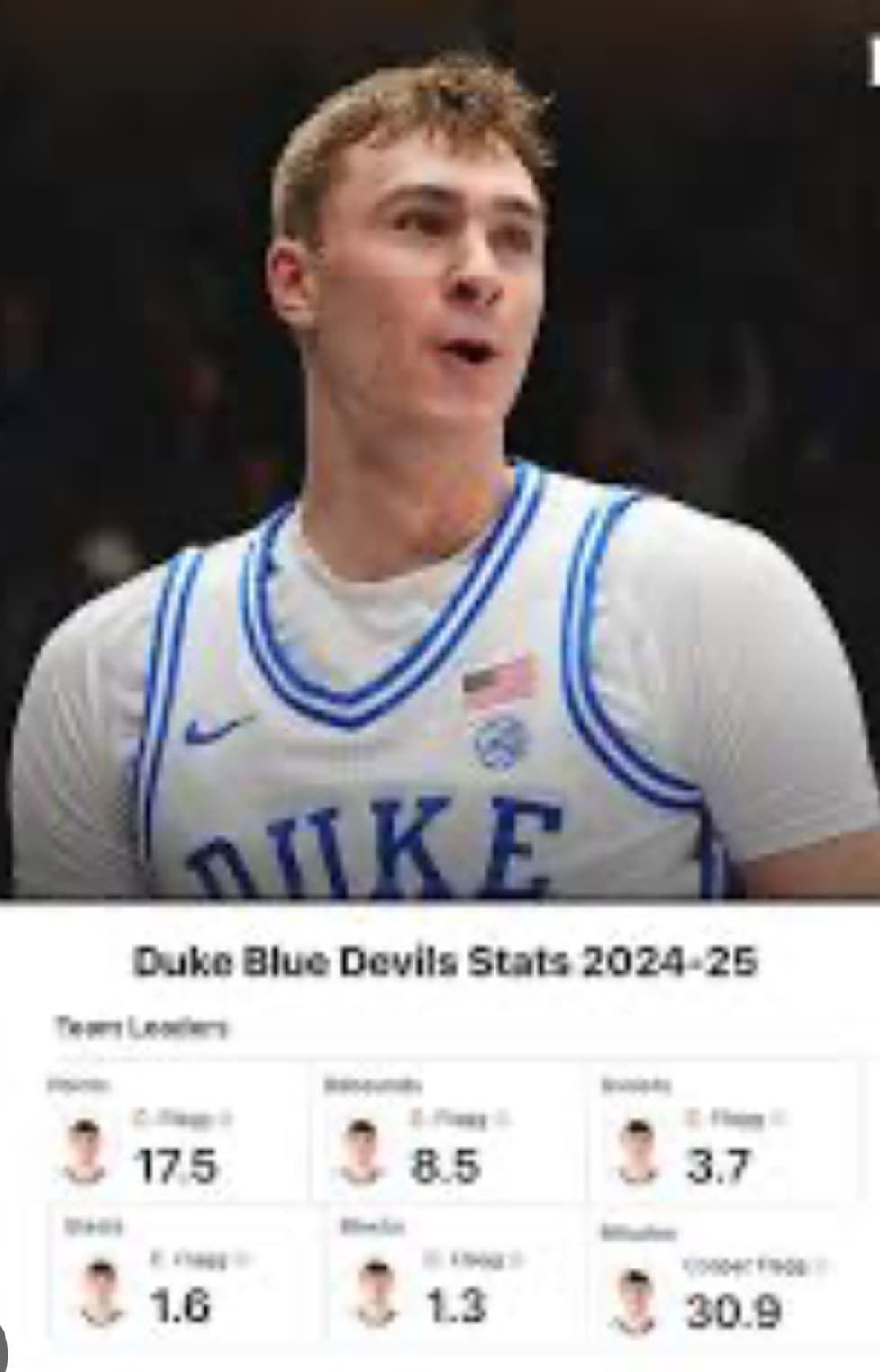
Fast forward: 1.8% odds. Lowest in the lottery. And yet Dallas is handed the No. 1 pick. That pick? Cooper Flagg.
He’s not just good—he’s perfectly timed. White American, media polished, NCAA box score killer. 38.5% from three. Top-tier BPM. Defends across four positions. Off the court? Already posing like he’s contractually obligated to give “future face of the league” vibes. Patriotic workout clips. Polished interviews. And now he’s not going to Portland, Charlotte, or Utah. He’s landing in Dallas—the exact market that needed a miracle.
And it wasn’t just the optics. It was the silence.
Nico Harrison didn’t even show up. The Mavs sent Rolando Blackman, cool as ever, emotionless as the envelope was pulled. And suddenly, the franchise that had just lit itself on fire in February... was back in the driver’s seat. No rebuild. No shame. Just a clean rebrand.
This is the kind of result that doesn’t just raise eyebrows—it raises suspicion. There’s no direct evidence, of course. But there’s plenty of alignment. The NBA has been here before—LeBron to Cleveland, Rose to Chicago, Zion to New Orleans. The lottery doesn’t reward the worst—it rewards the most valuable storyline. And Dallas, fresh off losing Luka, was a crisis and an opportunity.
Cooper Flagg landing there? It’s good for television. It’s good for jersey sales. It’s good for the narrative.
Meanwhile, San Antonio keeps stacking assets like a Silicon Valley fund—Wemby, Castle, and another likely top-7 pick next year. Philly stumbles into No. 3 and resets their timeline again, because failing up is kind of their brand. Utah, Brooklyn, and Washington? Irrelevant again.
The NBA didn’t rig the lottery.
But it absolutely curated the outcome.
It didn’t need to cheat. It just needed to tilt.
You don’t need a fix when the odds already lean toward drama.
So now Dallas, a team that should be buried in criticism, is reborn with the most marketing-friendly prospect since Blake Griffin met a Kia. Cooper Flagg isn’t just a player. He’s story armor. The NBA handed Nico Harrison a parachute right as the fanbase was looking for torches.
This wasn’t ping pong.
It was programming.
And it aired in primetime.
Best. For. Business.
Boston’s Half-a-Billion Dollar Hangover
It’s one thing to lose a superstar. It’s another to lose your financial oxygen at the same time. That’s what Boston’s facing.
When Jason Tatum tore his Achilles in the postseason, it wasn’t just a gut punch to the Celtics’ title hopes. It shattered their protective logic—the illusion that you can just spend your way out of roster fragility. Now? They’re looking down the barrel of a $500+ million payroll with no MVP-caliber player suiting up next season.
Let’s break it down:
Tatum: $59M (new extension kicks in)
Jaylen Brown: $54M
Porzingis, Holiday, White, Horford: $90M combined
That’s $203M just between six players. Before bench depth. Before buyouts. Before penalties.
And here’s the kicker: they’re either entering Year 2 of the second apron—or delaying the inevitable by a single season.
The second apron isn’t a tax. It’s a chokehold. It removes the most basic tools used to course-correct:
No mid-level exception
No aggregation of contracts in trades
No buyout market access
No flexibility to send out cash in deals
No sign-and-trades incoming
No step-laddering multiple mid-tier deals into an impact guy
Boston isn’t a team. It’s a luxury holding company. And now that Tatum’s out for 12–14 months, the question is no longer “How do they win the East?” It’s “What if they tear it down?”
Because here’s the chessboard:
Boston owns its 2026 first-round pick.
And that draft is expected to be loaded. AJ Dybantsa. Cameron Boozer. Koa Peat. Ace Bailey. Several top-10 names who could shift franchise futures.
So what if Brad Stevens goes nuclear?
Let’s map it:
Trade Jaylen Brown now, before the extension becomes even more toxic on the books. Even 60¢ on the dollar returns multiple rotation players or future capital.
Let Jrue Holiday walk, or flip him early next season to a contender (he’s still an elite defender, just miscast as a primary initiator).
Porzingis has one year left after this. Ride it out or explore a soft salary dump.
Derrick White becomes your steady veteran. Peyton Pritchard becomes your test case lead guard.
That group doesn’t win 50 games. That’s the point.
You float in that 25–35 win range, give the minutes to Jordan Walsh, Neemias Queta, JD Davison types, and pray the lottery balls hit just right. You’re not tanking—you’re clearing the cap and reloading your timeline.
When Tatum returns in 2026, you’ve potentially:
Reset the second apron clock
Reclaimed full draft flexibility
Maintained a quality developmental core
Possibly added a top-5 draft talent on a rookie-scale contract
Repositioned Tatum as the returning hero, not the overpaid anchor
The Celtics could become the Spurs with more resources—resetting while still maintaining culture and infrastructure.
Would Boston fans stomach it? Maybe not. But consider the alternative:
$500M payroll
No Tatum
A 46-win season ending in a 5-game second-round exit
No room to improve
No young assets besides Pritchard and some shaky upside guys
No cap space until 2027
That’s not contending. That’s delaying the inevitable.
Brad Stevens has a decision to make. Stay loyal to a core that got them close but never over the line? Or be ruthless and rebuild around a Tatum-led redux?
Because here’s what nobody’s saying: Jaylen Brown isn’t a franchise 1A. Not even close. He’s an elite 2—but a problematic one when he’s eating 25% of your cap and can’t reliably pass out of doubles. And with Tatum out, Brown as your lead guy isn’t just inefficient—it’s economically devastating.
So this summer becomes a referendum not just on the Celtics—but on how front offices understand era shifts.
The second apron was designed to humble big spenders. Boston is Exhibit A.
What do you do when you’ve built a beautiful house on a plot of land with a sinkhole?
You either reinforce the foundation…
Or you walk away before the whole thing collapses.
Tatum’s injury opened a window. Not for contention—but for clarity.
If Stevens is bold enough, he could use this moment to pivot into one of the savviest rebuilds in modern league history. Not a “blow it up” tankathon. But a financial detox with long-term vision and short-term sacrifice.
The Celtics are out of runway.
It’s either go nuclear now…
Or go nowhere for the next four years.
Cleveland & Indiana: When the Lights Hit, One Rose. One Froze.
Not all playoff collapses are equal. Some are about injuries. Some are about bad matchups. But Cleveland’s exit? That was exposure. When the lights got hot, Indiana rose. Cleveland froze.
Let’s start with Indiana. Tyrese Haliburton didn’t just play well—he conducted. 31 points. 8 assists. 60% from three. He was surgical. Poised. Efficient. Built for pace, but calm under pressure. Pascal Siakam bullied switches, Andrew Nembhard worked off the ball like a vet, and Aaron Nesmith? Outplayed Max Strus simply by existing. Movement. Hustle. Rotations. Carlisle’s crew didn’t just show up—they finished the job on Cleveland’s floor. That wasn’t a win. That was a message.
Indiana has an identity now. Purposeful pace. Inside-out IQ. Connected defense. They don’t need a face—they have a system. And when they walked off Cleveland’s floor, they didn’t just celebrate—they validated their season. No fluff, no fluke. Built on spacing, rhythm, and humility.
This team is more than Haliburton. They’re 10-deep with interchangeable wings, elbow facilitators, and guys who knowtheir roles. You don’t see anyone freelancing. You see trust. Carlisle tightened this rotation and asked for precision—and he got it. Indiana played like a team ready for the moment because they planned for it all year.
Now Cleveland.
Donovan Mitchell: 35 points.
Darius Garland: 4-for-16, 0 free throws.
Staggered actions collapsed. No rim pressure. No help at the point of attack.
Mobley was solid. Everyone else? Noise.
Max Strus went 0-for-9 with zero rebounds. Jarrett Allen was again out. Garland looked shook. The Cavs had no second-side action, no downhill threats, and no playmaking from their wings. When your best two creators are 6’1” guards who need ball screens to generate flow, your margin of error disappears. That’s regular season logic. The playoffs expose infrastructure. And Cleveland’s was rickety from the jump.
This isn’t just about execution. It’s about build. Cleveland built a team for aesthetics. Indiana built a team for impact.They didn’t spend big. They spent smart. The Siakam trade wasn’t about a star—it was about a connector. And it worked.
So what now? Garland or Mitchell? You can’t run this same backcourt again. Not after what Indiana just exposed. You either grow one to 6’5” overnight or you call a moving truck. Mitchell reportedly won’t sign an extension. Garland’s value might never be higher. You can’t wait another year to decide who you are. This roster is in cap quicksand and contract limbo. Do you cash out Mitchell? Rebuild around Mobley? Or double down on something that clearly doesn’t scale?
Let’s say it clearly: this core doesn’t work in May. It never will.
Because the Pacers? They’re here.
They’re not loud.
They’re legit.
And the Cavs? They’re in that brutal limbo where your numbers are nice but your identity’s hollow. The hard part of the rebuild—stockpiling picks, developing Mobley—is over. But the smart part—building a functional hierarchy—hasn’t even started.
This series wasn’t about upsets. It was about readiness. Indiana’s not just ahead—they’re aligned. Cleveland’s not just behind—they’re bloated.
Sometimes, the lights show you who’s ready.
Sometimes, they show you who needs to unplug the whole system.
OKC vs Denver: When Trust Ball Breaks a Super Team’s Back
We’re past the “young core overachieves” narrative. OKC isn’t just cute anymore. They’re calculated. And in Game 5, they didn’t just beat Denver—they dissected them. This wasn’t an upset. This was a shift.
Shai Gilgeous-Alexander didn’t panic. He piloted. 31 points, 7 assists, all in rhythm. Midrange mastery. Deceleration footwork. Elite shot selection. Meanwhile, Jalen Williams gave them 18-9-4 and looked more decisive than Denver’s entire guard rotation. But that’s not the story.
The story is trust.
OKC’s assist-to-pass ratio was 4:1. Every touch led to something. Every player moved like they expected the ball back. There’s a cadence to how they play—unselfish but never passive, creative without freelancing. Hartenstein and Chet combined for 29 points, 15 boards, 2 blocks. Caruso hit timely threes and racked up deflections. These weren’t just role players—they were functionality. This is what happens when a team builds around principle, not superstardom.
Denver? Looked exhausted.
Jokic gave them 44-15-5. It wasn’t enough.
MPJ? One bucket. No boards. No presence.
Murray? 28 points, but forced. 27 shots. 3-of-13 from deep with two air balls.
You can love cohesion. But cohesion without adaptation is inertia. Denver’s rotations were stale. Their shot profile, outdated. Their belief? Fragile. You could see it every time Jokic looked at the bench and saw nothing but hope and half-court prayers.
Meanwhile, OKC weaponized modernity. Wing initiators. Stretch 5s. Secondary ball-handlers. Defensive elasticity. Chet closed space like a Marvel edit. Caruso jumped passing lanes like he knew the scout six screens ahead. And Shai? Played like a man who doesn’t just want your respect—he wants your identity.
As Soraya said: “Denver isn’t addicted to stars. They’re addicted to cohesion.”
That’s beautiful in theory. But in practice? It’s predictable. You can’t beat a team that’s outthinking you and out-trusting you.
OKC isn’t a “future contender.”
They’re right now.
This is what the new NBA looks like: intelligent systems, not solo stars.
The rebellion isn’t coming.
It’s already in the room.
Sliding Doors Summer: What the NBA’s Chaos Cycle Means for Fans and Franchises
Every offseason has questions. But this one? Feels existential. It’s not just about trades. It’s about timelines. About windows. About what version of the NBA you actually believe in.
Boston is on the hook for a half-billion in payroll with no Tatum. Milwaukee’s clinging to a legacy as the tax bill suffocates their future. Brooklyn? Tanked for table scraps. Utah? Still waiting for picks to grow into players. And now Dallas—who traded Luka Doncic in one of the worst decisions in NBA history—gets bailed out with the #1 pick and a fully marketable franchise reset in Cooper Flagg.
Meanwhile, Indiana didn’t blink. OKC didn’t flinch. San Antonio keeps compounding. The real shift isn’t happening on ESPN panels or Shams bombs—it’s happening at the team-building level. Sliding doors are creaking open or slamming shut everywhere.
This summer, every franchise will be asked one question: “Do you believe in your own plan?”
For Boston, that might mean selling off Jaylen Brown before Tatum returns. For Cleveland, it means choosing between Mitchell and Garland before it’s chosen for them. For Philly? Re-roll the dice. Again. For Golden State? Accept that the dynasty is cooked.
And for the fans? It's about clarity. Are you supporting a team with a vision or a memory?
Soraya closed the episode like this:
“The lottery was never fair. But now it’s a feature, not a flaw. Flagg’s in Dallas. Boston’s broke. And somewhere in the league office, the script got greenlit. We’re just living in it.”
The NBA’s chaos economy isn’t a glitch. It’s the model.
Stars move. Picks get hoarded. Identity flickers and reboots.
And if your team isn’t on the storyboard? You’re not in the show.
The only constant now?
You either control the narrative…
Or you get buried by one