By Vince Carter and Soraya G.
Friday Night Lights, Global Hype: FRPC’s NBA Community Hits Different
When it’s late on a Friday and the basketball world is buzzing, there’s nothing quite like the feeling inside the Front Runner Podcast Collective. If you’re reading this, you already know: the NBA might have its official schedule, but the real action is when the conversation picks up around the globe. What started as a niche, passionate show has now gone worldwide shoutout to listeners in China, Japan, New Zealand, Australia, South America, North America, and across the pond in Europe. The FRPC isn’t just a podcast. It’s a growing movement, a virtual locker room where hoops diehards unite and trade takes across time zones.
For a creator, this kind of global audience is humbling. When you flip on the mic, you never truly know who’s on the other end or how far your words will travel. It’s not about speaking to millions right away. It’s about finding your tribe, building with them, and letting authentic word-of-mouth do the rest. And, honestly? The “FRPC Army” has done the heavy lifting. You’ve driven the show’s rise. You’ve shaped what lands and what doesn’t. If you’re reading this, you’re not just a passive listener you’re part of the engine.
But momentum doesn’t maintain itself. In this new era of the NBA, stories and communities spread fast, but loyalty is what lasts. The call is simple: be a friend, tell a friend. Share the link, post a hot take, bring someone new into the conversation. In a sports media landscape obsessed with algorithms, there’s something beautifully old-school about letting people carry the torch.
Here’s to you—the international diehards, the late-night statheads, the group chat GMs, the folks arguing Luka vs. SGA in the comment sections and in real life. You’re the pulse behind the show. And with the NBA offseason drama at full throttle, this community is just getting started. Keep riding with us. The future’s global, and so is our story.
Soraya’s Button: “Look, I’ve spent enough time chasing stories in cold arenas and hot gyms to know this: community isn’t an algorithm it’s chemistry. If you’re in our circle, you’re in on the story, not just hearing about it secondhand. FRPC is for the ones who can’t help but care. And if that’s you? Welcome home.”
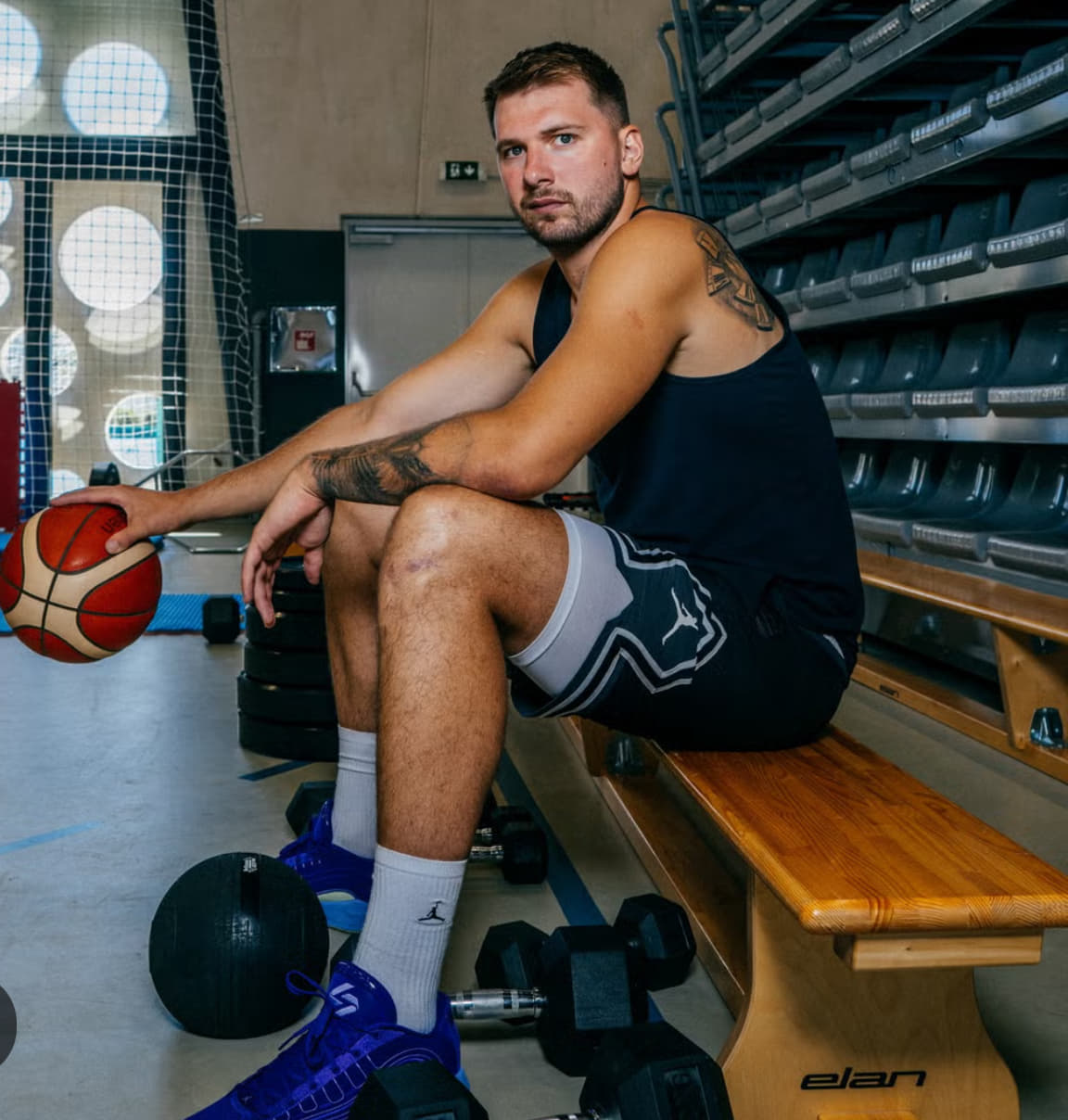
Luka Doncic’s Reinvention: Why 35 Pounds Is Just the Beginning
NBA offseason headlines are easy to tune out guys hit the gym, bodies transform, and IG explodes with “best shape of his life” posts. But what Luka Doncic pulled off this summer? That’s not a glow-up it’s a statement of intent. Dropping 35 pounds wasn’t about chasing aesthetics; it was about chasing greatness. You see it in his footwork, his sharper cuts, and the glint of “petty MVP energy” that he’s channeling. Luka didn’t just lose weight he recalibrated his approach to the game, and, by extension, the Lakers’ entire offensive philosophy.
Soraya’s Button: “I can spot a performative ‘summer body’ Instagram from a mile away, but what Luka’s doing? That’s next-level intention. He’s not chasing clout he’s hunting banners. I’ve learned to trust the ones who do the work when nobody’s watching, and Luka’s doing it with a side of that glorious NBA pettiness I absolutely love. Stay petty, stay dangerous.
Let’s set the scene. Only a couple of years ago, Luka was putting up 34, 8, and 9 in Dallas and dragging a battered squad to the Finals. Runner-up MVP, global face of the league, already a legend in the making. But this latest transformation? It signals something even bigger. He’s not just “in shape” he’s moving with the confidence and urgency of someone who knows the window is open, but not forever.
On the court, the impact is already showing. Footwork: tighter. First step: deadlier. And according to close watchers of his summer run including some serious IG sleuthing Luka is spry in a way he hasn’t been since his teenage Euro days. The league’s on notice. This isn’t a guy playing for headlines; it’s a dude preparing for a title run and the kind of legacy that leaves zero doubt.
There’s a mental edge here, too. Luka has always been a competitor (and, let’s be honest, one of the NBA’s great on-court petty kings), but this summer’s transformation screams “no more excuses.” He’s prepping for a title fight, not a summer photoshoot. Don’t be surprised if his name is right back in the MVP conversation only this time, with a fresh set of tools and a city hungry to ride with him.
The real test? What this version of Luka means for the Lakers and the NBA’s balance of power. Spoiler alert: If he keeps up this pace, we might be looking at a new face of the franchise and a whole new era in LA basketball.
The Luka-LeBron Axis: Why LA’s Offense Is About to Get Unstoppable
Let’s talk fit. When you combine a reenergized, slimmed-down Luka Doncic with LeBron James arguably the smartest player in the league’s modern era you get more than just box-office basketball. You get a chemistry experiment that could redefine how the Lakers attack, especially if LeBron leans into a pick-and-roll power forward role.
Year 23 is wild for any NBA player. But for LeBron, it’s more than just survival it’s about maximizing every last drop of athleticism and IQ. Yes, he’s lost a step. But he’s still more explosive at 41 than most guys in their twenties. The X-factor? Luka can now shoulder primary creation duties, freeing LeBron to conserve energy, hunt mismatches, and destroy teams as a secondary option. If JJ Redick can coax the duo to lean into that pick-and-roll duo, defenses will be left scrambling do you double Luka and risk LeBron rolling? Switch and let LeBron bulldoze a wing? Or collapse and risk shooters burning you from the perimeter?
But this is more than tactics; it’s about leadership handoff. LeBron’s role as mentor and secondary engine lets him be surgical in his attacks no more grinding through regular-season slogs. And with Austin Reaves emerging as a legitimate backcourt threat, this Lakers roster can run, space, and punish in ways that recall the franchise’s most dynamic eras.
For Lakers fans, this moment feels bigger than hype. When LeBron first landed in LA, there was excitement, but also skepticism could the team find its next era of dominance? Luka’s arrival, paired with his off-court commitment, is different. There’s a roar in the building, not just a murmur. A sense that, for the first time since Kobe, the Lakers have a star who can carry them into the future while still letting LeBron chase one last ring.
Soraya’s Button: I’ve always been a sucker for weird, beautiful basketball partnerships give me Bird/McHale, give me Shaq/Kobe chaos, give me Luka and LeBron running a two-man game. People think offense is just tactics, but it’s also trust, timing, and letting your freak flag fly. And trust me, no one’s going to be cooler under the lights than this duo. If you hear me yelling at the screen, just know I’m living for the chess match.
Don’t sleep on the contract drama, either. Word is, Luka’s about to lock in for a speculated four years, $227 million an extension that could reset the Lakers’ timeline for a decade. That signature won’t just shake the city it might register on the Richter scale.
The Restricted Free Agent Squeeze: $30 Million Questions and CBA Cold Truths
NBA fans love to debate who “deserves the bag,” but this summer’s contract gridlock says more about the league’s new reality than any player’s stat line. The era of big, borderline “third star” contracts is over unless you’re a playoff-proof, two-way force who makes your team more than just good PR. The new CBA and its infamous “apron” have turned every mid-to-high eight-figure slot into a make-or-break decision. Front offices are sweating every $30-33 million dollar move, knowing that one mistake can cripple flexibility for years.
Look at this summer’s restricted free agent drama: Josh Giddey, Jonathan Kuminga, Quentin Grimes, Cam Thomas. All with upside, all waiting for their market to shake loose. Why? Because teams aren’t just buying potential anymore they’re paying for postseason scalability. Giddey is a vision-first playmaker, but who does he guard? Kaminga’s athleticism is through the roof, but has he proven he can swing a playoff series? Grimes and Thomas good players, but can you trust them to be a top-three option in crunch time? Front offices know: if you miss on that $30 million slot, you’re not just burning cap you’re risking your job.
The lesson? Owners aren’t paying $30M for “vibes.” They want a player who spikes win probability in May and June, not just October. Only two teams in the last six years have reached the conference finals with a dead money $30 million slot, and both got bounced. In the modern CBA, there’s nowhere to hide a bad deal. Owners are telling GMs: If you want that check signed, show me playoff impact, not just regular-season highlights.
Soraya’s Button: Honestly, if I had a nickel for every ‘future star’ who fizzled when the money got real, I could fund my own G League team. The lesson? Don’t just chase the bag; chase a spot in May and June. If you can’t lock up on D, hit a corner three, or swing a playoff series, the market doesn’t care about your mixtape. And neither do I. We’re building dynasties, not highlights
Teams like Oklahoma City are showing the blueprint: every contract has to fit. There’s no room for redundancy or sentimental overpays. The new NBA is cold-blooded. If you’re a restricted free agent who can’t defend, can’t shoot, or can’t change a playoff series, you’re learning the hard way potential pays, but only when it’s proven.
Oklahoma City and the New Model for Team Building
Oklahoma City isn’t just building a contender they’re showing the entire league how to thrive in this new economic landscape. The Thunder aren’t paying for names, they’re paying for roles. SGA is the engine. Jalen Williams is the Swiss Army knife. Chet Holmgren is the unicorn who guards the rim, stretches the floor, and hasn’t hit his ceiling. Every contract is tailored to fit, not overlap, and every dollar is spent with playoff matchups in mind.
What makes OKC’s approach so effective? Balance and flexibility. They lock up core players early, avoiding messy player opt-outs that blow up future plans. When Chet got paid, there was no drama just mutual recognition that he’s unique (how many 7’1” rim protectors can switch onto guards and hit threes at age 23?) and worth investing in for the long haul. There’s no risk of max redundancy. No “overlap” that gums up the rotation. It’s an assembly line built for the postseason, not just highlight reels.
Soraya’s Button: If you’re not learning from OKC, you’re behind. Period. I love a front office with the guts to zig while everyone else zags. There’s nothing sexier to me than a roster with no wasted motion no overlapping egos, no ‘max for the wrong guy’ mistakes. Give me the team that’s thinking about May, not just Instagram likes in October. That’s how you set the blueprint for the next decade.
Compare that to franchises haunted by the ghosts of bad contracts think Tobias Harris in Philly, Zach LaVine in Chicago, or any team that’s paid big for regular season stats only to be exposed in May. The difference is discipline. OKC’s front office doesn’t fall for points-per-game inflation or empty calorie production. They pay for versatility and playoff proofing, not nostalgia.
Want to know what separates the good teams from the contenders? Ask yourself: if your third-highest paid guy can’t close games, defend, or “swing” a series, are you really a threat? The Thunder say no. And so does the modern NBA.
Soraya’s last note: As FRPC’s Chief Content Operator, my mission is to give you more than just a summary. I want you to feel the stakes, see the chess moves, and maybe argue with me just a little. Because if you’re not fired up about where this league is headed, we haven’t done our job. We are a team. Let’s keep the takes smart, the vibes immaculately spicy, and the conversations robust!
X - Twitter Handles