By Vince Carter
When Identity Becomes the Enemy: Philly’s Double Life
Right now, the Philadelphia 76ers aren’t tanking. They aren’t contending. They’re just… here. And in today’s NBA, that’s the most dangerous place to be.
For a fanbase that once found meaning in the word “Process,” Philly’s living in a weird basketball purgatory: too proud to blow it up, too battered to build forward, too expensive to get flexible. They’re a franchise building two identities at once, and as the saying goes, build two, finish none.
The Split Personality Sixers
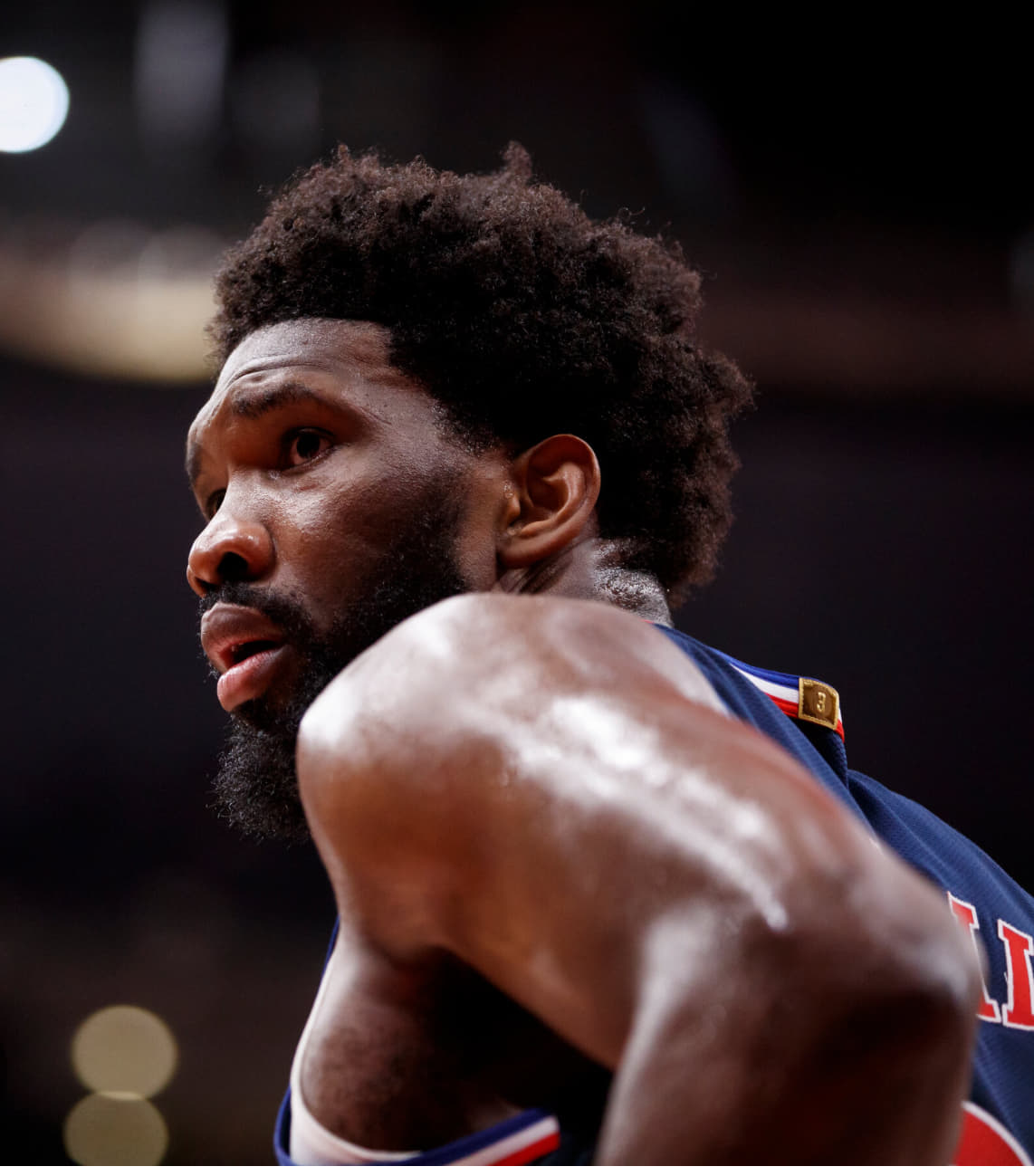
Some nights, it’s throwback basketball: Joel Embiid on the block, carving up defenses, halfcourt battles, everything slow and bruising. The next game? Embiid sits, and it’s Maxey, McCain, and Edgecombe flying around, pace-and-space, perimeter chaos. The Sixers flip styles based on one player’s availability, and with Embiid averaging under 24% of games played over the past two years, the team’s “identity” is as unstable as the starting five.
This isn’t just a tactical problem; it’s a locker room crisis. Last season, Philly finished 24-58, 13th in the East—ranking bottom-five in SRS, Net Rating, and both offense and defense. Not tanking, just lost. The tension in the locker room was palpable: star players coming and going, and fans obsessing more about vibes and “what ifs” than the basketball itself.
Cap Traps and the Cost of Commitment
The future? It’s expensive. Embiid’s fresh extension eats 37% of the salary cap by 2028-29—$67.2M for one player, with no trade kicker, no player outs, and no escape hatch unless he voluntarily walks away. Meanwhile, health is the biggest red flag: Embiid’s missed more games than he’s played, and his own words hint at an exit ramp, not a new beginning.
No Easy Out! So Pick a Lane
Here’s the brutal truth, straight from FRPC’s Vince Carter: The only real way out for Philly is to trade Tyrese Maxey.Yes, it’s painful. Yes, it sounds heretical. But with Embiid’s chronic unavailability, and an unmovable contract eating up over a third of the salary cap, the franchise simply doesn’t have the timeline, or the tools, to build around both stars at once.
Trading Maxey is the nuclear option, but it’s also the only move that brings back the kind of draft capital and salary flexibility needed to build around the uncertainty of Embiid. It’s a pivot toward the future, even if it means letting go of the one ascending star fans can believe in.
The only way out is through: commit to a timeline. If you keep trying to split the difference, you end up with neither a contender nor a clean rebuild just a franchise stranded in no man’s land, expensive and irrelevant.
Vince’s take:
“If Embiid’s health is an unsolvable riddle, you can’t just hope for a miracle. Maxey’s the one chip that gets you a war chest of picks, cap relief, and a chance to develop McCain, Edgecombe, and whatever the next phase of Philly basketball becomes. The Sixers have to stop pretending they can have it both ways. They can’t.”
It’s not tanking. It’s transition a post-Process evolution. Trade George, move Oubre, test the young core for upside, and rebuild flexibility deal by deal. Measure every decision by how it helps (or hinders) what comes after Embiid, because as things stand, the era of MVP Joel is a memory, not a strategy.
Giddey Gambit, Vuc Dilemma, and the Bulls’ Fork in the Road
Bulls in the Balance: Gamble, Buyout, or Build?
Let’s cut to the chase: the Chicago Bulls are out of excuses and almost out of time. The post-DeRozan era has begun, but clarity still hasn’t arrived. Every move this summer is less about talent acquisition and more about what kind of franchise the Bulls want to be. The stakes? The difference between another year of treadmill mediocrity or a purposeful pivot toward a real future.
The Giddey Gambit: Bridge or Building Block?
First up, Josh Giddey. Chicago shipped out Alex Caruso a core identity piece to make Giddey part of their next chapter. But now, before he’s even played a minute, there’s a contract standoff. Giddey’s camp wants $20 million-plus annually. The Bulls want to lock him up in the $13–15 million range. Classic restricted free agent dance: nobody wants to blink.
But this isn’t just about money, it’s about leverage and legacy. Giddey, fresh off a run with a title contender, sees himself as a starting-caliber, creative lead guard. The Bulls, with a jammed backcourt and plenty of “maybe” talent, are hesitant to give him star money before he proves it on their floor.
Could Giddey bet on himself, take the qualifying offer, and walk in 2026? Absolutely. But if he does, and the guard rotation squeezes his minutes or muddles his role, that next payday could disappear. For both sides, the gamble is real—and the risk is bigger than just the cap sheet.
The Vuc Dilemma: Buyout or Bust?
Then there’s Nikola Vucevic. His $21.5 million contract is a glaring question mark, and buyout rumors won’t go away. The only real logic for cutting bait now? Admitting it’s time for a full reset. Vuc is a pro, but hanging onto him only makes sense if you’re chasing wins that simply aren’t coming.
If the Bulls are serious about a rebuild, they should clear the lane literally or guys like Zach Collins, Jalen Smith, Noa Essengue, and Buzelis to get meaningful run at the five. Anything less is just spinning wheels and blocking potential.
Directional Crisis: The Halfway House
Chicago’s roster is deep with interesting pieces, but the vision is foggy. You’ve got Coby White, Ayo Dosunmu, Isaac Okoro, Kevin Huerter, and Buzelis, not to mention Giddey. Vets and lottery picks all mashed together, but still no clear pecking order, no defined style. The front office is living in the halfway house: not rebuilding, not reloading, not committed to anything except avoiding the pain of real decisions.
Here’s the thing: the Bulls actually have options. The cap isn’t ruined yet. The young core is intriguing. The vets are moveable. But every single transaction from here on out has to answer: does this fit the 2026–2028 timeline, or is it just more delay?
Giddey’s Game Needs Context... And Time
Giddey is a connector, not a volume scorer. He needs shooters and rim protection around him. If the Bulls treat him as a star but crowd him with mismatched parts, his impact plummets. This is the moment to clear a lane, for Giddey and for Buzelis, by moving vets, eating short-term pain, and giving the next wave room to breathe.
Fork in the Road! No More Middle
There are only two real paths:
1. Run it back, chase 41 wins, and hope for a mini-leap à la Cleveland.
2. Clear the decks, invest in the kids, and bottom out for one more blue-chip pick.
And yes, in the new-look East, 28 wins could still be survivable as teams like Brooklyn, Washington, Charlotte, Indiana (pending Haliburton’s health), and Toronto rebuild.
But here’s the real danger, and the Bulls’ habit for a decade: indecision. Letting Giddey’s extension linger. Keeping Vuc and Huerter until February. Waffling between “let’s compete” and “let’s retool.” That’s how you end up with 37 wins, no identity, and another summer of “maybe next year.”
At some point, you have to pick pain or progress. There’s no more hiding in the middle.
Welcome to the Audition: DC’s Roster Reset
The Washington Wizards are running the youngest squad in the league and for the first time in years, that’s not a punchline, it’s the plan. If you’re watching this team, forget about playoff brackets or tanking odds. 2025–26 is about open auditions, rapid-fire growth, and figuring out which of DC’s lottery-loaded prospects are actually part of a real NBA future.
Nine First-Rounders, One Big Unknown
You want youth? Washington’s got it by the truckload. This roster is a highlight reel of the last three drafts:
Alex Sarr: Defensive unicorn and possible franchise anchor.
Bilal Coulibaly: Wing stopper with endless arms and the swagger to match.
Bub Carrington: Lead guard with next-level pace, learning NBA speed on the fly.
Tre Johnson: This year’s #6 pick and a three-point sniper with off-ball movement for days.
Will Riley: 6’8” scorer out of Illinois, already showing flashes of pro-level IQ and scoring chops.
Every night, it feels like draft night all over again. Minutes aren’t promised. Roles are up for grabs. And for once, the front office is letting the kids sink or swim.
CJ & Khris: Vets With an Expiry Date
Veteran presence matters even in a rebuild. Enter CJ McCollum and Khris Middleton: two names you didn’t expect in DC, but their real role is “staircase contract.” They’re here to:
Keep the books clean (their deals expire before the cap spike of 2026)
Model pro habits for the young guards and wings
Space the floor and provide calm when the kids are flailing
Neither is part of the long-term vision, but both are crucial for avoiding “young team with zero structure” disaster. The $100M+ in cap space about to hit the books? That’s front office chess—ready for a big move once the real core emerges.
Who’s Real? The Spotlight’s Blinding
Let’s get granular, because these player spotlights are the whole story.
Tre Johnson is the franchise’s hope for shooting and swagger. He dropped 18.4 points a night in college, hit 41% from deep, and has a release that screams “NBA ready.” But he’ll need to add muscle, survive defensive schemes, and finish at the rim to become more Devin Booker than Quentin Grimes.
Will Riley brings length, off-ball movement, and the kind of patience you can’t teach. A 31-point debut as a freshman at Illinois hinted at his upside, but consistency and shot selection will determine if he’s a rotation mainstay, or just a story for Wizards Twitter.
Cam Whitmore “aka” Baby Sprewell is the wild card, explosive wing, relentless at the rim, and always one play away from “why hasn’t he broken out?” Houston couldn’t find him a role, but in DC’s chaos, he’ll have the green light to prove himself.
This Is the Year for Answers, Not Wins
This isn’t “trust the process” or “embrace the tank.” It’s an audition, plain and simple. Every spot in the rotation is up for grabs. Sarr and Coulibaly look like near-locks for starter minutes, but everyone else is in open competition. That means:
Consistency matters. No more “one good game, three invisible.”
Defense is non-negotiable. You want run? You better get stops.
Turnovers will cost you. Play smart, or watch from the bench (or G League).
The upside? If just two of these young wings hit, the Wizards leap from irrelevance to relevance fast—and with all that cap flexibility, they can accelerate the timeline.
Patience Versus Pressure: The Real DC Test
Let’s be real: there will be growing pains. Defense will break down. The kids will have cold nights. But these reps are the only way to know who’s real. Fans want a star. The front office wants proof. By next summer, Washington could have a roster full of guys with legit NBA minutes, and $100M to spend.
Who handles adversity? Who seizes the moment? That’s what this season is about.
Sorting, Not Just Rebuilding: The Charlotte Hornets’ Real Challenge
If you’ve followed the Hornets, you know the script: promising young talent, flashes of brilliance, then injuries, logjams, and “next year” talk. But this year feels different. The 2025–26 season isn’t just about development or adding ping-pong balls to the lottery drum. It’s about sorting out the future—once and for all.
The Core Questions: Who’s The Cornerstone?
Let’s start with the obvious: every team wants a star. Charlotte’s peers Orlando, OKC, Houston have crowned theirs. For the Hornets? The jury’s still out.
LaMelo Ball is the ultimate wild card. He’s the heartbeat of the offense, a walking highlight reel, and a legitimate creator when he’s on the floor. His playmaking (career 38.2% assist rate) is top-tier, but health is the swing factor. Only 47 games played last year, with lingering ankle concerns. For the Hornets to sniff .500, LaMelo has to play 65+ games, steady the ship, and cut the high-wire turnovers that make coaches sweat.
Brandon Miller, 6’9”, silky shot, flashes two-way upside. In just 27 games as a rookie, he took on big defensive assignments, put up solid shooting numbers (.597 3PA rate, .540 TS%), and looked every bit the modern NBA wing. But he’s still raw, needs to bulk up, and hasn’t yet claimed that “go-to scorer” mantle. Is he Robin, Batman, or trade bait? Hornets fans want to know now.
Kon Knueppel & Liam McNeeley, this year’s rookies, arrive with expectations. Knueppel (No. 4 overall) offers shooting and IQ rare for his age. McNeeley is a wing who just makes winning plays. The hope? One (or both) emerge as high-end role players or maybe even more.
A Roster Full of “Maybes”
This is a team loaded with questions:
Guards: Nick Smith Jr. can score in bunches, but is he more spark plug or rotation lock? KJ Simpson has creativity but needs to prove he can stick at NBA speed. Sion James brings defense, but is his offense NBA-ready?
Wings: Miller and Knueppel headline, but don’t sleep on McNeeley or Tidjane Salaün, a Swiss Army forward with defensive juice but an iffy jumper.
Bigs: Ryan Kalkbrenner’s rim protection is real, but can his feet hold up defensively? Moussa Diabaté has energy, but is he more than a change-of-pace guy?
Vets: Collin Sexton, Pat Connaughton, and Grant Williams are here to set the tone, but can any of them anchor a young locker room through losses and growing pains?
Sorting Year = Opportunity Year
The 2025–26 Hornets are not about winning 45 games. They’re about answering the key questions that have haunted this franchise for a decade:
Who fits with LaMelo Ball, if he’s the future?
Who can thrive alongside Miller, Knueppel, or McNeeley?
Which big (if any) anchors a defense that too often feels like a turnstile?
Who survives the “Hunger Games” guard rotation and becomes a long-term piece?
And most importantly: Who’s the real franchise pillar star, starter, or trade chip?
Charlotte’s front office is pushing “development, culture, and opportunity.” But let’s call it what it is: star-hunting in progress. No crowned king yet just a lot of intriguing candidates.
Rookies, Roles, and What to Watch
This year’s rookies will get every chance to prove themselves. Knueppel’s shooting and maturity make him an immediate rotation factor. McNeeley’s off-ball movement and basketball IQ could quietly solve lineup chemistry issues by January. Kalkbrenner, if he proves mobile enough, could change the team’s defensive ceiling in just 15 minutes a night.
And don’t discount the Summer League crew Simpson, James, Peterson. In Charlotte, someone always pops when you least expect it.
Sorting the Rotation, Shifting the Culture
For fans? Watch the wings. This group (Miller, Knueppel, McNeeley, Salaün) might just become the league’s deepest young wing pool. If two or three pop, the Hornets can leap out of the basement maybe faster than expected.
Leadership is the X-factor. Can LaMelo stay healthy and focused? Does Miller step up vocally? Will a vet keep the locker room together when the losing streaks hit? The answers will define the season and maybe the next five.
The Heat Is On—But the Old Miami Blueprint Isn’t Working
Meta Description:
The Miami Heat are entering a post-Butler, post-superstar-hunting era, and for the first time in a decade, their legendary “Heat Culture” faces a modern NBA reality check. Can this new, youth-driven roster actually deliver—or is Miami just another middle-seed in today’s league?
Miami’s Identity Crisis: New Era, Same Expectations?
It’s not often that the NBA’s most envied “superstar magnet” hits the reset button, but here we are. The Miami Heat long known for patience, cap flexibility, and swooping in for the next disgruntled megastar have finally run out of magic bullets. Jimmy Butler’s departure at last season’s trade deadline wasn’t just an end to an era. It was a statement: Miami’s way of doing business is officially on trial.
No more stalling for the next whale. No more cap gymnastics hoping a championship window randomly swings open. Instead, Miami fans are getting something they haven’t seen in years: an actual youth movement, uncertainty at the top, and the uncomfortable reality that “Heat Culture” might not be enough in a league built on volume scoring and multi-positional depth.
A Roster Reset! With Real Questions
Gone is Jimmy Butler, replaced by a wave of question marks. Andrew Wiggins and Norman Powell are in, alongside a pack of rookies and “project” players fighting for minutes. The days of waiting on Dame Lillard or Kevin Durant rumors are over this year, it’s about finding answers inside the building.
Tyler Herro steps in as Miami’s new “go-to” bucket getter. He’s now an All-Star, but is he a #1?
Bam Adebayo is the franchise’s most stable piece a relentless defender, and now tied with LeBron for most playoff double-doubles in Heat history. But with limited help up front, will Bam’s effort translate to wins or just respect?
The front office’s strategy once the gold standard for flexibility is looking increasingly boxed in. Cap space is tight, draft assets are thin, and the superstar market is dry. Now, Miami’s best hope is that one of their own breaks out and becomes a star.
On the Court: Fit Over Flash?
The Heat’s new rotation leans younger than any Pat Riley squad since the early 2000s. Powell and Herro can both shoot and create, but they overlap, and there’s still no true lead guard. Bam’s defensive brilliance can’t hide the lack of rim protection if rookie Kel’el Ware isn’t ready from day one.
Nikola Jović and Kasparas Jakucionis headline the rookie class, joined by a fleet of two-way contract players fighting for relevance. The gamble: that someone anyone pops before Miami sinks into the East’s lower tier.
Jakucionis: The Prototype Project
Kasparas Jakucionis is the perfect “Heat project.” At 18, he brings real size for a guard, vision, and rebounding. His college line 15 points, 6 boards, 5 assists per game, 84% from the line suggests potential, but his shooting is streaky, and turnovers are an issue. Scouts see flashes of Goran Dragić or Tomas Satoransky a Euro connector who does a bit of everything, but isn’t elite at any one thing (yet).
Miami’s bet: their vaunted development staff can do what they’ve done before turn a raw playmaker into a reliable weapon.
Time for a New Culture Code?
But here’s the big question: is Pat Riley really ready to pivot? For 15 years, the Heat have been the NBA’s biggest “superstar hunter” stacking contracts, selling South Beach, waiting for the big domino to fall. But league insiders and a handful of honest Heat fans now wonder if that script is played out.
The new CBA punishes teams who just hoard space. Star trades are rarer, more expensive, and often leave rosters gutted. The teams winning today? They draft, develop, consolidate, then pounce when the window opens. Boston. Denver. Minnesota. Miami has to decide: stick with the old playbook, or finally invest in their pipeline?
The Real Heat Check
So what now? The fans are restless. The East is deeper than ever. The front office calls it a “flexible, youthful roster”—but everyone knows that means “a lot of unproven guys and not enough picks.”
Norman Powell: Elite catch-and-shoot, but can he thrive as more than a third option?
Wiggins: Big name, but still streaky. Does Miami unlock his consistency?
Simone Fontecchio: Reliable shooter, questionable defender.
Kel’el Ware: If he pops as a rim protector, the whole defense changes. If not, Miami’s in trouble.
The biggest risk? The Heat slide into “tough out, first round” territory and stay there. Solid, but never dangerous. Good culture, but not enough talent.The Heat are still on but the old Heat Way isn’t working. For the first time in a decade, Miami has to find new answers or risk becoming just another middle seed in the NBA’s new order.
Atlanta Hawks 2025–26: The Last Stand for Trae Young or the Real Flight Begins?
With the Eastern Conference wide open, the Atlanta Hawks have their best shot in years—but is this Trae Young’s time to lead, or his last dance in the ATL? The roster is deeper, the defense is real, and patience is running thin. Here’s why Atlanta’s window is now or never.
No More “Almost”: The Hawks’ Biggest Opportunity Yet
For years, the Hawks have been the NBA’s perpetual “what if” team always fun, always dangerous, but never quite ready to break through. This season? No more excuses. With Jayson Tatum and Tyrese Haliburton sidelined, Embiid hobbled, and Miami in a rebuild, the Eastern Conference is up for grabs. Atlanta finally has the runway and the stakes have never been higher.
All Eyes on Trae: Lead or Leave?
Let’s be honest: Trae Young remains one of the most polarizing players in the league. He’s an offensive magician, a nightly highlight, and at times, a system unto himself. But after years of letting Trae cook, the Hawks front office has retooled the roster to demand accountability, not just entertainment.
This is the deepest, most versatile squad Atlanta has built around their star.
Nickeil Alexander-Walker and Dyson Daniels bring size, defense, and shooting.
Kristaps Porziņģis is healthy (for now), offering elite rim protection and stretch-five versatility.
2nd Year Zaccharie Risacher, plus solid wings like Kennard and Okongwu. give Atlanta five-out flexibility.
The message is clear: Trae can’t play by his own rules anymore. Snyder’s system is structured, the defense is no longer optional, and if Young doesn’t buy in, the trade rumors will get real fast.
Can the Defense Finally Keep Up?
Last season, Atlanta finished in the bottom 10 defensively again. But that should change if everyone stays healthy. Daniels is a defensive pest, Porziņģis alters shots, and lineups with NAW and Risacher are built to switch and fly in transition.
Key stat:
If the Hawks can be even average defensively, their ceiling jumps a tier. With the right mix, this team could punish opponents on both ends, especially in an East missing its biggest stars.
Jalen Johnson: The X-Factor No One’s Talking About
Jalen Johnson is Atlanta’s most important variable after Trae. When healthy, he’s a transition wrecking ball and versatile defender grabbing 26% of defensive rebounds and flashing real playmaking (20% assist rate for a 6-9 forward). But Johnson’s best skill might be availability, and so far, that’s been elusive (only 36 games per year on average).
If he breaks out, Johnson gives Atlanta a real second option, something they haven’t had since the peak of the Trae-John Collins duo. If he doesn’t, the Hawks may have the deepest group of “role players-plus” in the league but no real co-star.
Shooting, Switching, and No More Excuses
This roster finally fits the modern NBA. Alexander-Walker shot 38% from deep. Porziņģis spaces the floor, Kennard is always a threat, and Daniels brings elite switchability. Risacher, Newell, and Okongwu add even more lineup options.
But it all comes down to Trae: can he embrace a true team offense, move the ball, and defend enough to keep Snyder’s trust? Or will he default to deep isos, quick threes, and defensive lapses that stall the system?
Scouting buzz:
If the Hawks move the ball and play five-out, their offense can be top 10. But if Trae stalls the flow, all the depth in the world won’t matter.
The New Atlanta Standard: No More “Potential”, Just Results
This isn’t about “potential” anymore. The Hawks have shooters, defenders, and a coach with real tactical chops.
If Trae buys in? Atlanta’s a playoff lock, maybe a top-four seed.
If he doesn’t? This is his last year as the face of the franchise, and Atlanta must move quickly before the market cools.
There’s a universe where Trae Young is the MVP dark horse and Atlanta’s darling. But there’s also a universe where he’s just the latest All-Star on the move.
Orlando Magic 2025–26: Welcome to the Bane Era
The Orlando Magic just flipped the script on their “good vibes, bad shooting” reputation, adding Desmond Bane, steadying with Tyus Jones, and betting on Paolo Banchero’s superstar leap. Is this finally the year the Magic grow teeth and a half-court offense worth fearing?
Orlando’s Whole Vibe Just Changed
For years, Orlando has been the NBA’s adorable overachiever: high energy, defense-first, and always a tough out, but just a shooter (or three) short of real playoff danger. Not anymore.
This summer, the front office made a statement: enough grinding, time to build.
Desmond Bane, a top-tier movement shooter, arrives as the new gravity guy, opening the floor for Paolo and Franz.
Tyus Jones, one of the league’s best “grown-up” point guards comes in to stabilize late-game chaos.
Rookie Jase Richardson brings upside and lottery-pick juice, but now development is a luxury, not a necessity.
Gone are KCP, Cole Anthony, Gary Harris, all solid, but part of a ceiling the Magic were desperate to shatter.
Soraya’s Note: “The Magic’s own execs said it best: ‘We can’t ask Paolo to be Superman with four non-shooters.’ Bane’s arrival is about culture shift as much as spacing. This front office is building, not hoping.”
The Core: Stars, Connectors, and Culture Setters
Paolo Banchero is the franchise pillar, but he’s still writing his story.
33.6% usage, .551 true shooting, he gets all the touches, but the next step is efficiency and late-game shot creation.
Insiders rave about his vision, Paolo isn’t just a bully in the paint, he’s threading next-level passes that show future All-NBA potential.
“Pressure drops when your man can actually hit. Bane gives Paolo room to dance.”
Franz Wagner is the secret sauce, 6-10, point-forward skills, and a 26.6% assist rate that would make any coach smile. This is his season to be bold, not bashful.
With Bane on the floor, Franz finally faces tilted defenses he can attack closeouts, find the open man, and become a true secondary creator.
Coaches are challenging Franz to double his three-point attempts. If he starts letting it fly, Orlando’s offense could reach a tier we haven’t seen since the Hedo-Turkoglu era.
Jalen Suggs brings the edge.
Already a playoff-level defender and culture setter, Suggs needs the jumper to land so he’s not just a “dare you to shoot” target.
As Soraya says: “He’s the fan favorite, the demolition agent, and the guy who gets the bench hyped. But every playoff team needs that one player the opponent fears in crunch time. If Suggs hits, he closes. If not, he’s still the dog you need off the bench.”
Desmond Bane is the headline.
40% from deep, relentless off movement, and a floor raiser for everyone else.
Bane isn’t just a spot-up shooter, he’s the reason Paolo and Franz can breathe, and why Orlando can finally hunt mismatches in the half court.
Tyus Jones is the adult in the room.
Surgical, steady, never rattled.
The front office calls him “the floor general Orlando’s missed since Jameer Nelson.” His impact won’t fill the box score, but you’ll see it in the win column when he’s on the floor late.
Paolo’s Path! Superstar or Just Star?
Here’s where the story gets fascinating:
Floor: Julius Randle, big stats, but not quite winning time. (Not Even Considering this scenario)
Median: Melo-era Nuggets, buckets, rebounding, but is it “Death Star” for a franchise?
Ceiling: Jayson Tatum, two-way killer, perennial All-NBA.
“The comp that matters is playoff impact. Paolo’s already a better passer than most—if the defense comes, his ceiling is scary.”
The Lineup Mix: Depth, Risks, and Playoff Reality
This isn’t just the deepest Magic roster since the Dwight Howard Finals days it might be the most dangerous Magic team in a generation.
Host Vince Carter puts it plainly:“This is the year the Magic make the leap. With this defense and the extra firepower from Desmond Bane, I’m telling you: an Eastern Conference Finals run isn’t out of the question. Orlando’s not just a tough out they’re a real threat to anybody in the East.”
Strengths: Top-2 defense that travels, much-improved halfcourt spacing, and enough lineup versatility to throw counters at every playoff opponent.
Risks: Orlando is betting big on Bane’s health, Paolo’s leap, and Suggs’ jumper. If the three isn’t falling, offense could still get stuck. But with real shooters now in the mix, that old “grind it out and pray” identity is fading fast.
“Every coach raves about Franz’s feel, Paolo’s vision, Bane’s toughness. But now it’s about pulling the trigger literally. If this group lets it fly and stays connected on D, they’re not just a playoff team, they’re a problem.”