By Vince Carter
Draft Room Drama: Sliding Doors and Power Moves
There’s always more to draft night than the handshake, the hat, and the highlight package. The first round of the 2025 NBA Draft wasn’t just a talent evaluation it was a high-stakes poker table, with every front office bluffing, hedging, or laying their cards flat for the world to see. And as the dust settles, some teams look like they had the cheat codes; others, like they sat down at the big boy table and realized far too late they brought Old Maid to a Texas Hold’em showdown. After weeks of “Spy versus Spy”, energy and misinformation flowing like the mighty Mississippi River, on this night reality is a cold Mistress!!!
Let’s start with Ace Bailey, the draft’s most audacious player-agent operation. In an era when prospects ghost entire franchises, Ace doubled down he flat out refused workouts for anyone but Washington and Brooklyn, making it known he wanted to call his shot. If you listened to his camp, the only possible outcomes were the Wizards or Nets. But Utah’s Danny Ainge wasn’t having it. Ainge, unflinching as ever, called the bluff, swiped Bailey at five, and let the chips fall where they may. Result? Bailey played poker and lost; the Jazz now control his NBA destiny. This was a franchise making it clear: you play for the logo, not the zip code.
On the flip side, the New Orleans Pelicans and Portland Trail Blazers played the role of eager, nervous newcomers. New Orleans, eyes wide with offensive upside, mortgaged their future sending an unprotected 2026 first (in a loaded draft) just to climb ten spots for Derik Queen. It’s a move that, to seasoned executives, signals not calculated boldness but anxious impatience. One exec compared it to “bidding against yourself at a silent auction.” Portland, meanwhile, reached a full thirty picks above consensus for Hansen Yang a big whose name wasn’t even whispered in most first-round circles. That’s not just trusting your scouts, that’s rolling the dice and praying the analytics intern is a genius.
Contrast this with Sam Presti and the Oklahoma City Thunder. There’s a clinical calm to OKC’s draft process—no panic trades, no desperate reaches, just a relentless focus on character, skill set, and scalable fit. Selecting Thomas Sorber at fifteen was a master class in measured confidence. Presti’s room isn’t chasing unicorns or drafting for headlines they’re building, brick by brick, a perennial contender.
The lesson? The NBA draft isn’t just a measure of scouting. It’s a test of organizational nerve and clarity. If you’re the Jazz or Thunder, you dictate terms. If you’re the Pelicans or Blazers, you’re still learning the language of the room.
As the league evolves, one thing is clear: fortune may favor the bold, but the draft always exposes the unprepared.
Who Actually Got Better? Instant Role Fits and Year-One Starters
Let’s get this out of the way: Not every lottery pick is ready to clock 25 minutes a night, and not every team should throw a rookie into the fire. But if you zoom out and squint with a dash of pragmatism some teams left the 2025 NBA Draft not just with “talent,” but with actual, functional NBA players. You know, guys who’ll play real minutes, not just fill up the back of a rookie card.
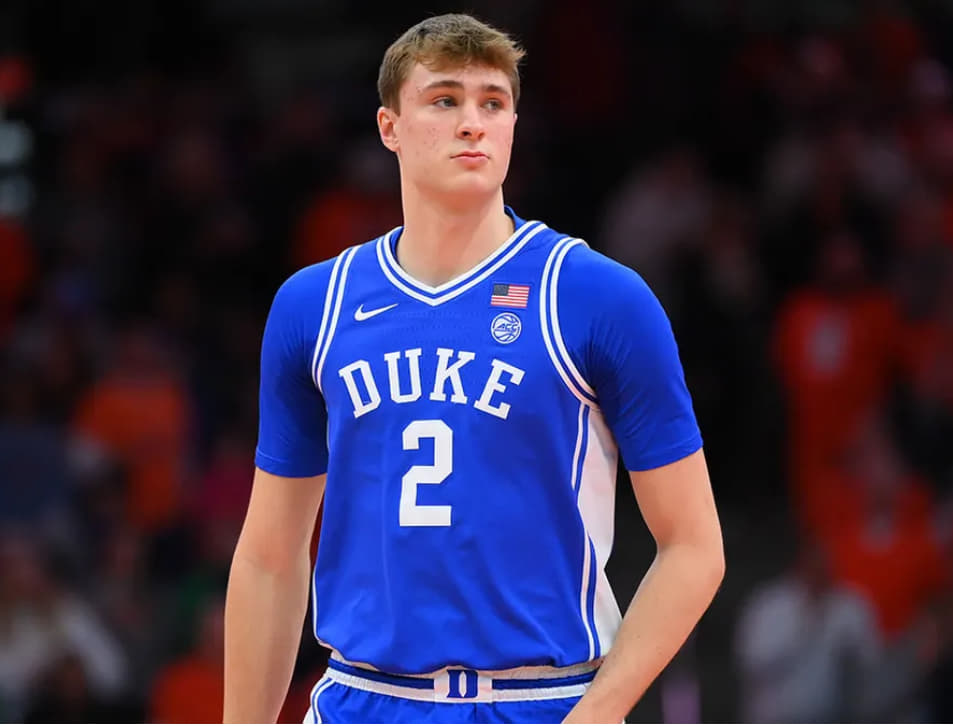
Take Dallas. Cooper Flagg isn’t just a blue-chipper, he’s plug-and-play think Shane Battier’s brain in a Paul George frame. Day one, he’s in the closing five, soaking up Jason Kidd’s aura and switching everything defensively. That’s not projection, that’s penciled in pen. The Sixers get a similar gold star: VJ Edgecombe lands in Philly with Tyrese Maxey and Joel Embiid. He’s a freak athlete, built for their transition-heavy attack, and has the tools to defend wings right now. It’s a fit that makes too much sense.
The Charlotte Hornets are quietly winners too, snagging Kon Knueppel, a guy who gives them desperately needed shooting and connective passing. He slots next to LaMelo Ball and Brandon Miller, spacing the floor and giving Steve Clifford one fewer headache. That’s instant impact think Mike Miller rookie year, but with more playmaking.
Oklahoma City? No shock, they nailed it again. Thomas Sorber doesn’t have to start, but you can bet Sam Presti’s already found him fifteen nightly minutes anchoring bench lineups, setting bruising screens, and mopping up defensive rebounds. He’s a role player with “eventual playoff minutes” written all over him.
Meanwhile, you have teams like Portland Hansen Yang’s theoretical five-out fit makes sense on paper, but in practice? He’s buried behind a small nation of centers. And let’s be real, there’s a real chance he’s spending the year learning English terminology for “defensive slide” in the G League.
Not every team fared so cleanly. The Pelicans traded up for Derik Queen, but between Zion, Ingram, and the ever-rotating frontcourt, his rookie minutes will depend more on others’ health than his own readiness. Some picks like Miami’s Kasparas Jakučionis and Sacramento’s Nique Clifford could be quiet steals, ready to jump into 15–20 minute roles if the rotation gets wobbly.
So who actually got better? Dallas, Philly, Charlotte, and OKC these teams didn’t just draft for upside; they drafted for the present. Year One minutes aren’t promised, but some rookies are already making the depth chart in bold ink. And in this league, that’s half the battle.
The Reach, The Risk, and The Reward: Analytics vs. Instinct
It happens every year, and it always feels the same draft night hums along, everyone at home cross-checking picks with their 37 mock drafts and YouTube deep dives, congratulating themselves on being “plugged in.” Then wait, what just happened? Portland selects Hansen Yang, and you can feel every NBA draft nerd collectively fall off their couch.
Let’s be honest, this is the exact reason you watch the draft live. The drama, the confusion, the “Did Woj just typo that?” group chat explosion. Portland, a franchise with more centers than the United Nations, reaches down into the deep cuts and pulls up a 7'1" project big out of Qingdao, China a guy ranked 48th by the consensus, ahead of more “NBA ready” bigs and wings.
Look, every draft, someone talks themselves into being the smartest guy in the room. Sometimes it’s genius, sometimes it’s a panic attack with a suit and a G League affiliate. Portland’s analytics crew must have seen a Jokic fever dream big frame, soft hands, passing flashes. But let’s not kid ourselves: most of us had to check the pronunciation guide twice before finding a highlight.
Let’s just say what everyone’s thinking: If you’ve got DeAndre Ayton, Donovan Clingan, Robert Williams III, and Duop Reath… what, exactly, is the plan? Yang’s offense has touch, sure, but this league isn’t exactly waiting around for another project big who struggles to defend in space. Does Portland have a suitor for Ayton and or Williams III??? On the “Time Lord”, front I can’t fathom that there is a team willing to take the risk on William III especially after playing 26 total games in the last two seasons.
Is this bold? Absolutely. Is it reckless? Maybe, maybe not. The draft is all about conviction, and if you’re Portland, you might as well roll the dice nobody’s calling you a contender tomorrow anyway. But the optics? Woof. This is the reach everyone will remember, and if Yang pops, you look like visionaries. If he flames out, it’s a “Portland does it again” meme locked and loaded.
This is the beauty of the NBA draft, man. Analytics meet instincts. Scouts meet spreadsheets. Portland congrats, you’ve given us the annual “Wait, what?” pick. Can’t wait to see how this one plays out.
Don’t Sleep on Day Two: Best Remaining Talents & Why They Fell
Every year, as the first round closes and the cameras fade, true hoop heads know the real value starts to bubble up. The “second screen” crowd is hunting for those overlooked gems—guys with first-round tools who, for whatever reason, are still on the board. The 2025 NBA Draft? No exception. This Day Two class is loaded, and if you listen closely, you’ll hear GMs scrambling for the phone, looking for rotation guys and maybe even a future starter or two.
Let’s start with Noah Penda, a long, athletic 6’7” wing with a 7-foot wingspan who somehow slid into the second round. Penda’s calling card is his defense he can guard up and down the lineup, brings relentless energy, and flashes real slashing ability. Scouts docked him for inconsistent shooting mechanics and limited creation, but if he lands in a system that lets him focus on corner threes and high-level on-ball defense (think Miami or Toronto), he could be this draft’s Bruce Brown. Sometimes the league overthinks “specialists” Penda could become the next one to make everyone pay.
Ryan Kalkbrenner might be the biggest surprise on the board. On some analytics models, he was a late first/early second lock a legit 7’1” rim protector out of Creighton, elite in drop coverage and among the best shot-blockers in the country. The knock? He’s already 23 and considered “old” by draft standards. But let’s get real: backup centers who set hard screens, know their role, and won’t get played off the floor in a playoff series are never out of style. Slot him into a team that needs a reliable backup five like the Celtics, Bucks, or Warriors and don’t be surprised if he’s logging meaningful playoff minutes in a couple years.
Rasheer Fleming is another name to circle 6’8”, 7’5” wingspan, all-defense upside. He rebounds, switches, and flashes real growth as a shooter. Why did he fall? Mostly a combination of raw offensive game and playing for a mid-major (St. Joe’s), but the modern league is starving for versatile defenders who can cover ground and finish lobs. If he goes to a developmental powerhouse like OKC or Memphis, Fleming could absolutely be the guy who cracks the rotation by the All-Star break. It is was eye opening to hear scouts who give “developmental space” for an attribute to grow but when it came to Flemming’s 3 point shooting improvement, many scout were not moved at all
Then there’s Maxime Raynaud, the 7-footer from Stanford who moves surprisingly well for his size and can stretch the floor. He lacks elite athletic pop but, in the right system, brings real spacing and modern “five out” looks. If Dallas or Sacramento are smart, they’ll take a swing here.
And don’t ignore Adou Thiero explosive, long-armed wing from Arkansas. Still raw, but has the defensive tool kit to stick. A year in the G League, and he could be a rotation piece by next spring.
Why did these guys fall? Age, imperfect skill sets, or simply being “old news” to scouts who have moved on to shinier objects. But ask any assistant coach rotation players are built, not just drafted. Day Two is where you find them.
Keep your notifications on. The best value is just getting started.